Basement Finishing Cost Per Square Foot: A Complete 2025 Pricing Guide
Finishing a basement is one of the most cost-effective ways to add usable living space to your home, but most homeowners underestimate the real price before they start. The average basement finishing cost per square foot in the United States currently runs between $32 and $75, with most complete projects landing in the $45,000 to $90,000 range for a fully finished 1,000-square-foot space.
Those figures move a lot depending on where you live, how you plan to use the room, and how much plumbing and electrical work the space needs. This guide breaks down exactly what drives the basement finishing cost per square foot, what you can expect to pay at each finish level, and how to build a budget you can actually stick to.
The Average Basement Finishing Cost Per Square Foot
National averages paint a useful picture, but they hide a wide spread. According to cost data collected by remodeling contractors and reported by This Old House, a finished basement typically runs $32 to $75 per square foot, not counting a drop ceiling, egress windows, or a new bathroom. Add a bathroom and those same figures can climb by $10,000 to $25,000 on their own.
Here is how the math works out at the most common sizes:
- 500 sq ft: roughly $16,000 to $37,500
- 1,000 sq ft: roughly $32,000 to $75,000
- 1,500 sq ft: roughly $48,000 to $112,500
- 2,000 sq ft: roughly $64,000 to $150,000
Location is the single biggest swing factor. In high-cost metros such as Seattle, Boston, and much of California, labor rates push the basement finishing cost per square foot toward $85 to $120. In the Midwest and South, the same scope of work often lands below $50 per square foot. Before you commit to any quote, get at least three itemized bids so you can compare labor, materials, and allowances line by line.
Basement Finishing Cost Per Square Foot by Finish Level
Not all finished basements are built to the same standard. The finish level you choose changes the per-square-foot price more than almost anything else, so it helps to define your target before you start collecting bids.
| Finish Level | Cost per Sq Ft | Typical Total (1,000 sq ft) | What You Get |
|---|---|---|---|
| Basic | $32–$50 | $32,000–$50,000 | Framed walls, drywall, paint, basic flooring, drop ceiling, basic lighting |
| Mid-range | $50–$75 | $50,000–$75,000 | Upgraded flooring, recessed lighting, a wet bar, better insulation and soundproofing |
| High-end | $75–$150+ | $75,000–$150,000+ | Full bathroom, home theater, custom cabinetry, luxury vinyl or tile, premium finishes |
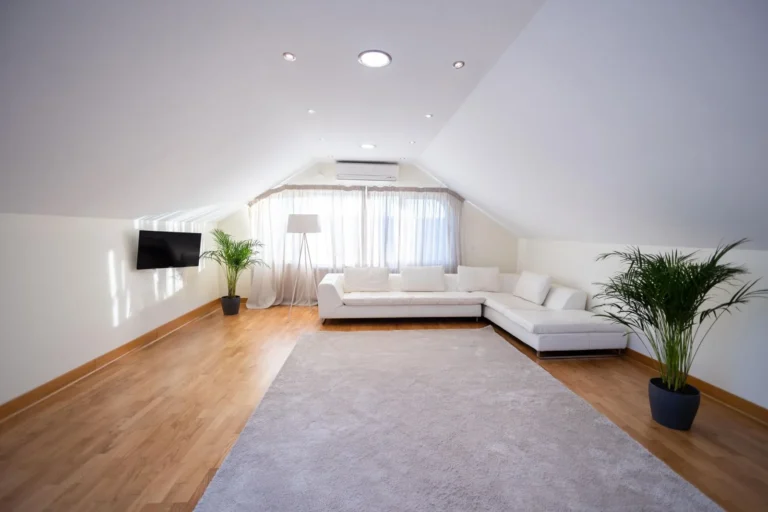
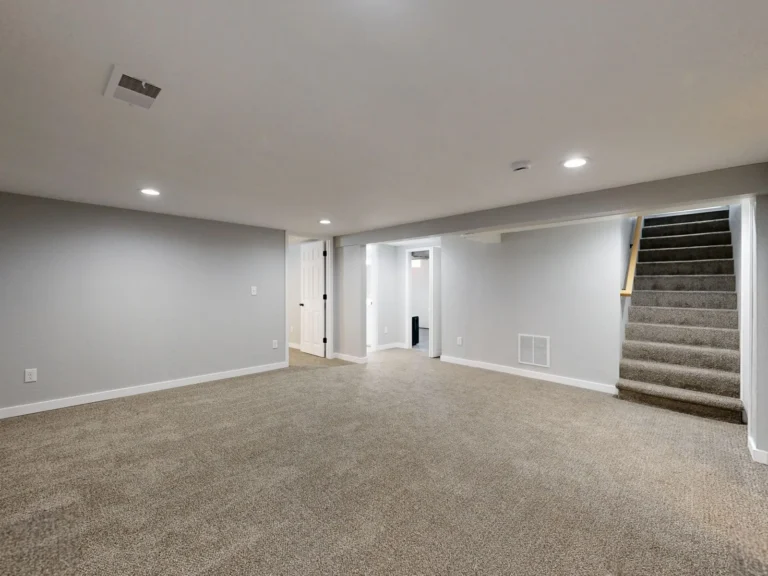
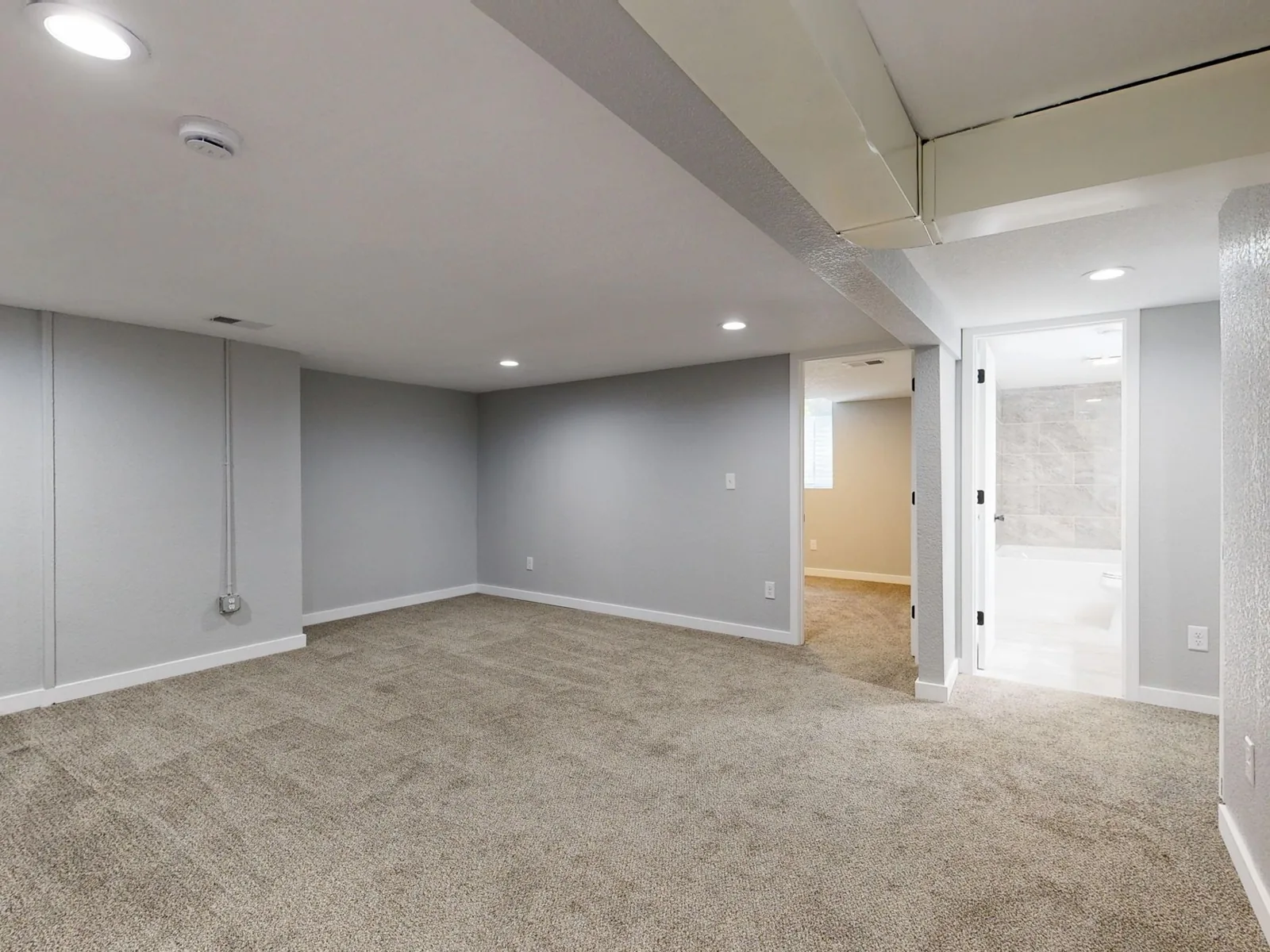
A basic finish turns raw space into a clean, code-compliant rec room. A high-end finish essentially builds a second living floor below grade, often with a bedroom and full bath that require egress windows and dedicated HVAC runs — both of which add cost quickly.
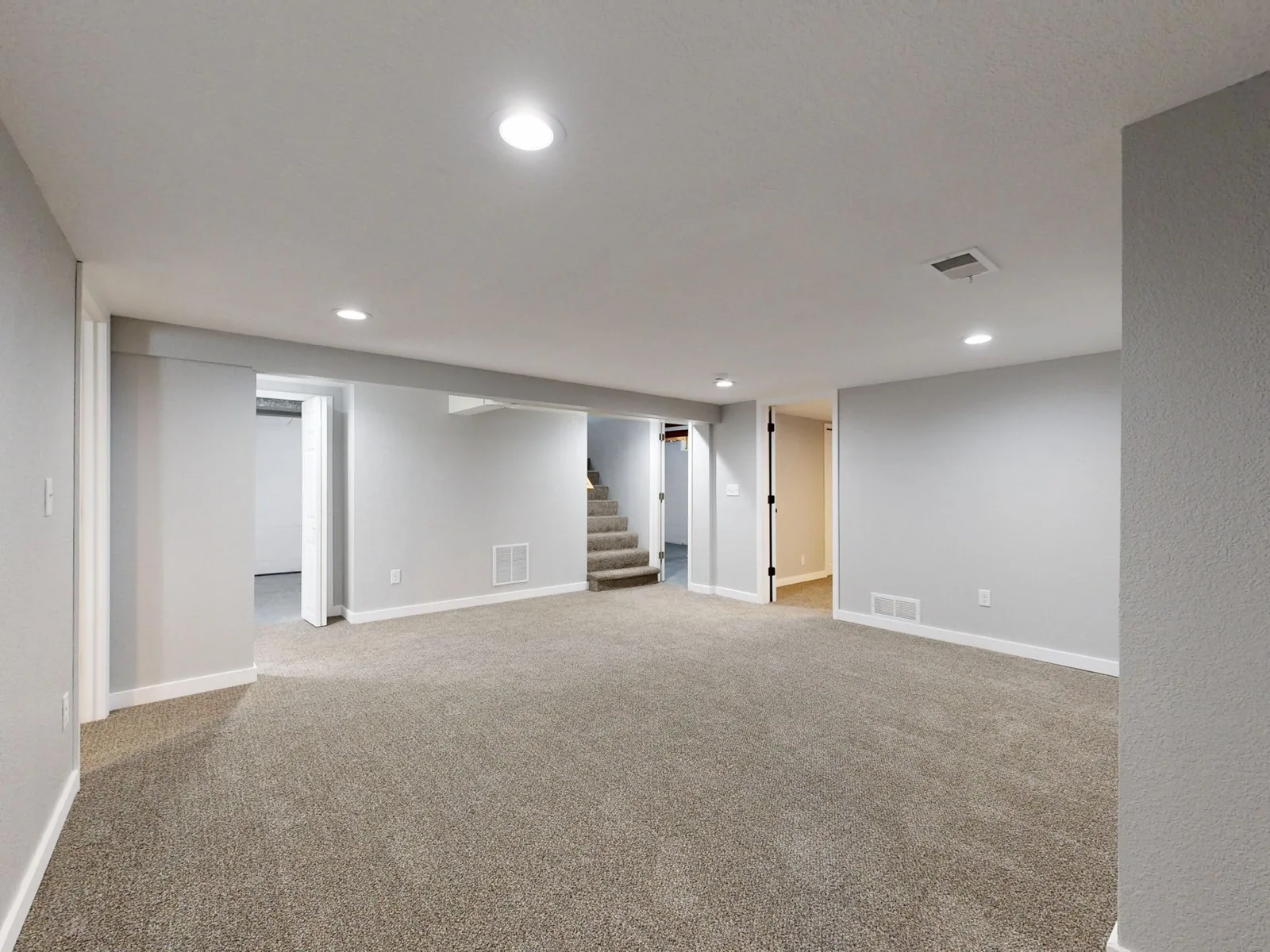
Photo by Peter Vang via Pexels
What Drives the Basement Finishing Cost Per Square Foot Up or Down
Understanding the individual cost drivers helps you see where your money actually goes — and where you can trim without cutting corners.
Plumbing and Bathrooms
Adding a bathroom is the most common budget-breaker. A below-grade floor sits below the main sewer line, which usually means an up-flushing toilet system or a sewage ejector pump (roughly $800 to $1,500 for the unit plus installation). Factor in rough-in plumbing, fixtures, and tiling, and a full basement bath adds $15,000 to $40,000 to the total.
Electrical and Permits
Older basements were never wired for a finished space. You will likely need a subpanel, new circuits, GFCI outlets, and egress-compliant lighting, which typically runs $2,000 to $6,000 in electrical work alone. Permits for framing, electrical, and plumbing vary by municipality but commonly add $1,000 to $3,000.
Insulation and Moisture Control
This is the part you should not skimp on. Basements sit below grade, so moisture management matters more than insulation thickness. Closed-cell spray foam insulates and acts as a vapor barrier in one step but costs roughly $2.50 to $3.50 per board foot, while rigid XPS or polyiso foam board runs $1.50 to $3 per square foot of wall. The U.S. Department of Energy publishes basement insulation guidance that is worth reading before you choose a system — the wrong one can trap moisture inside your new walls.
Flooring
Concrete holds cold and damp, so most pros recommend a dimpled subfloor membrane such as DRIcore (about $2 to $3 per square foot) and then luxury vinyl plank (LVP) on top. LVP brands like Lifeproof or Shaw run $2 to $5 per square foot for materials and shrug off the occasional damp. Carpet is cheaper up front but is riskier below grade.
Cost by Basement Type and Condition
The starting condition of your space sets the floor for everything else. A newer home with a poured-concrete foundation and 8-foot ceilings finishes far more cheaply than an older home with a low, damp fieldstone foundation.
- New construction / walk-out basement: cheapest per square foot; drains and tall ceilings are usually already in place.
- Standard poured-concrete basement, dry: mid-range; mostly framing, electrical, and finish work.
- Older home with moisture issues: highest cost; may require regrading, a sump pump, a perimeter drain, or a full waterproofing job before any finishing begins.
If your basement shows signs of water — efflorescence, musty smell, or standing water after rain — solve that first. We covered the options in detail in our guide to basement waterproofing costs, because finishes placed over a leaking wall will fail no matter how carefully they are installed.
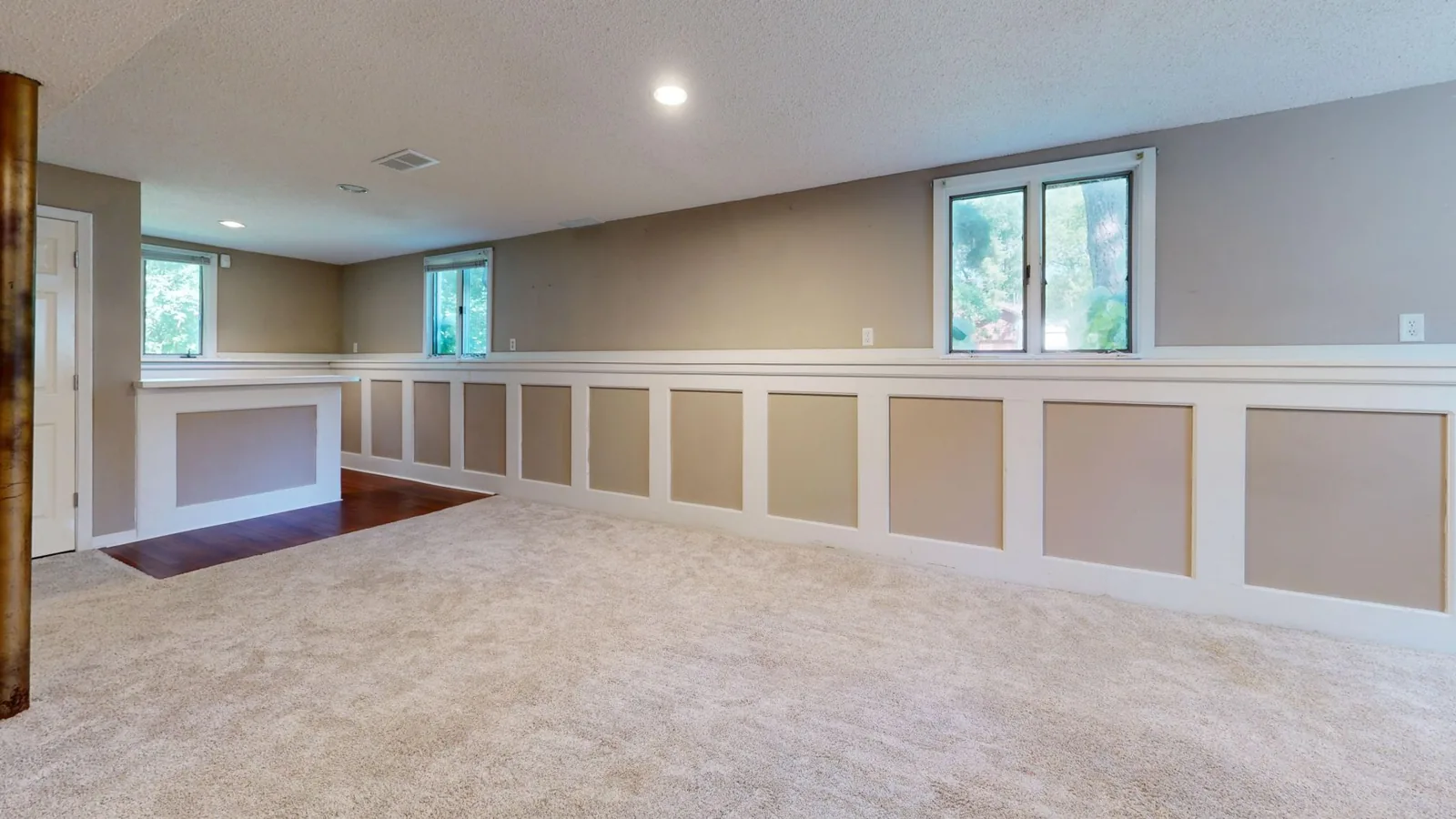
Photo by Peter Vang via Pexels
DIY vs. Hiring a Contractor
The single fastest way to change your basement finishing cost per square foot is to decide how much of the job you will do yourself.
- Full DIY: possible for framing, drywall, painting, and LVP flooring. Expect to save 40% to 60% on labor, bringing a basic finish down to about $15 to $25 per square foot in materials — if your time is free and you pull permits correctly.
- Partial DIY: hire out electrical, plumbing, and drywall taping; handle demolition, painting, and flooring. This is the sweet spot for most homeowners.
- Full-service GC: a general contractor manages everything at $50 to $75 per square foot and up. You pay a premium of roughly 15% to 25% over direct subcontractor pricing, but you get one point of accountability and a warranty.
Electrical and plumbing are not realistic DIY territory for most people. Mistakes there are expensive to fix and dangerous, and most jurisdictions require licensed trades for any work you cannot legally pull a permit for yourself.
How to Budget a Basement Finish Without Overpaying
A realistic budget protects you from the mid-project scope creep that ruins most basement jobs. Use these rules of thumb:
- Start at $50 per square foot as a planning baseline for a mid-range finish, then adjust up or down for your region.
- Hold a 15% contingency. Hidden water damage, failed inspections, and back-ordered materials are common below grade.
- Get three itemized bids. Compare them by line item, not by total, so one contractor’s “allowance” does not hide a bargain bid.
- Sequence the work. Waterproof and insulate first, then rough in plumbing and electrical, then drywall and finishes. Skipping steps in the middle is how you pay twice.
- Plan the whole space at once. Finishing half a basement now and half later costs more total than doing it in one pass, because crews and dumpsters return twice.
Before you finalize a layout, it is worth a quick read through our finished basement ideas roundup — choosing the right floor plan up front is free, while changing it after drywall goes up is not. And if the scope keeps growing toward a full remodel, compare notes with our basement remodel cost breakdown so the budget grows honestly with it.
Frequently Asked Questions
How much does it cost to finish a 1,000-square-foot basement?
Most homeowners pay between $32,000 and $75,000 for a 1,000-square-foot basement, or $32 to $75 per square foot depending on finish level and location. Adding a full bathroom typically pushes the total above $55,000.
Is finishing a basement worth the money?
Yes, in most markets. The Remodeling Cost vs. Value Report has long shown a basement finish recouping 65% to 75% of its cost at resale, and that figure ignores the years of usable living space you get before you ever sell.
Does a finished basement add square footage to my home?
Not to the listed square footage in most states. Below-grade space is usually tallied separately from above-grade living area, even when fully finished, so a 1,500-square-foot home with a finished basement is still marketed as 1,500 square feet. It does, however, add real value and buyer appeal.
Can I finish a basement myself to save money?
Partially. Framing, insulation, painting, and floating LVP floors are approachable for careful DIYers and can cut 40% to 60% off the labor bill. Leave electrical, plumbing, and egress windows to licensed professionals — those permits exist for a reason.
What is the cheapest way to finish a basement?
A basic finish done yourself — framing, fiberglass batt insulation, drywall, a drop ceiling, and budget LVP — can land near $15 to $25 per square foot. Keep the layout open, skip the bathroom, and reuse a portable dehumidifier instead of installing a full drainage system.
The Bottom Line
The basement finishing cost per square foot is not a single number — it is a range that bends with your location, your finish level, and how much of the work you take on yourself. Plan around $50 per square foot for a comfortable mid-range finish, budget $32 to $75 per square foot depending on scope, and never let waterproofing or insulation slide to fund nicer finishes, since that trade always costs more later.
Get three line-item quotes, pin down your finish level before you start, and hold a real contingency. Do that, and the square footage you add below grade will pay you back for years before it ever shows up in a listing.