Attic Insulation Types: R-Values, Costs, and What to Choose
The attic is where your house loses the most heat in winter and soaks up the most in summer. Choosing among the main attic insulation types — fiberglass batt, blown-in cellulose, spray foam, mineral wool, and rigid foam board — is the single highest-impact upgrade most homeowners can make for their energy bills, and it almost always pays for itself within a few years.
But the options are not interchangeable. Each attic insulation type has a different R-value per inch, a different installed cost, and a different ideal use case. Cotton-batting fiberglass is cheap and forgiving for a DIY Saturday. Closed-cell spray foam costs several times more but does the work of two materials because it insulates and air-seals at once.
This guide breaks down the realistic costs and R-values for every common option, explains how to pick based on your climate, and flags the mistakes that quietly ruin an insulation job.
What the R-Value Actually Means
R-value is the standard measure of how well a material resists heat flow. The higher the number, the better it insulates. Fiberglass batts run roughly R-2.9 to R-3.8 per inch, while closed-cell spray foam delivers R-6.5 to R-7 per inch — which is why two materials can look similar in a bag but perform very differently once installed.
What matters more than the R-value of the material itself is the total R-value of your finished attic. The U.S. Department of Energy recommends insulation levels that vary by climate zone:
- R-30 to R-49 for attics in most of the northern U.S.
- R-38 to R-49 across the Midwest and New England
- R-30 to R-38 for much of the South and coastal regions
- R-49 to R-60 for the coldest zones in northern Minnesota, the Dakotas, and Alaska
One number to keep front and center: most older homes were built with R-19 or less in the attic. If your house is more than 20 years old, there is a strong chance you are sitting at roughly half the insulation the DOE now recommends for your region.
The Most Common Attic Insulation Types
Here is the full lineup of attic insulation types you will actually encounter at a home center or in a contractor quote, ranked roughly from cheapest to most effective.
Fiberglass Batts and Rolls
Pink or yellow blankets of spun glass fibers, sold in pre-cut batts or long rolls. Material costs run about $0.30 to $1.50 per square foot, and because it needs no special equipment, it is the most popular DIY option in the country. The catch is installation quality. A batt compressed into a tight cavity or cut sloppily around a junction box loses a meaningful share of its rated R-value, so it performs well only when it is fit carefully and never compressed.
Blown-In Insulation (Fiberglass and Cellulose)
Loose-fill insulation is blown into place with a machine, which makes it the go-to choice for topping up an existing attic or filling irregular, hard-to-reach cavities. Two materials dominate:
- Blown-in fiberglass — roughly $0.50 to $1.10 per square foot installed, R-2.2 to R-2.7 per inch.
- Blown-in cellulose — roughly $0.60 to $2.30 per square foot installed, R-3.2 to R-3.8 per inch, and made mostly from recycled newsprint treated with a fire retardant.
Cellulose costs a bit more and settles a bit more over time, but it insulates better per inch and does a better job of slowing air movement through the loose fill.
Spray Foam Insulation
Spray foam is the premium option, and it earns the price. Applied as a liquid that expands into a rigid foam, it seals every gap as it insulates — something batts and loose fill simply cannot do. Open-cell foam runs about $0.44 to $0.65 per board foot and delivers R-3.5 to R-3.6 per inch. Closed-cell foam runs $1.00 to $2.00 per board foot but delivers R-6.5 to R-7 per inch and doubles as a vapor barrier. For a full breakdown of what a project runs, see our guide on spray foam insulation cost.
Mineral Wool (Rock Wool)
Denser and stiffer than fiberglass, mineral wool runs roughly $1.40 to $2.10 per square foot and delivers R-3.0 to R-3.3 per inch. It is naturally fire-resistant, sheds water, and dampens sound better than fiberglass, which makes it a favorite for attics that double as living space or for homes in wet climates.
Rigid Foam Board
Rigid panels of EPS, XPS, or polyiso deliver a lot of R-value in a thin profile — anywhere from R-3.6 to R-6.5 per inch, at roughly $0.50 to $1.25 per square foot for the material. Boards are rarely the only attic insulation; they are most often used against the roof deck, under a slab, or to insulate an unvented attic assembly.
Reflective and Radiant Barriers
These thin foil-faced products work differently. Instead of slowing conductive heat like the materials above, a radiant barrier reflects radiant heat, which is most useful in hot, sunny climates. In an attic with a properly vented roof, a radiant barrier installed under the rafters can cut cooling loads measurably; on its own, it does almost nothing for conductive heat loss in winter.

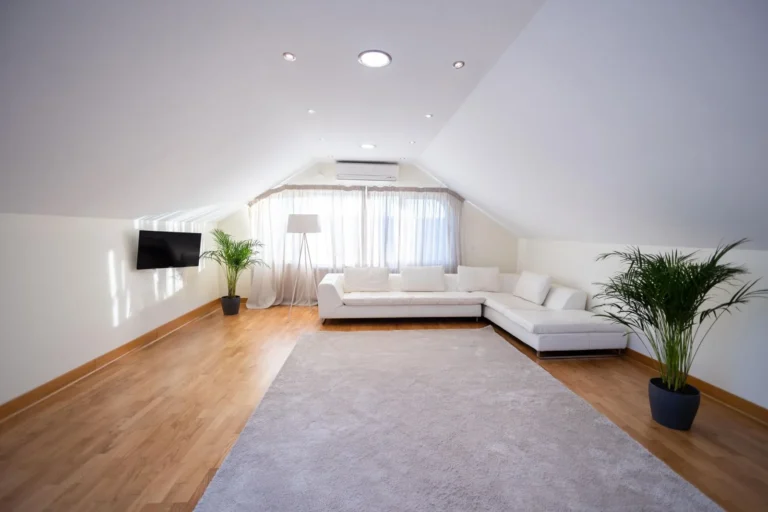
Photo by Ogy Kovachev via Pexels
Attic Insulation Costs by Type
Installed costs vary by region, access difficulty, and attic size, but these are realistic mid-2020s ranges for a typical 1,000-to-1,500-square-foot attic.
| Insulation Type | R-Value per Inch | Installed Cost (per sq ft) | Best Use Case |
|---|---|---|---|
| Fiberglass batts | R-2.9 to 3.8 | $0.65 to $1.20 | DIY-friendly standard attics |
| Blown-in cellulose | R-3.2 to 3.8 | $0.60 to $2.30 | Topping up existing insulation |
| Blown-in fiberglass | R-2.2 to 2.7 | $0.50 to $1.10 | Budget retrofit, irregular cavities |
| Mineral wool | R-3.0 to 3.3 | $1.40 to $2.10 | Fire resistance and sound control |
| Rigid foam board | R-3.6 to 6.5 | $0.50 to $1.25 | Roof deck and unvented assemblies |
| Closed-cell spray foam | R-6.5 to 7.0 | $1.00 to $2.00 / board ft | Maximum R-value plus air sealing |
As a rough planning number, a full attic insulation job runs between $1,500 and $3,500 for most homes, with a national average around $2,100 to $2,500. Spray foam is the outlier on the high end, often running $3,000 to $6,000 or more for the same attic because of the specialized equipment and labor it requires.
Choosing an Attic Insulation Type for Your Climate
Your climate should drive the decision more than the price tag alone.
In cold northern climates, target the highest total R-value your budget allows — R-49 to R-60 in the attic is the norm. Cellulose and blown-in fiberglass are cost-effective ways to hit that depth when you are topping up, while closed-cell spray foam is worth the premium if your attic also has air leaks or ice dams forming at the eaves.
In hot southern climates, the priority flips. You want enough insulation to block heat gain, but you also want to stop radiant heat, which is why many builders pair blown-in insulation with a radiant barrier under the rafters. R-30 to R-38 is usually sufficient.
In mixed or humid climates, moisture control matters as much as R-value. Closed-cell foam or mineral wool hold up better in damp conditions, and you need to pay close attention to attic ventilation to avoid trapping moisture against the roof sheathing.
Vented vs. Unvented Attics
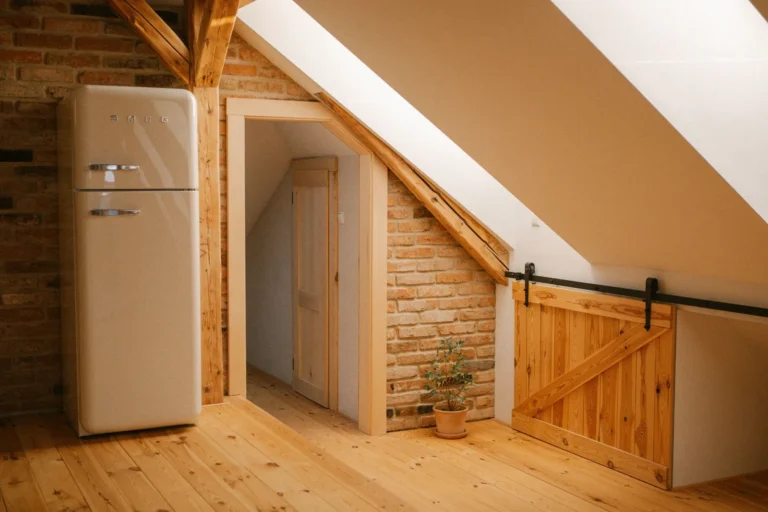
Most attics are vented, with insulation on the attic floor and airflow moving above it. If you are finishing the attic into living space, you move to an unvented assembly instead — spray foam or rigid board applied directly against the roof deck — which changes the material math completely. That finished-space conversion overlaps heavily with the work covered in our basement finishing cost guide if you are taking on the whole lower level at once.

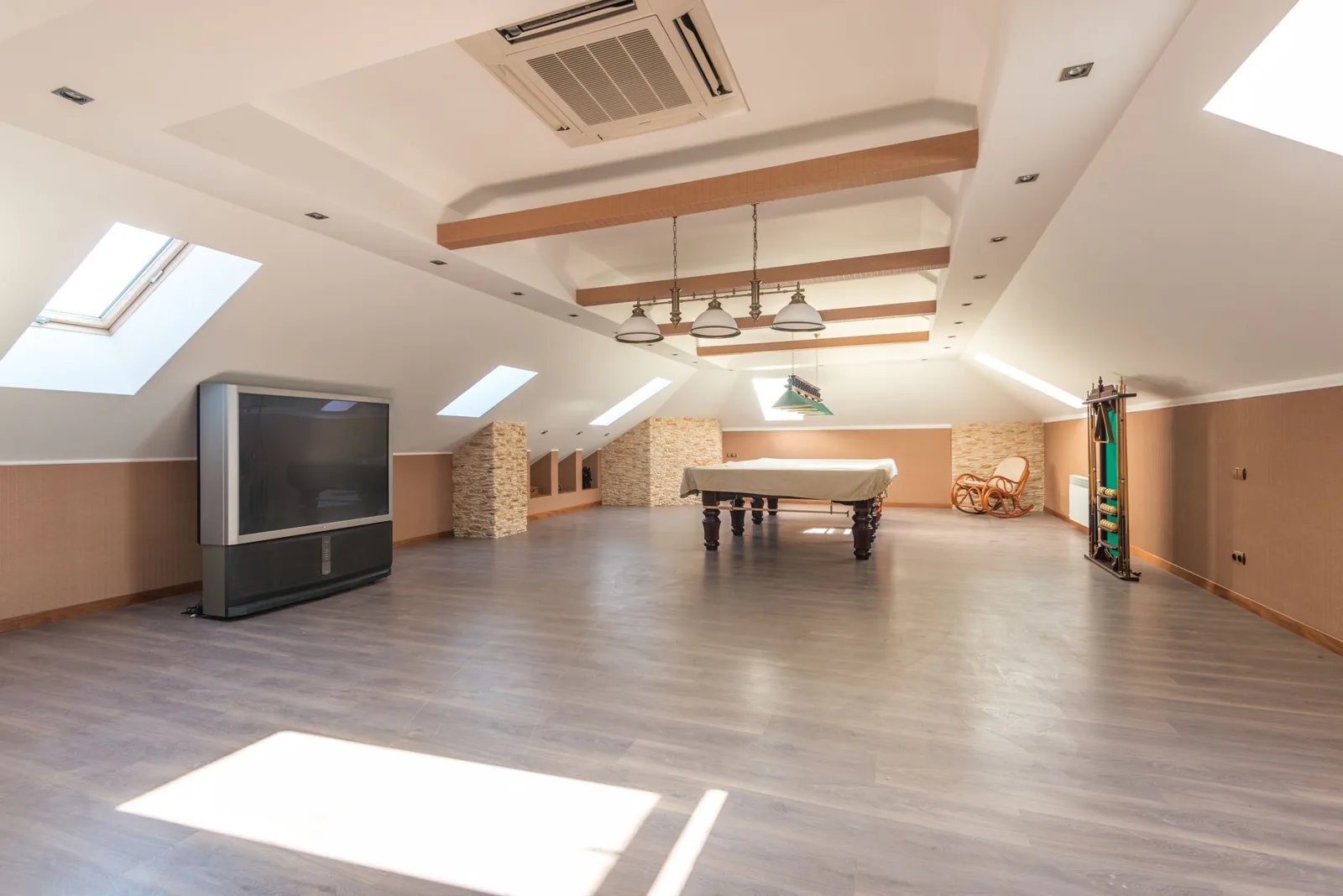
Photo by MART PRODUCTION via Pexels
DIY vs. Hiring a Pro — and the Mistakes That Undo Both
Batts and rolls are genuinely approachable DIY work for a weekend with a partner. Blown-in insulation usually means renting a blower (many home centers throw in the machine for free when you buy the bags), which is still doable for a determined homeowner.
Spray foam is a different story. It requires professional equipment, respirators, and a careful hand, and a botched DIY spray foam job is expensive to fix. Most pros recommend leaving it to a licensed installer.
Whichever route you take, four mistakes undermine more attics than anything else:
- Blocking the soffit vents. Piling insulation over the eaves chokes airflow and turns the attic into a moisture trap. Install baffles first.
- Compressing batts. Shoving a thick batt into a thin cavity cuts its R-value dramatically. Match the batt to the cavity depth.
- Ignoring air leaks. Insulation does not stop airflow. Air-seal the attic floor around plumbing penetrations, wires, and the hatch before you insulate.
- Forgetting the attic hatch. An uninsulated pull-down stair or access door lets conditioned air pour out year-round. Insulate and weatherstrip it.
Frequently Asked Questions
What is the best type of insulation for an attic?
For most climates, blown-in cellulose or blown-in fiberglass delivers the best balance of cost and performance, especially when topping up an existing attic. If your attic has air leaks or you want the highest R-value per inch, closed-cell spray foam is the best performer despite its higher price.
How much does it cost to insulate an attic?
A typical attic insulation project runs between $1,500 and $3,500, with most homeowners paying around $2,100 to $2,500. Spray foam runs higher, often $3,000 to $6,000, because of the specialized labor and equipment involved.
How many inches of attic insulation do I need?
It depends on your climate zone and the material. In cold northern climates you want R-49 to R-60, which works out to roughly 15 to 20 inches of loose-fill cellulose or 10 to 12 inches of closed-cell foam. In the South, R-30 to R-38 is typically sufficient.
Can I install attic insulation myself?
Yes, for batts, rolls, and blown-in fiberglass or cellulose. Those are the most common DIY insulation projects and require little more than basic tools and a rented blower. Spray foam should be left to professionals.
Does attic insulation really lower energy bills?
Yes. The DOE estimates that air-sealing and properly insulating an attic can cut heating and cooling costs by up to 15%, and many homeowners report monthly savings of 10% to 20% depending on how under-insulated the attic was to begin with.
The Bottom Line
There is no single best attic insulation type — there is only the right one for your climate, your attic’s condition, and your budget. If you want a low-cost, high-reward upgrade, blown-in cellulose or fiberglass is hard to beat for topping up an under-insulated attic. If you are chasing maximum performance or finishing the space into a room, closed-cell spray foam or mineral wool justify the higher spend.
Whatever you choose, do the unglamorous prep work first: air-seal the floor, clear the soffit vents, and insulate the hatch. Insulation performs only as well as the cavity it sits in. For the full picture on a related project, start with our basement remodeling cost guide or dig into basement waterproofing cost if moisture is a concern in the levels below. For more guidance from the source that sets the standards, the U.S. Department of Energy’s insulation recommendations are worth bookmarking, and This Old House has a solid visual walkthrough of each material.