Kitchen Island Cost: What You’ll Actually Pay in 2026
A kitchen island is the centerpiece of nearly every modern remodel — more prep space, extra storage, and the spot where everyone gathers during a party. Ask a dozen contractors what it costs, though, and you’ll get a dozen different numbers. That’s because kitchen island cost depends almost entirely on what you build, how big it is, and who installs it.
Most homeowners pay between $3,000 and $7,000 for a new island that includes cabinetry, a countertop, plumbing, and electrical work. At the low end, a rolling cart or stock prefab island runs a few hundred dollars. At the high end, a large custom island with a second sink, seating, stone waterfall edges, and a built-in beverage fridge can push past $15,000.
Here’s a detailed, no-guesswork breakdown of real prices by type, what drives the bill up or down, and where it’s actually worth spending your money.
Average Kitchen Island Cost
National data from remodeling contractors consistently puts a standard kitchen island — roughly 4 to 7 feet wide with base cabinets and a quartz or granite top — in the $3,000 to $7,000 range. The most recent figures from Angi and HomeAdvisor place the average right around $6,500 for a full mid-range install.
That average hides a lot of spread, though. A simple 3-by-5-foot island built from stock cabinets and a laminate top can be done for under $2,000. The same footprint in custom cabinetry with a waterfall quartz top, pop-up outlets, and a prep sink will land between $12,000 and $20,000.
The single biggest factor is whether you’re working with stock, semi-custom, or fully custom cabinetry, followed closely by the countertop material. We’ll walk through both below.
Kitchen Island Cost by Type
Not all islands are priced the same because they aren’t built the same way. Here’s how the three main tiers compare side by side.
| Feature | Prefab / Stock Island | Semi-Custom Island | Fully Custom Island |
|---|---|---|---|
| Typical price | $500–$2,500 | $3,000–$7,000 | $8,000–$20,000+ |
| Countertop | Laminate or butcher block | Quartz or granite | Marble, waterfall quartz, solid surface |
| Lead time | Days (in stock) | 2–6 weeks | 6–14 weeks |
| Best for | Renters, small kitchens, tight budgets | Most standard remodels | Large or high-end kitchens |
Prefab and stock islands are the budget route. You can buy a ready-made island base from Home Depot, Lowe’s, or IKEA, top it with a butcher-block slab, and be done the same weekend. Don’t expect real stone or plumbing at this price.
Semi-custom is where most financed remodels land. You get a base built to your exact footprint with off-the-shelf door styles, a quartz or granite top, and basic electrical. This is the sweet spot: it looks built-in without the full custom price.
Custom islands are designed and fabricated to order, usually with seating overhangs, a prep or bar sink, upgraded storage like trash pull-outs and microwave drawers, and high-end stonework. Expect to pay a premium for both materials and labor here.
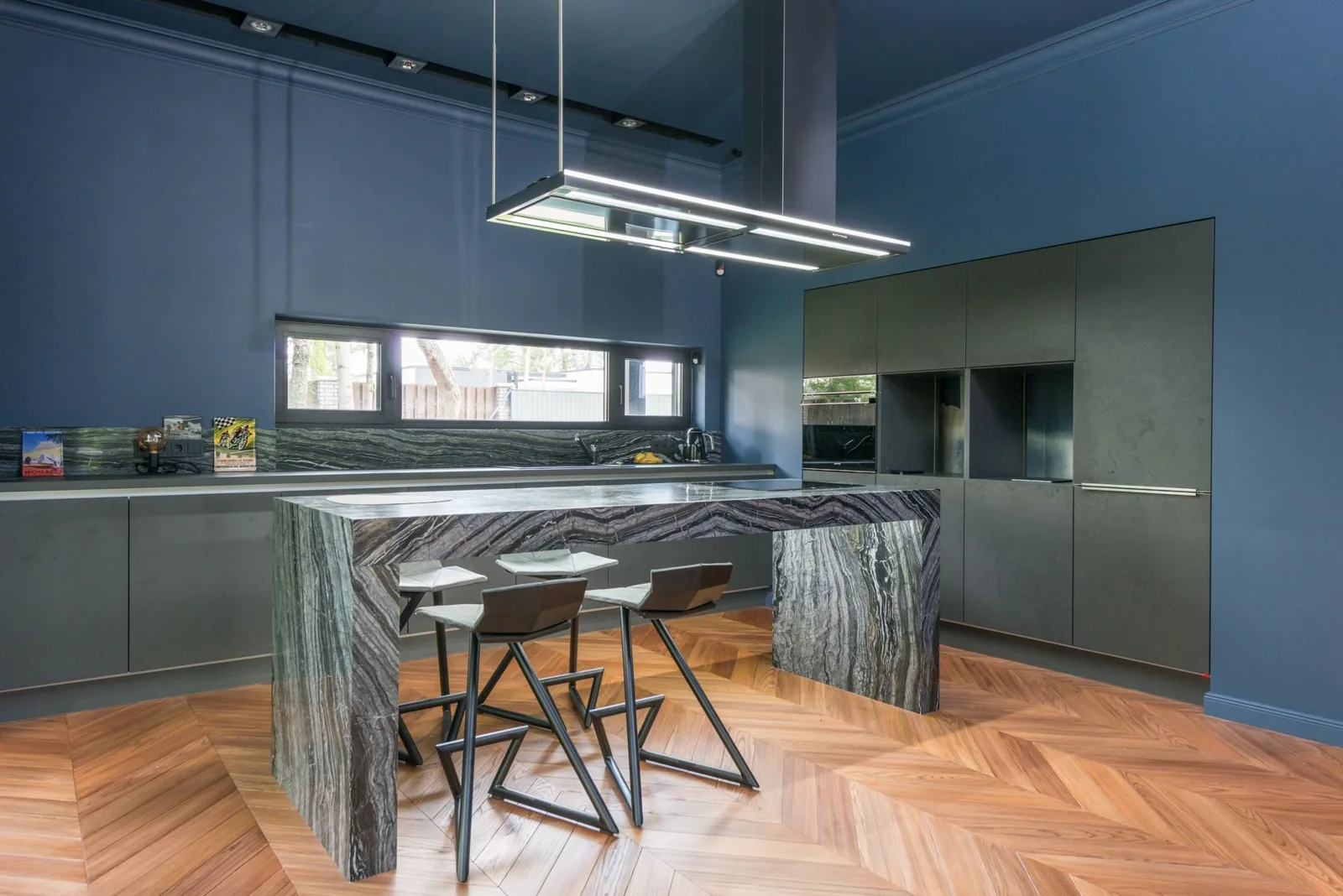
Photo by Max Vakhtbovych via Pexels
What Drives the Price Up or Down
If you’re getting wildly different quotes for what looks like the same island, these are the line items that move the number.
- Size and footprint. Islands are priced partly per linear foot. A 6-foot island costs more than a 4-foot one, and an L-shaped or extra-deep (5-foot) island costs more than a standard 39-inch-deep run.
- Countertop material. Laminate is the cheapest at $10–$30 per square foot. Butcher block runs $30–$60. Quartz and granite land at $50–$150, and marble or a waterfall edge pushes to $100–$250 per square foot.
- Plumbing. Adding a sink to an island means running water supply and drain lines through the floor — usually $500 to $1,500 on top of the base price, more if you have a slab foundation.
- Electrical. A standard 120V outlet is $200 to $400. Pop-up outlets built into the countertop run $400 to $800 each. A 240V line for a range or induction cooktop can add $1,000 to $2,500.
- Seating. An overhang for stools needs structural support (or it sags). A 10- to 12-inch overhang is cheap; a full 18-inch supported overhang for a raised bar adds several hundred dollars.
- Appliances. A built-in microwave drawer, beverage fridge, or dishwasher bay each add $500 to $2,000 plus cabinetry and wiring.
- Finishes and hardware. Soft-close drawers, dovetail joinery, custom paint colors, and upgraded pulls quietly add 10 to 20 percent to the cabinet portion of the job.
DIY vs. Hiring a Contractor
A lot of homeowners wonder whether they can knock this out themselves. The honest answer: it depends on which of the three tiers you’re building.
A prefab or rolling island is genuinely DIY-friendly. IKEA and Wayfair sell ready-to-assemble units for $300 to $1,500 that bolt together in an afternoon. If your island doesn’t need plumbing or wiring, a competent DIYer can save every dollar of labor.
A semi-custom island is a mixed bag. Installing stock base cabinets and clamping down a butcher-block top is doable for a patient weekend warrior. But cutting quartz or granite is not — countertop fabrication stays with the pros, and they typically charge $40 to $100 per square foot including install. If you want a sink or electrical in the island, codes in most US municipalities require a licensed plumber and electrician to pull permits and pass inspection.
Fully custom islands should almost always be contractor-built. You’re paying for precise scribing to your floors, load-bearing design under stone, and clean integration of plumbing, electrical, and ventilation (if it houses a cooktop). A permit is usually required whenever you add electrical or water, and skipping it can bite you at resale or on a home-insurance claim.
Expect labor to be roughly 20 to 40 percent of a professionally installed island. On a $7,000 project, that’s $1,400 to $2,800 in labor alone — the part DIY savings target directly.
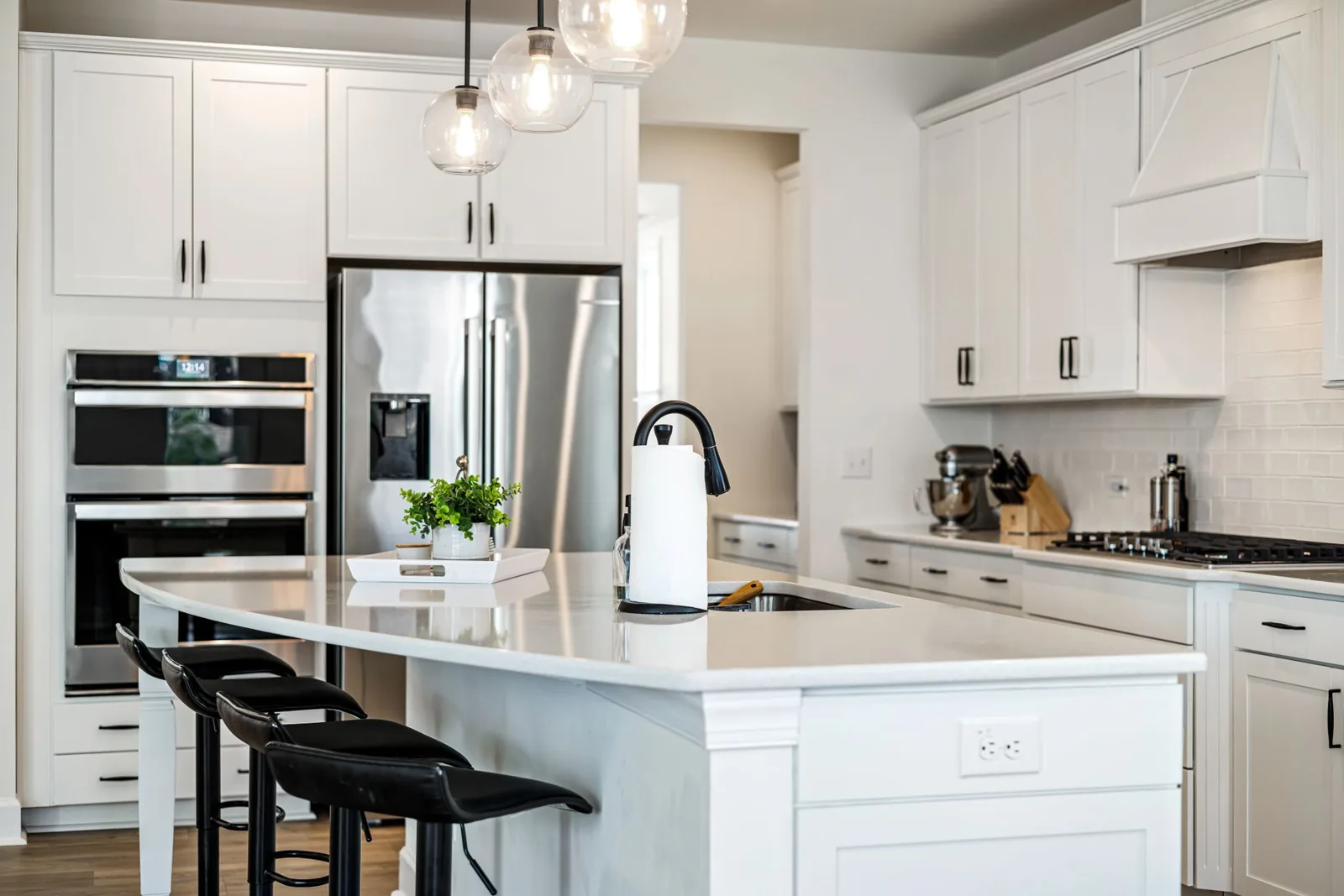
Photo by Curtis Adams via Pexels
Kitchen Island Cost vs. the Rest of Your Remodel
Islands are one of the pricier line items in a kitchen, but they’re rarely the whole budget. Context helps when you’re deciding how much to spend.
A full kitchen remodel typically runs $14,000 to $40,000, so an island at $3,000 to $7,000 is usually 15 to 25 percent of the total. If you’re working from a tight per-square-foot budget, remember an island eats floor space as well as dollars — make sure you’re not paying for a footprint that chokes the walkway. And if you’re trying to get the look on a small budget, kitchen remodel ideas on a budget covers lower-cost alternatives that free up money for the island itself.
One good rule: spend on the island what you’ll actually use. If it’s mostly a landing spot for mail, a $1,500 stock unit does the job. If you cook every day and host often, the prep sink and seating are likely worth the upgrade.
How to Lower Your Kitchen Island Cost
You don’t have to accept the top of any quote. These adjustments reliably cut hundreds — sometimes thousands — from the final bill.
- Go semi-custom, skip full custom. You get a built-in look for roughly half the price by using stock door styles over a custom-sized base.
- Choose quartz over marble. Quartz delivers the stone look at $50–$100 per square foot and doesn’t need the sealing that makes marble a maintenance cost, not just an install cost.
- Skip the sink. Moving plumbing is a four-figure add. A waterless island still doubles your prep surface.
- Use a standard-depth overhang. A modest 10- to 12-inch overhang with a couple of corbels is far cheaper than engineering an unsupported 18-inch ledge.
- Buy the base, hire only for the top. Assemble stock cabinets yourself, then pay a fabricator solely to measure, cut, and install the stone. You keep the savings without gambling on a bad countertop.
- Time your purchase. Cabinet and stone shops run promotions in January and late summer; appliance brands discount heavily around holiday weekends.
Frequently Asked Questions
How much does a kitchen island cost on average?
Most homeowners spend $3,000 to $7,000 for a mid-range island with cabinetry, a quartz or granite top, and basic electrical. Simple prefab units run under $1,000, while custom islands commonly top $15,000.
Is a kitchen island worth the cost?
Usually yes. Remodeling surveys consistently rank kitchen remodels among the best returns on investment, and an island is the single most desired feature for buyers. For daily use — prep space, storage, and seating — most owners report it’s the upgrade they use most.
Can I add an island to an existing kitchen cheaply?
Yes, if you keep it simple. A stock or IKEA base with a butcher-block top and no plumbing or electrical can be added for $1,000 to $2,500, including the cost of reworking a small section of flooring if needed.
How much does it cost to add water and electricity to an island?
Budget $500 to $1,500 for plumbing (supply and drain through the floor) and $200 to $800 per outlet. A 240V line for a cooktop or range adds $1,000 to $2,500. These jobs almost always require permits and licensed tradespeople.
Does a kitchen island add resale value?
It adds desirability more than a precise dollar figure. Buyers in most markets filter for an island, so while it may not return dollar-for-dollar like some upgrades, it shortens time on market and strengthens your negotiating position, especially in mid- and high-price homes.
The Bottom Line
Kitchen island cost comes down to a simple decision: stock, semi-custom, or custom. If you want a functional prep and gathering surface without a second mortgage, a semi-custom island in the $3,000 to $7,000 range is the practical choice for most homes. Skip the plumbing, choose quartz, and buy the base yourself, and that number trends toward the low end.
Whatever you spend, put it toward the features you’ll use every day — a large single-level worktop, comfortable seating, and storage you can reach. An island that fits how you actually cook is money well spent; an island bought to impress is where budgets quietly balloon.
For a full breakdown of what a complete project costs, start with our kitchen remodel cost guide, then sharpen your numbers with kitchen remodel cost per square foot. According to This Old House, the island’s size and storage configuration are the two biggest drivers of its price, and Angi’s cost guide is one of the most current sources for regional labor rates.