How Much Does It Cost to Finish a Basement? A Realistic 2025 Price Guide
If you have an unfinished basement, it is probably the single most untapped square footage in your home. The question most homeowners start with is straightforward: how much does it cost to finish a basement? The honest answer is that it depends on size, finish level, and where you live, but you can expect a typical range of $7,000 to $23,000 for a basic-to-mid-grade finish, with the national average landing around $18,000 to $20,000 for a standard, code-compliant job.
That number can climb fast once you add a bathroom, a wet bar, egress windows, or high-end finishes, and it can fall just as quickly if you do part of the work yourself. This guide breaks down the real numbers so you can budget with confidence instead of guessing.
What Drives the Cost of Finishing a Basement
No two basements cost the same amount to finish. The biggest variables are square footage, the level of finish you want, labor rates in your area, and how much of the mechanical, plumbing, and electrical work your existing space already has. Understanding these levers is the fastest way to control your final bill.
Square Footage Is the Biggest Lever
Most contractors price basement finishing by the square foot, so the size of your floor plan is the headline number. A compact 500-square-foot basement costs far less in absolute dollars than a sprawling 1,500-square-foot space, even though the per-square-foot rate is similar.
As a general rule, expect to pay $7 to $23 per square foot for a basic finish, $30 to $75 per square foot for a full finish with a bathroom and quality materials, and $75 to $100+ per square foot for a high-end build-out. A 1,000-square-foot basement at a mid-range $45 per square foot lands right around $45,000. For a closer look at the math, see our breakdown of basement finishing cost per square foot.
Finish Level: Basic vs. Full vs. High-End
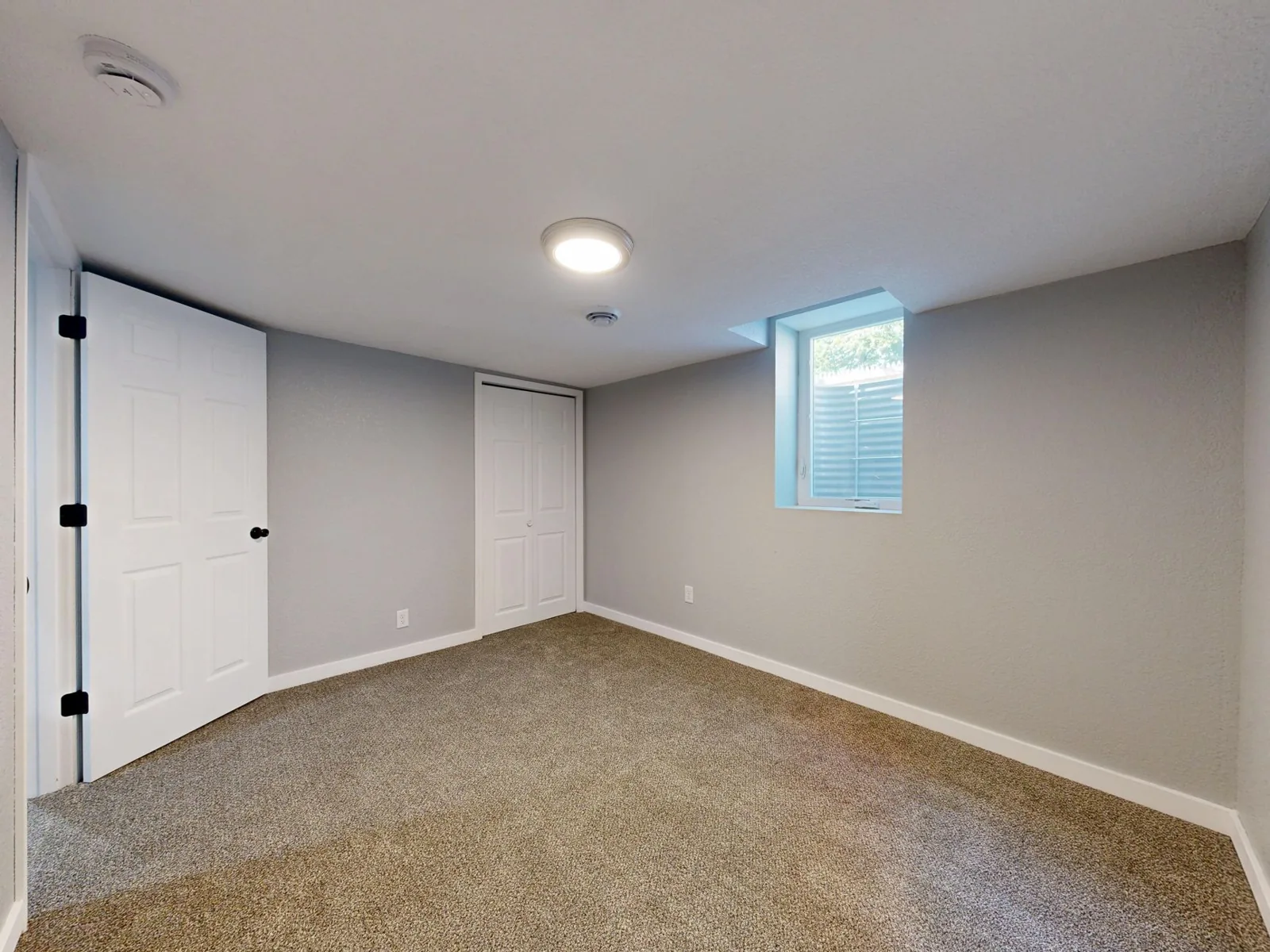
The three-tier model is the cleanest way to think about your options. A basic finish means drywall, flooring, paint, and basic electrical — enough to make the space livable as a rec room or home gym. A full finish adds a bathroom, upgraded flooring, better lighting, and often a wet bar or kitchenette. A high-end finish includes custom cabinetry, a full second kitchen, premium flooring, and theater-quality finishes.
| Feature | Basic Finish | Full Finish | High-End Finish |
|---|---|---|---|
| Cost per sq ft | $7–$23 | $30–$75 | $75–$100+ |
| Bathroom | No | Yes (one) | Yes (one or two) |
| Flooring | Vinyl or carpet | LVP or engineered wood | Hardwood or tile |
| Lighting | Standard fixtures | Recessed + dimmers | Custom + accent |
| Extras | None | Wet bar or kitchenette | Second kitchen, theater |
| Typical 1,000 sq ft | $12,000–$25,000 | $30,000–$50,000 | $75,000–$100,000+ |
Cost Breakdown by Component
It helps to see where the money actually goes. A finished basement is really a dozen smaller jobs stacked together, and each one has its own price tag.
Framing and Drywall
Framing out interior walls and hanging drywall typically runs $1.50 to $3.50 per square foot of wall space. For an average basement, budget $3,000 to $7,000 for framing, drywall, taping, and mudding. Metal or wood studs are fine below grade, but many pros recommend moisture-resistant drywall in basements to head off mold problems down the road.
Electrical, Plumbing, and HVAC
Electrical work — new outlets, switches, recessed lighting, and a subpanel if needed — usually costs $1,500 to $4,000. If you are adding a bathroom, plumbing is the single most expensive line item, often $8,000 to $20,000, because it may require breaking into the concrete slab to tie into the drain line. Extending your HVAC into the basement adds another $1,500 to $3,500, depending on whether you add a mini-split or full ducting.
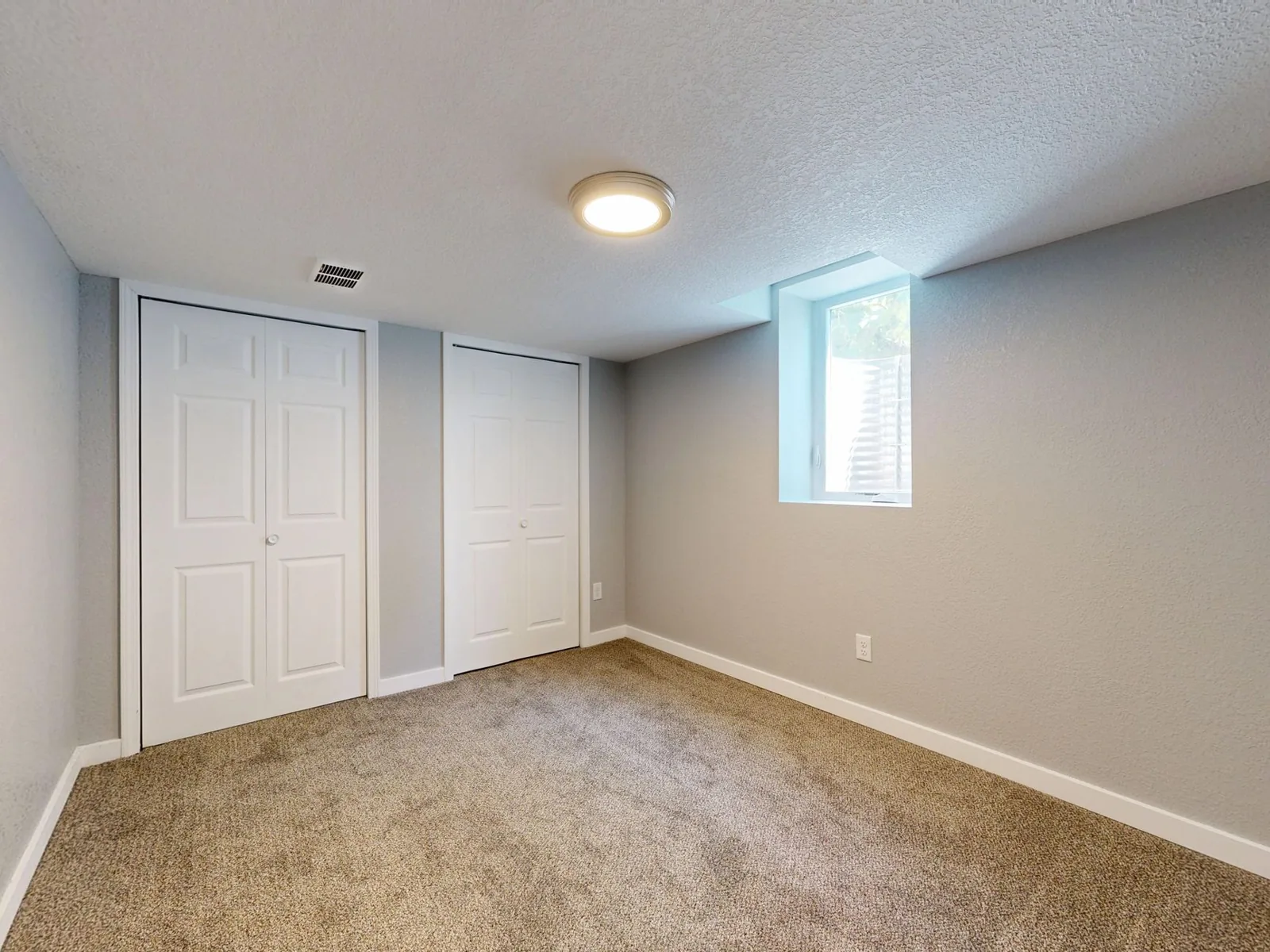
Photo by Peter Vang via Pexels
Flooring and Paint
Flooring is one of the easier places to save. Luxury vinyl plank (LVP) is the current favorite for basements because it is water-resistant and installs for $2 to $7 per square foot. Carpet is cheaper up front but riskier below grade. Engineered hardwood starts around $6 to $12 per square foot. Paint averages $1,000 to $2,500 for a full basement, more if there is significant prep work.
Ceilings and Lighting
A standard drop ceiling costs $2 to $4 per square foot, while a drywall ceiling runs $1.50 to $3 per square foot but makes future access to pipes and wiring harder. Recessed can lights average $100 to $200 per fixture installed, and most basements need 8 to 12 of them to feel bright rather than cave-like.
When a Basement Costs More: Bathrooms, Kitchens, and Egress
The three upgrades that push a basement finish from “affordable” to “significant investment” are a bathroom, a wet bar or kitchen, and an egress window. Each one has a specific reason for its cost.
A bathroom is expensive because of the slab work. Drains sit below the concrete floor, so adding a toilet, shower, and sink often means jackhammering, repitching drain lines, and re-pouring concrete. A kitchenette or wet bar is cheaper than a full kitchen but still adds $5,000 to $15,000 for plumbing, cabinetry, counters, and a small refrigerator. An egress window is a building-code requirement if you want the basement to count as a legal bedroom, and it runs $2,500 to $5,000 for the window, excavation, and window well. Before you take on any of this, it is worth reviewing the broader basement remodeling cost picture so the upgrades do not blindside your budget.
Waterproofing First: The Most Common Expensive Mistake
The single most overlooked line item in a basement finish is waterproofing. Framing, drywall, and flooring installed over a damp foundation will fail — often within a few years — and the repair bill will dwarf whatever you saved by skipping it.
Before any finish work starts, inspect for cracks, efflorescence, musty smells, and water staining. Fixing drainage or sealing a leaking foundation costs $2,000 to $7,000 on average, and installing a full interior drain system with a sump pump can run $5,000 to $15,000. That sounds like a lot, but it is cheap insurance compared to ripping out finished drywall and flooring after a flood. Learn what to expect in our guide to basement waterproofing cost.
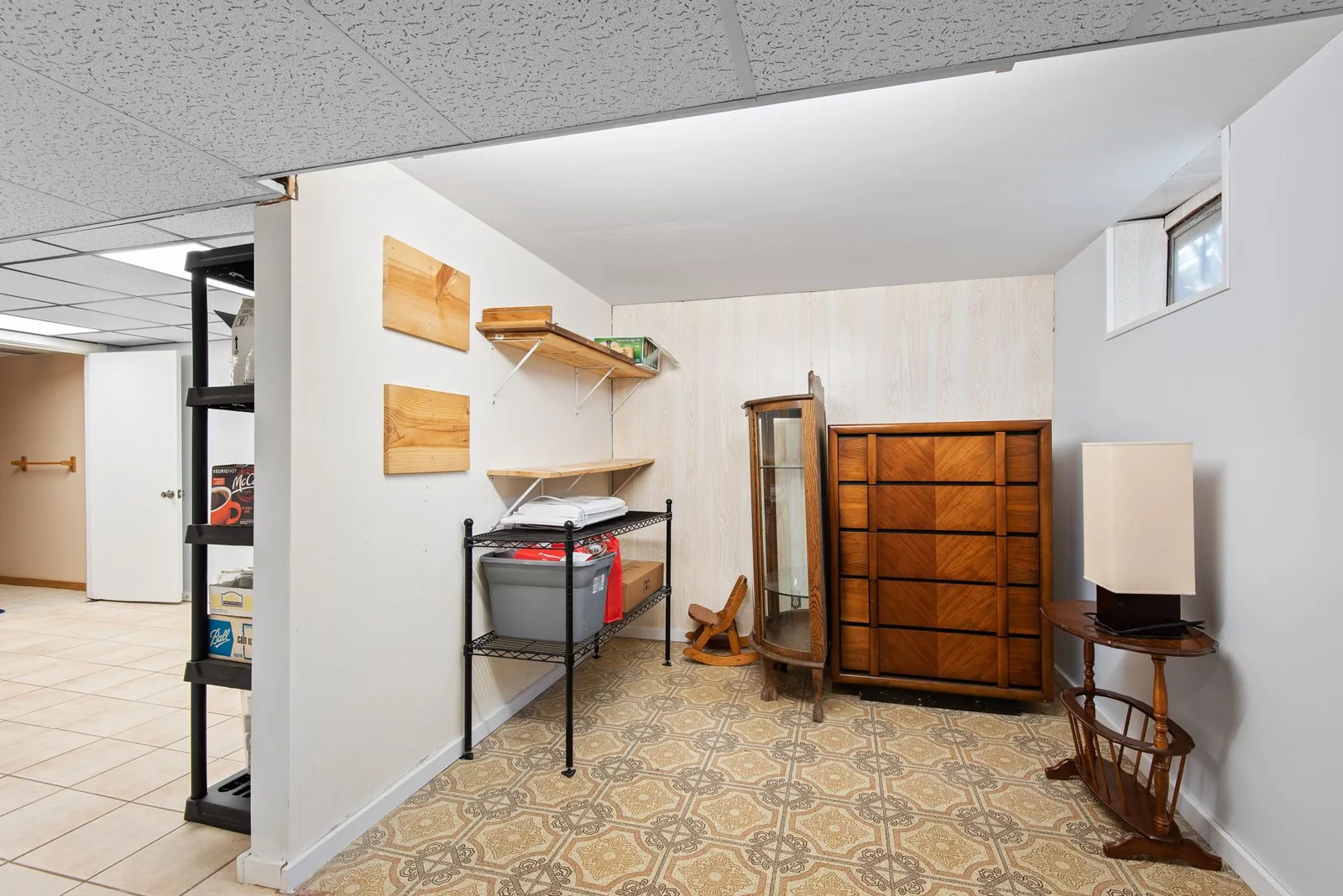
Photo by Do Huy Hoang via Pexels
DIY vs. Hiring a Contractor
This is the single biggest decision in your budget, worth more than any individual material choice.
Doing it yourself can cut the labor portion of the bill — often 50 to 60 percent of the total — but it trades money for time and skill. Knocking out non-structural work like painting, trim, and even LVP flooring is realistic for a competent DIYer. Framing, electrical, plumbing, and anything that touches the foundation or structure is best left to licensed pros, both for safety and to pass inspection. A homeowner who handles paint, flooring, and trim on a 1,000-square-foot basic finish might complete it for $12,000 to $18,000 in materials instead of $35,000 all-in.
Hiring a general contractor costs more but brings permits, scheduling, licensed subs, and a warranty. Expect $30 to $75 per square foot for a full finish with a bathroom. The tradeoff is risk management: a good GC catches waterproofing and code issues before they become your problem.
How to Keep the Price Down
A few decisions have outsized influence on the final number, and most do not sacrifice livability.
- Keep the layout open. Fewer walls mean less framing, fewer outlets, and lower material cost.
- Skip the bathroom if you can. A half-bath adds $8,000+ in plumbing alone. A powder room on the main floor may already serve your guests.
- Choose LVP over hardwood or tile. It is cheaper to buy and install, and it handles moisture far better.
- Rough-in plumbing now, finish later. Running the drain lines during construction costs a fraction of retrofitting after the slab is poured.
- Reuse existing mechanical placement. Keep the furnace, water heater, and panel where they are instead of paying to relocate them.
For ideas on what to do once the space is finished — and how the design choices affect cost — browse finished basement ideas before you commit to a plan.
Frequently Asked Questions
How much does it cost to finish a 1,000-square-foot basement?
A basic finish typically runs $12,000 to $25,000, a full finish with a bathroom $30,000 to $50,000, and a high-end build-out $75,000 or more. The spread comes down to finish level, your local labor market, and whether you add plumbing.
What is the most expensive part of finishing a basement?
Adding a bathroom is almost always the costliest single item, usually $8,000 to $20,000, because it requires cutting into the concrete floor to connect drains. After that, HVAC extension and custom cabinetry tend to be the biggest line items.
Does finishing a basement add value to a home?
Yes. According to This Old House, a finished basement typically returns 70 to 75 percent of its cost at resale, and it converts dead storage space into usable square footage that buyers actively look for.
How long does it take to finish a basement?
A basic finish usually takes 3 to 6 weeks with a contractor. Adding a bathroom, egress windows, or significant waterproofing can stretch the timeline to 8 to 12 weeks. DIY projects routinely run several months when done on weekends.
Do I need a permit to finish a basement?
In most jurisdictions, yes. Any structural, electrical, or plumbing work requires permits and inspections. Skipping them can void your insurance, stall a future sale, and create safety hazards. Angi recommends pulling permits for basement finishes precisely to keep the work insurable and resale-ready.
The Bottom Line
So, how much does it cost to finish a basement? For most homeowners, plan on $7,000 to $23,000 for a basic finish and $30,000 to $75,000 for a full finish with a bathroom, with square footage and local labor setting the pace. The two moves that keep you out of trouble are doing waterproofing first and resisting the urge to overbuild.
Get at least three written quotes, confirm each one includes permits, framing, insulation, and moisture protection, and remember that a well-finished basement is one of the highest-return projects you can take on — paying you back in both daily living space and resale value.