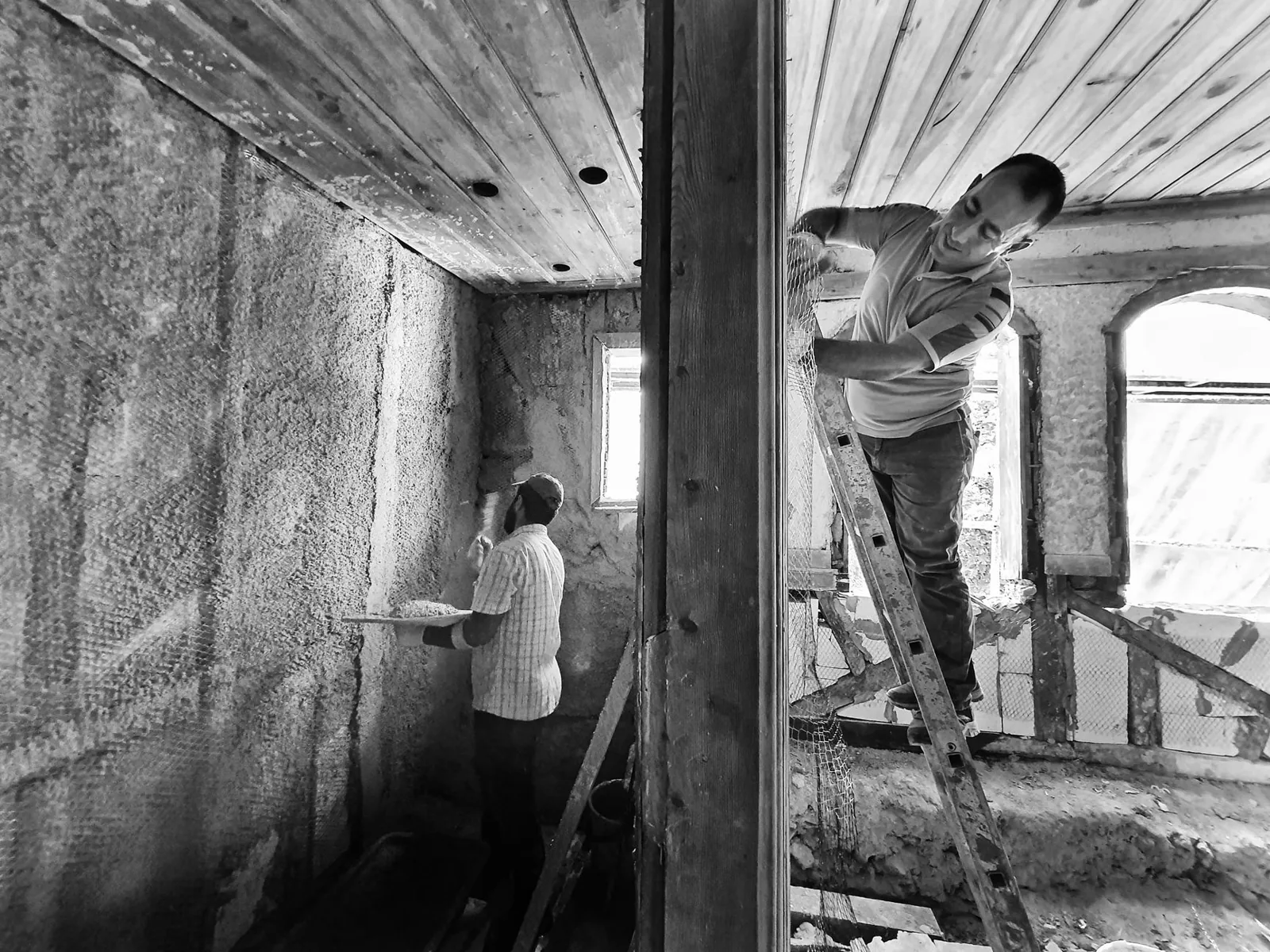
Fiberglass vs Spray Foam Insulation: Costs, R-Value, and Which to Choose
If you’re insulating an attic, a basement, or an open wall cavity, the first question is almost always the same: fiberglass vs spray foam insulation — which one actually pays off? The two materials work in fundamentally different ways, and they cost very different amounts. Choosing wrong means paying more than you should, or living with drafts and high heating bills for years.
Fiberglass is the default in most homes because it’s cheap and familiar. Spray foam costs two to three times as much, but it does more than fill a cavity — it seals it. The right answer depends on where you’re insulating, how much air leaks into the space, and how long you plan to stay in the house.
This guide breaks down the real numbers: R-value per inch, cost per square foot, installation difficulty, and the specific situations where each material earns its price. No vague “it depends” — just the figures and trade-offs a contractor would walk you through.
What Is Fiberglass Insulation?
Fiberglass is made from fine strands of molten glass spun into a wool-like mat that traps air. It comes in two common forms: batts (pre-cut rolls with or without a kraft-paper vapor barrier, sold by Owens Corning, CertainTeed, and Johns Manville) and loose-fill (blown-in fibers shot into attics with a blower machine).
The material itself is inexpensive and does a reliable job of slowing heat transfer — but only when the air around it stays still. Fiberglass is a thermal insulator, not an air barrier. If a draft moves through the wall or attic, it carries heat right past the fibers and cuts the insulation’s real-world performance dramatically.
Typical R-value: R-2.2 to R-2.7 per inch for standard batts, and R-3.0 to R-3.7 per inch for higher-density batt products. A 2×4 wall stuffed with R-13 batts delivers about R-13 in the lab, but can drop well below that in a leaky, wind-exposed wall.
What Is Spray Foam Insulation?
Spray foam is a two-part liquid — a polyol resin and an isocyanate — mixed on site and sprayed as a liquid that expands into a dense foam within seconds. It comes in two varieties with very different characteristics:
- Open-cell foam is soft and spongy. It expands to roughly R-3.5 to R-3.7 per inch, absorbs sound well, and allows water vapor to pass through.
- Closed-cell foam is rigid and dense, at R-6.0 to R-7.0 per inch. It acts as both an air barrier and (above roughly 1.5 inches) a vapor barrier, and it adds structural rigidity to walls and roofs.
The defining feature of both is that spray foam adheres to the surfaces it touches, filling gaps, cracks, and odd-shaped cavities completely. It insulates and air-seals in one step, which is the main reason contractors recommend it in spaces where fiberglass struggles.
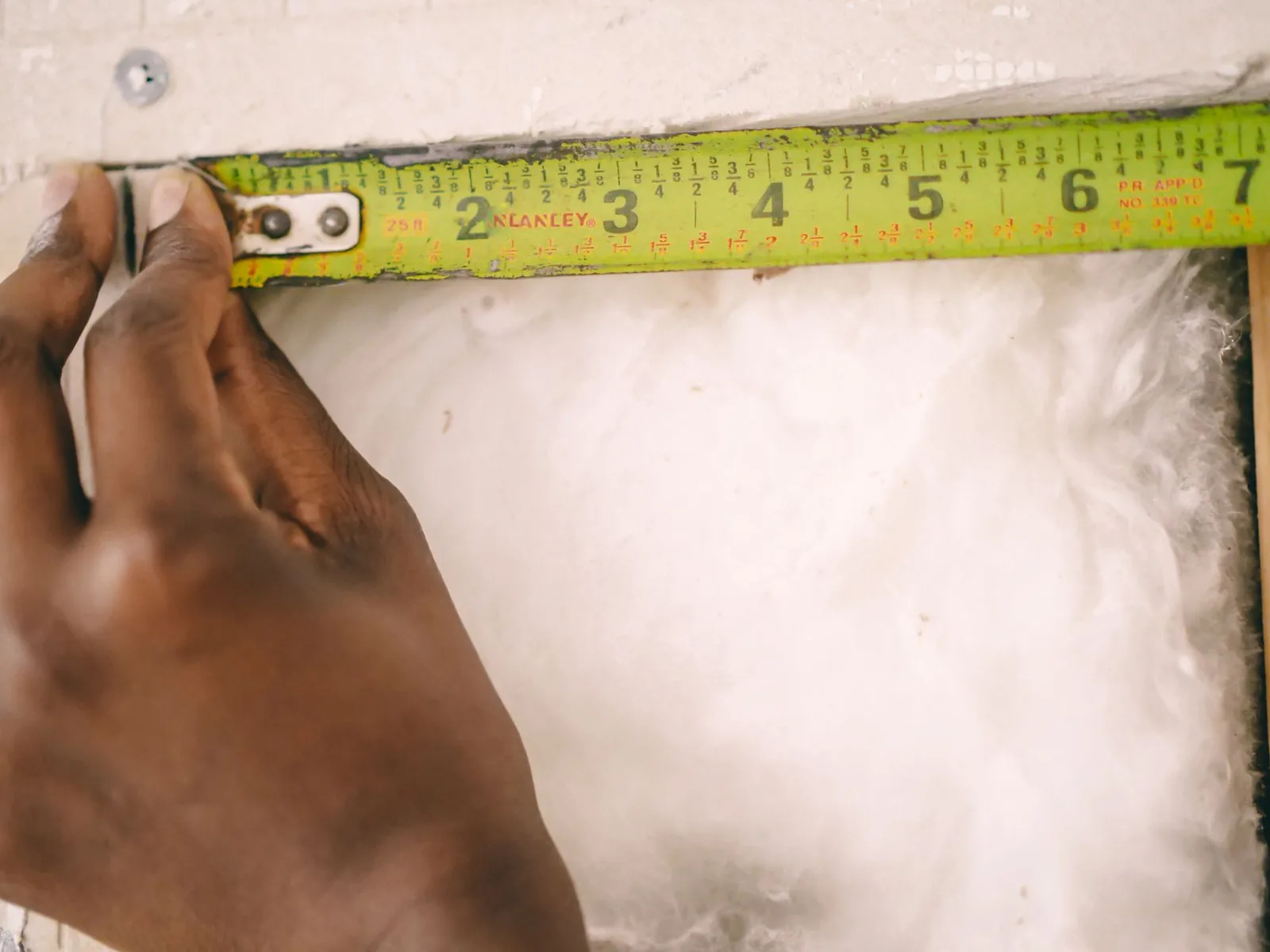
Photo by Kindel Media via Pexels
Fiberglass vs Spray Foam Insulation: R-Value, Cost, and Air Sealing
This is where the two materials diverge in ways that matter to your wallet and your comfort.
| Feature | Fiberglass (Batts) | Spray Foam (Closed-Cell) |
|---|---|---|
| R-value per inch | R-2.2 to R-3.7 | R-6.0 to R-7.0 |
| Installed cost per sq ft | $0.30 to $1.50 (materials) | $2.00 to $4.50 |
| Air sealing | None on its own | Excellent |
| Moisture/vapor barrier | Kraft facing only | Yes (closed-cell) |
| DIY-friendly | Yes | No (pro only) |
| Sound dampening | Moderate | Good (open-cell) |
The headline difference is air sealing. A batt that tests at R-13 in a sealed lab chamber can perform at R-9 or less in a real wall with gaps, electrical boxes, and plumbing penetrations. Spray foam eliminates those leakage paths because it forms a continuous seal.
The trade-off is cost. Closed-cell spray foam at $2.00 to $4.50 per square foot is often three to five times the material cost of fiberglass batts. For a 1,000-square-foot attic, that’s the difference between roughly $500 and $3,000 or more — before labor.
How Much Each One Costs Per Square Foot
Here are the working numbers a contractor or DIYer should budget with:
Fiberglass:
– Batts (materials only): $0.30 to $0.80 per sq ft
– Batts (professionally installed): $1.00 to $2.50 per sq ft
– Blown-in attic insulation (installed): $1.00 to $2.80 per sq ft, depending on depth
Spray foam:
– Open-cell (materials): $0.44 to $0.65 per board foot
– Open-cell (installed): $1.00 to $2.50 per sq ft
– Closed-cell (installed): $2.00 to $4.50 per sq ft
A board foot is one square foot at one inch thick, which is why depth matters so much. Sealing a 2×4 wall with closed-cell foam to full depth can run $3.50 to $4.00 per square foot. That’s a premium product, and it’s priced like one.
If you’re working through the full budget for a space that needs finishing after the insulation goes in, our basement finishing cost breakdown and basement finishing cost per square foot guide line up the numbers for the whole project, not just the insulation line item.

Photo by Aleksandr Novikov-Andrienko via Pexels
Where Each Insulation Works Best
Neither material wins everywhere. The choice depends on the space.
Fiberglass makes sense when:
– You’re insulating a vented attic, where loose-fill fiberglass is the standard, affordable choice.
– The cavity is open, square, and easy to reach, with minimal plumbing and wiring.
– Budget is the controlling factor and you’re doing the work yourself.
– You’re adding a top-up layer over existing insulation rather than starting from scratch.
Spray foam earns its price when:
– You’re sealing a rim joist or band joist — the single leakiest spot in most basements.
– The cavity is irregular, or full of pipes, ducts, and electrical runs.
– You’re insulating a cathedral ceiling or a finished basement wall where condensation and air movement are real risks.
– You need moisture control in a below-grade space, where closed-cell foam doubles as a vapor barrier.
For below-grade walls in particular, the air-sealing and vapor-control advantage of closed-cell foam often justifies the higher price, especially in damp climates. If water intrusion is the underlying problem, though, insulation won’t fix it — start with a look at basement waterproofing cost before you spend on foam.
Installation and DIY Considerations
Fiberglass is a realistic DIY job. Batts cut with a utility knife, and blown-in fiberglass rents for free or cheap at most home centers when you buy the insulation there. The risks are real but manageable: wear long sleeves, gloves, a dust mask, and eye protection, because the fibers irritate skin and lungs. The most common DIY mistake is compressing batts into the cavity — compressed fiberglass loses R-value, so the batt should sit at its full loft.
Spray foam is not a DIY product. The two-part kits sold at home centers (Froth-Pak, Touch ‘n Seal) can handle small jobs like a rim joist, but they’re finicky: temperature-sensitive, easy to apply unevenly, and the chemicals are hazardous before they cure. For anything beyond a small patch, hire a licensed installer. Professional application also matters because a botched foam job can shrink, off-gas, or fail to cure, and it’s expensive to remove and redo.
Frequently Asked Questions
Is spray foam worth the extra cost over fiberglass?
In leaky, irregular, or below-grade spaces, usually yes — the air-sealing and vapor-control benefits recover the premium through lower energy bills and fewer moisture problems. In a simple vented attic, fiberglass typically gives you better value per dollar.
What R-value should I aim for?
The U.S. Department of Energy recommends R-30 to R-60 for attics (depending on climate zone) and R-13 to R-21 for walls. You can hit most of those targets with either material; the difference is how well the installed product holds its rated value in the real world.
Can I put spray foam over existing fiberglass?
Not directly on top. You’d remove the fiberglass first or spray foam against the sheathing and then reinstall the fiberglass. Layering them without a plan can trap moisture. Check attic insulation types for how different materials combine.
Does fiberglass insulation cause mold?
Fiberglass itself doesn’t feed mold, but it absorbs water and can stay damp if the space leaks or condenses. The kraft facing and trapped dust can support mold growth. Spray foam, especially closed-cell, is far more resistant to moisture.
How long does each material last?
Fiberglass batts last for decades if they stay dry and uncompressed, though they settle slightly and lose some effectiveness if disturbed. Closed-cell spray foam can outlast the house, holding its R-value indefinitely when correctly installed.
For R-value and air-sealing specifics, the U.S. Department of Energy covers insulation types.
The Bottom Line
Fiberglass vs spray foam insulation isn’t a contest with one winner — it’s a matching problem. Fiberglass wins on price and DIY accessibility; spray foam wins on air sealing, R-value per inch, and moisture control.
Here’s the short version. Insulating a standard vented attic on a budget? Blow in fiberglass. Sealing a rim joist, a finished basement wall, or a cathedral ceiling where air leaks and condensation are the enemy? Pay for closed-cell foam. For most mixed projects, contractors use both: fiberglass where the cavity is simple and dry, foam where it’s leaky and awkward.
Either way, the biggest energy gains come from sealing air leaks first and insulating second. Get that order right, and the material choice starts to take care of itself.