Granite vs Quartz Countertops: Cost, Durability, and Which Is Right for You
The granite vs quartz countertops debate is the one almost every homeowner runs into during a kitchen remodel, and for good reason: both look premium, both hold up to daily abuse, and both come in at roughly the same price band. The two surfaces are not interchangeable, though. Granite is a natural stone slab pulled from a quarry; quartz is an engineered product made from crushed stone, resins, and pigments. That single distinction drives almost every difference in how they look, wear, and clean.
Choosing wrong is an expensive mistake to undo. Countertops typically eat up 10% to 15% of a mid-range kitchen remodel budget, and most of that is fabrication and installation labor you’ll never recover if you swap surfaces later. Before you sign a contract with a fabricator, it’s worth understanding exactly what you’re buying. Here’s a straight comparison of granite and quartz across cost, durability, care, and resale value.
Granite vs Quartz Countertops: The Key Differences at a Glance
The short version: granite is 100% natural stone, while quartz is about 90% to 93% ground natural quartz (usually a byproduct of mining or crushed stone) bound together with 7% to 10% polyester or acrylic resin and pigments. That resin is why quartz can be made in near-uniform colors granite simply can’t produce — and why quartz never needs sealing.
| Feature | Granite | Quartz |
|---|---|---|
| What it is | Natural stone slab | Engineered stone (90%+ crushed quartz, ~7-10% resin) |
| Installed cost per sq ft | $40–$100 (slabs $50–$200) | $50–$150 |
| Sealing required | Yes, usually annually | No |
| Heat resistance | Excellent (tolerates hot pans) | Good (resin can scorch above ~300°F) |
| Stain resistance | Needs sealing to stay stain-proof | Very high, non-porous |
| Color range | Natural, one-of-a-kind veining | Consistent, wider color control |
| Resale appeal | Classic luxury signal | Modern, builder-friendly |
Neither surface is objectively “better” — it comes down to which trade-offs fit how you actually cook and live. The sections below break down each factor in real-world dollars and wear.
Cost: What You’ll Actually Pay
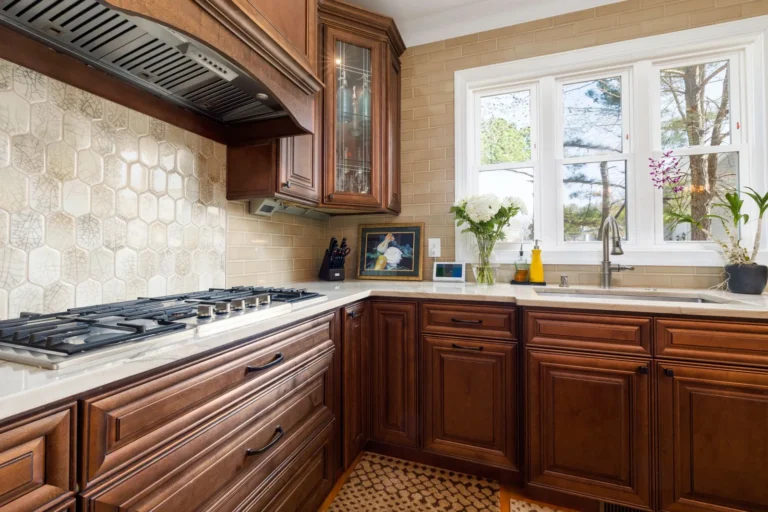
Installed countertops are priced per square foot, and labor is a huge share of the price. Granite runs roughly $40 to $100 per square foot installed, with exotic slabs (rare colors like Blue Louise or high-movement leathered finishes) pushing past $200 for the slab alone before fabrication. Quartz sits slightly higher on the low end, typically $50 to $150 installed per square foot for brands like Caesarstone, Cambria, Silestone, and MSI.
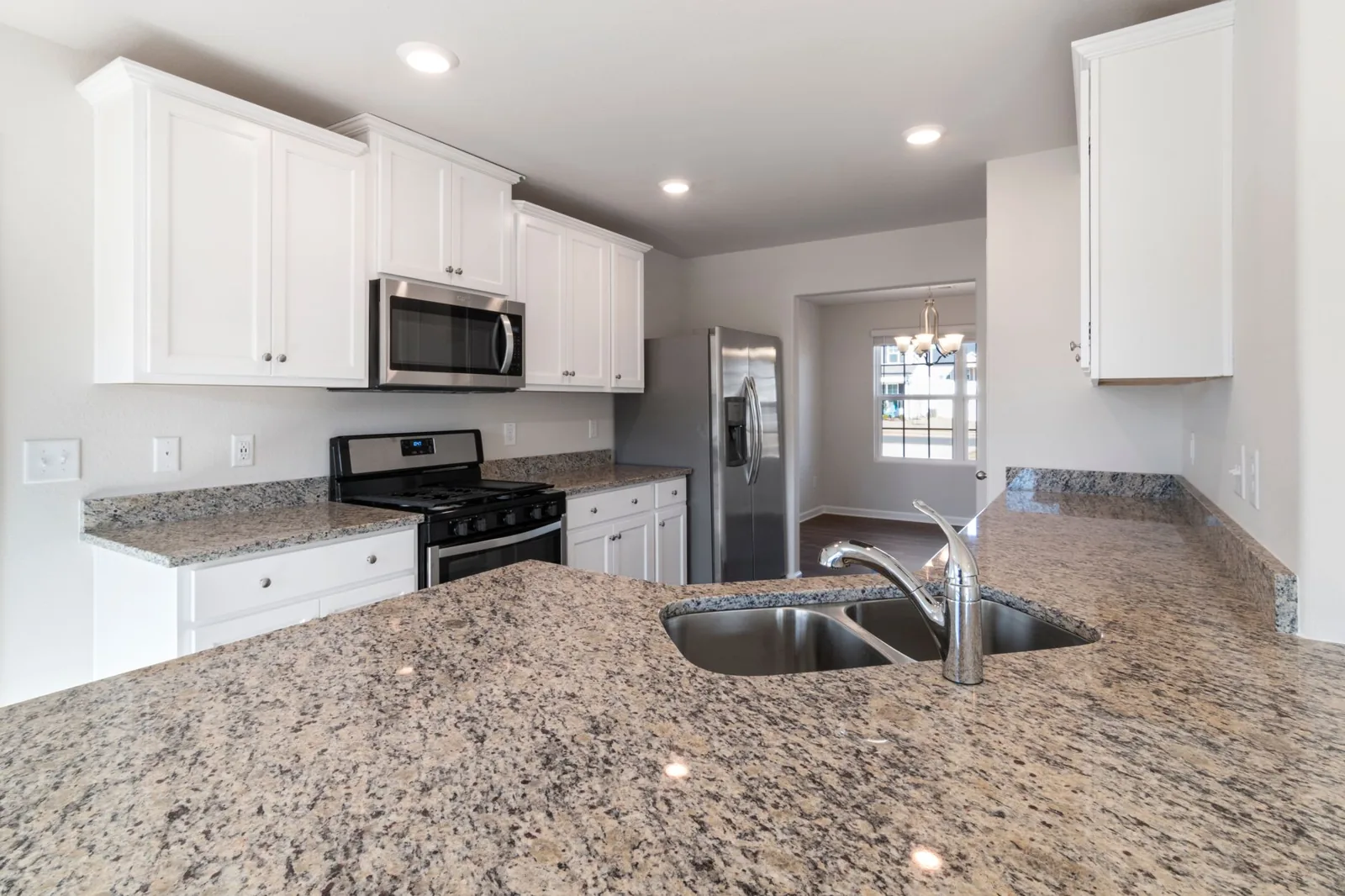
Photo by Curtis Adams via Pexels
For a typical 30 to 40 square-foot kitchen countertop, budget roughly:
- Granite: $1,200 to $4,000 installed for common colors; $5,000+ for premium slabs
- Quartz: $1,500 to $6,000 installed depending on brand and edge profile
The catch with granite is pricing opacity. Because slabs are natural and unique, two slabs called “Black Galaxy” can look different, and fabricators price by the specific slab you pick in the yard. Quartz pricing is more predictable because every sheet of a given color is identical. Factor in a $200 to $400 sink cutout and $10 to $40 per linear foot for a premium edge profile like ogee or waterfall, and the gap between the two narrows considerably.
See our full breakdown of what a kitchen remodel costs and how the math changes per square foot before you set a budget.
Durability and Daily Wear
Both surfaces score high on durability, but they fail differently. Granite is a hard igneous rock (6 to 7 on the Mohs hardness scale), so it shrugs off knife slips and won’t scratch under normal use. Its real vulnerability is its porosity: unsealed granite will soak up red wine, olive oil, and coffee, leaving permanent dark rings. A quality penetrating sealer, re-applied every 6 to 12 months, closes that gap.
Quartz is non-porous out of the box, which makes it tougher against stains than even sealed granite. Its weakness is heat. The resin binder can scorch, discolor, or even crack if you set a hot pan directly on the surface — most manufacturers warn against temperatures above roughly 300°F to 350°F. With granite you can slide a skillet straight off the burner, though a trivet is still a prudent habit with any counter.
Neither is indestructible. Dark granite can show fingerprints and water spots; glossy quartz can show fine scratches in certain lighting that are nearly impossible to buff out. For a busy family kitchen, quartz’s stain resistance usually wins; for heavy cooks who live near the stove, granite’s heat tolerance is hard to beat.
Maintenance and Care
Maintenance is where the two diverge most, and it’s the factor homeowners most often underestimate. Granite needs a sealing schedule — annually for busy kitchens, or every two years for lighter-use colors — plus a pH-neutral stone cleaner. Skip the sealer and a spilled bottle of balsamic vinegar can leave a mark that stays.
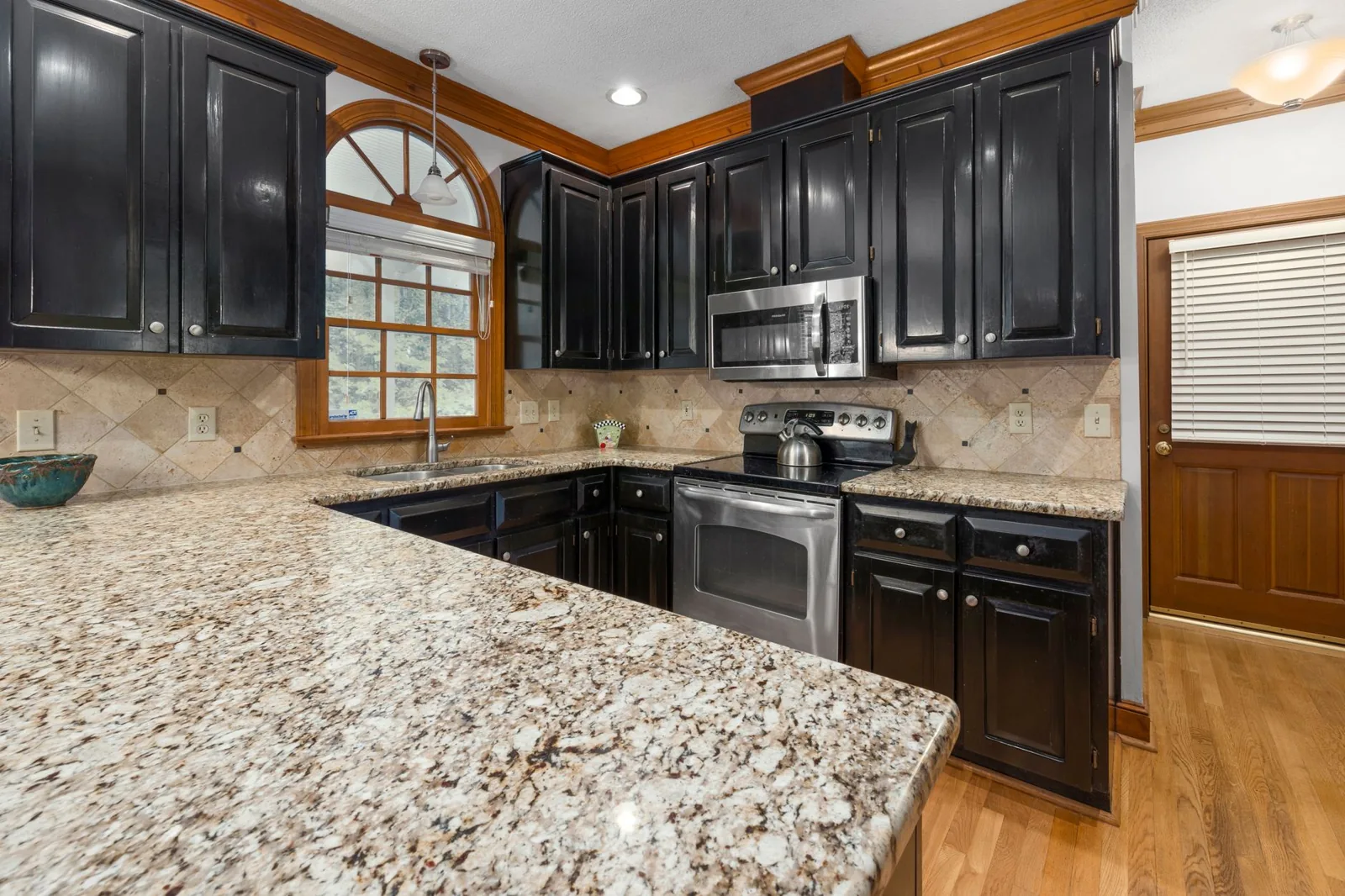
Photo by Curtis Adams via Pexels
Quartz needs almost nothing. Wipe it with warm water and mild dish soap, or a dedicated quartz cleaner. There’s no sealing, no annual maintenance call, and no special stone polish. For that convenience, you give up the ability to buff out the rare deep scratch — quartz can’t be re-polished the way granite can be by a stone fabricator.
The bottom line on upkeep: if you want a surface that forgives spills and neglect, quartz is the lower-effort choice. If you’re fine with a once-a-year ritual and want a surface a pro can restore, granite rewards the care with decades of looks.
Appearance and Design Options
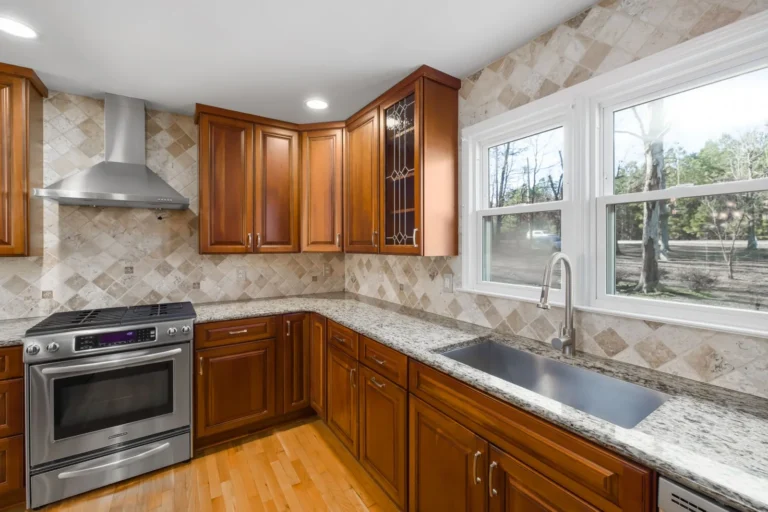
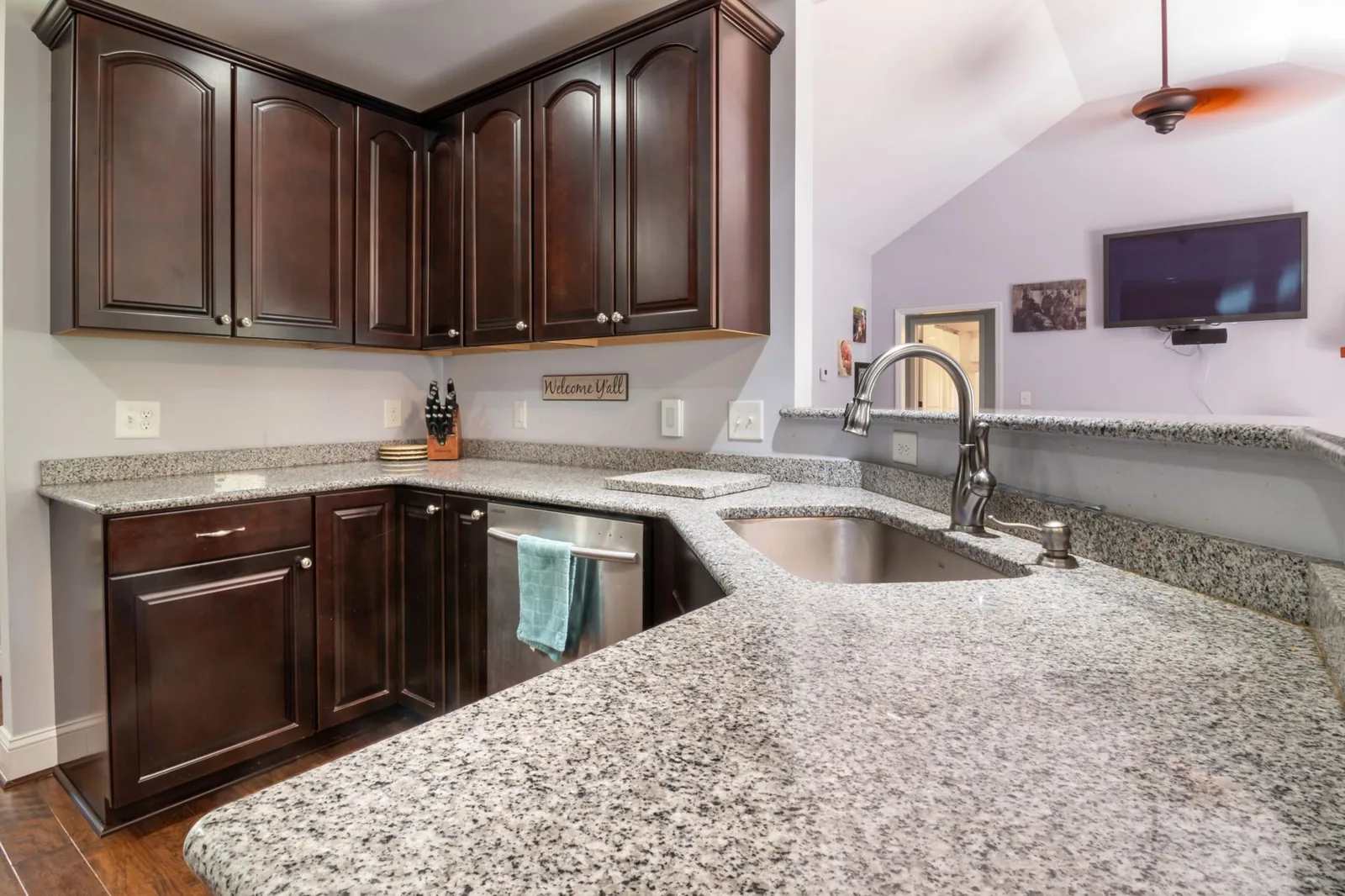
Here the two appeal to different tastes. Granite is a natural product, so every slab is one of a kind. You get depth, movement, and veining that varies from slab to slab — and the exact slab you see in the showroom is the one going into your kitchen, so you should hand-select it before fabrication. Popular granite colors include Giallo Ornamental, Kashmir White, Absolute Black, and Santa Cecilia.
Quartz is engineered for consistency and range. Because pigments are added during manufacturing, quartz comes in colors granite almost never does — true whites, greys, and minimalist marbles like Caesarstone’s Calacatta and Silestone’s Eternal Marquina. The veining is predictable and repeatable, which matters when you’re matching a large island to perimeter counters. That control is why quartz dominates modern and transitional designs.
Granite tends to read traditional or rustic; quartz reads clean and contemporary. Neither ages a kitchen on its own, but the color you pick matters more for resale than the material itself.
Resale Value and Homebuyer Appeal
Both granite and quartz are what appraisers and buyers consider “stone countertops,” and both generally out-perform laminate or tile on resale. Buyers today lean slightly toward quartz because it’s marketed as low-maintenance, but a well-sealed granite in a classic color rarely turns anyone away. What drags down value isn’t the material — it’s a dated, high-contrast color like builder-grade burgundy granite from the early 2000s.
If remodeling to sell within a few years, choose a neutral, light-to-mid-tone color in either material and pair it with simple edges. That’s a safer return than paying extra for an exotic slab in a bold color that only some buyers will love. If you’re staying for a decade, pick the surface you’ll enjoy living with, since both hold their looks for 15 to 25 years when cared for.
For more on stretching the budget across the whole project, see our kitchen remodel ideas on a budget.
Frequently Asked Questions
Is quartz more expensive than granite?
They overlap more than most people expect. Granite typically runs $40 to $100 per square foot installed, while quartz runs $50 to $150. Entry-level granite usually beats entry-level quartz, but premium quartz can out-price mid-grade granite.
Which is more durable, granite or quartz?
Granite resists heat and scratches better; quartz resists stains and bacteria better because it’s non-porous and never needs sealing. For most households, quartz is the more forgiving daily surface.
Does quartz need to be sealed?
No. Quartz is engineered with resin that makes it non-porous, so it never requires sealing. Granite needs a penetrating sealer every 6 to 24 months depending on use and color.
Can you put a hot pan on granite or quartz?
On granite, generally yes — it tolerates direct heat, though a trivet is still recommended. On quartz, no: the resin binder can scorch or discolor above roughly 300°F to 350°F.
Which adds more resale value?
Both count as premium stone to buyers and appraisers. A neutral color in either material performs best on resale; bold, dated granite colors can drag a kitchen’s appeal more than the material itself.
Does granite crack or chip?
It can chip on a sharp edge impact, but cracks are rare with proper installation and support. Fabricators can often repair small chips with a color-matched epoxy fill, and granite can be re-polished — quartz generally cannot.
The Bottom Line
You’re not picking between a good surface and a bad one; you’re picking which set of trade-offs fits your kitchen. Choose granite if you want a natural, one-of-a-kind slab, top-tier heat resistance, and a surface a fabricator can restore if it’s ever damaged — and you’re willing to seal it once a year. Choose quartz if you want near-zero maintenance, superior stain resistance, and predictable colors, and you can commit to keeping hot pans off the surface.
Whichever way you lean, get quotes from at least three local fabricators before committing, and hand-select your actual granite slab or quartz sample in person. The material is only half the value — fabrication, installation, and edge work decide how the final counter looks and holds up.
Sources: This Old House on countertop materials and Angi on granite vs quartz costs.