Kitchen Renovation Cost: What Homeowners Really Pay in 2025
The average kitchen renovation cost in the United States lands between $25,000 and $60,000 for a mid-range project, according to recent remodeling industry data. A full gut renovation with custom cabinetry, new plumbing, and premium appliances can push past $100,000, while a cosmetic refresh focused on paint, hardware, and a new backsplash might come in under $10,000. The number that matters is the one attached to your kitchen, and that depends almost entirely on size, scope, and finish level.
This guide breaks down real kitchen renovation cost ranges, line by line, so you can budget with confidence instead of guessing. You will also find a breakdown of where the money actually goes, the biggest cost drivers, and the tactics that trim thousands without making the final result look cheap.
How Much Does a Kitchen Renovation Cost?
Most homeowners think a new kitchen means ripping everything out and starting over. In practice, renovation spans three broad tiers, and the kitchen renovation cost in each one is driven by how far you go.
- Cosmetic refresh — $5,000 to $15,000. Paint, new cabinet hardware, a fresh backsplash, updated lighting, and maybe refinishing existing counters. Nothing moves, and plumbing stays put.
- Mid-range renovation — $25,000 to $60,000. New semi-custom cabinets, a stone or quartz counter, a mid-range appliance suite, new flooring, and updated plumbing and electrical. This is the national average a typical family kitchen fits into.
- High-end renovation — $75,000 to $150,000+. Custom cabinetry, high-end stone, professional-grade appliances, structural changes, and full design services. Costs climb fast once you move walls or relocate a sink.
Location matters as much as scope. The same mid-range job that costs $40,000 in a midwestern suburb can run $70,000 or more in San Francisco, New York, or Seattle, where labor rates and permit fees are higher. Angi’s annual cost data puts the typical range for a kitchen remodel at roughly $14,600 to $41,000, with high-end work routinely exceeding that ceiling — a reminder that national averages hide enormous regional variation.
Kitchen Renovation Cost by Square Foot
When you size a job, thinking in cost per square foot keeps expectations realistic. The table below compares the three finish tiers side by side.
| Feature | Basic / Cosmetic | Mid-Range | High-End |
|---|---|---|---|
| Cost per sq ft | $60 – $120 | $150 – $300 | $300 – $500+ |
| Cabinets | Refaced or painted | Semi-custom wood | Fully custom |
| Countertops | Laminate or refinished | Quartz or granite | Marble or engineered stone |
| Appliances | Kept or budget-grade | Mid-range stainless | Professional-grade |
| Timeline | 1 – 3 weeks | 4 – 8 weeks | 3 – 6 months |
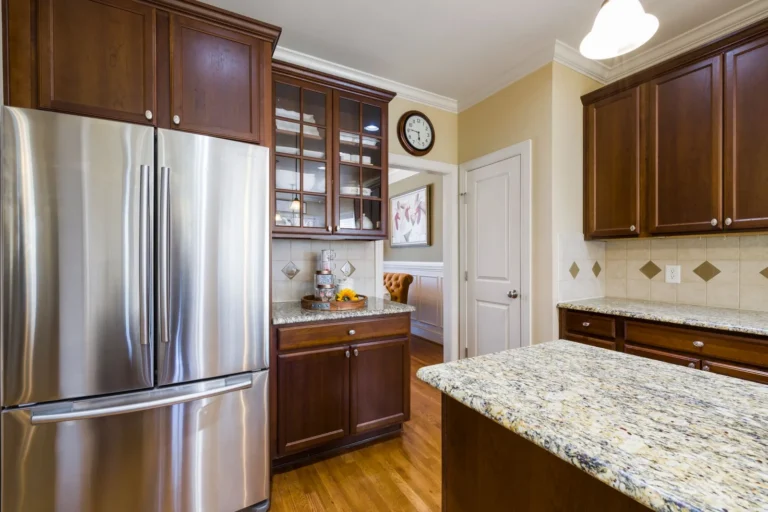
Photo by Lee Salem via Pexels
A 150-square-foot kitchen at the mid-range level would therefore land around $22,500 to $45,000, which lines up with the national averages above. For a deeper line-by-line look at how those square-foot figures are derived, see our guide to the kitchen remodel cost per square foot.
Where Your Money Actually Goes
Understanding kitchen renovation cost means knowing that cabinets and labor do most of the heavy lifting. Here is how a typical mid-range project’s budget shakes out:
- Cabinetry — 30% to 35%. The single largest line item, whether you buy stock, semi-custom, or fully custom boxes.
- Labor — 20% to 35%. Installation, plumbing, electrical, and general contracting. Skilled trades are the part you cannot cheap out on without inviting rework.
- Countertops — 10% to 15%. Quartz is now the most popular choice for its durability and low maintenance; granite still sells well on price.
- Appliances — 10% to 15%. A six-piece mid-range suite (fridge, range, dishwasher, and microwave) averages $3,000 to $8,000.
- Flooring, lighting, and plumbing fixtures — 10% to 15%. Tile, hardwood, or LVP underfoot, plus faucets, sinks, and fixtures.
- Walls, ceilings, and painting — 5%. Drywall repair, trim, and a quality paint job.
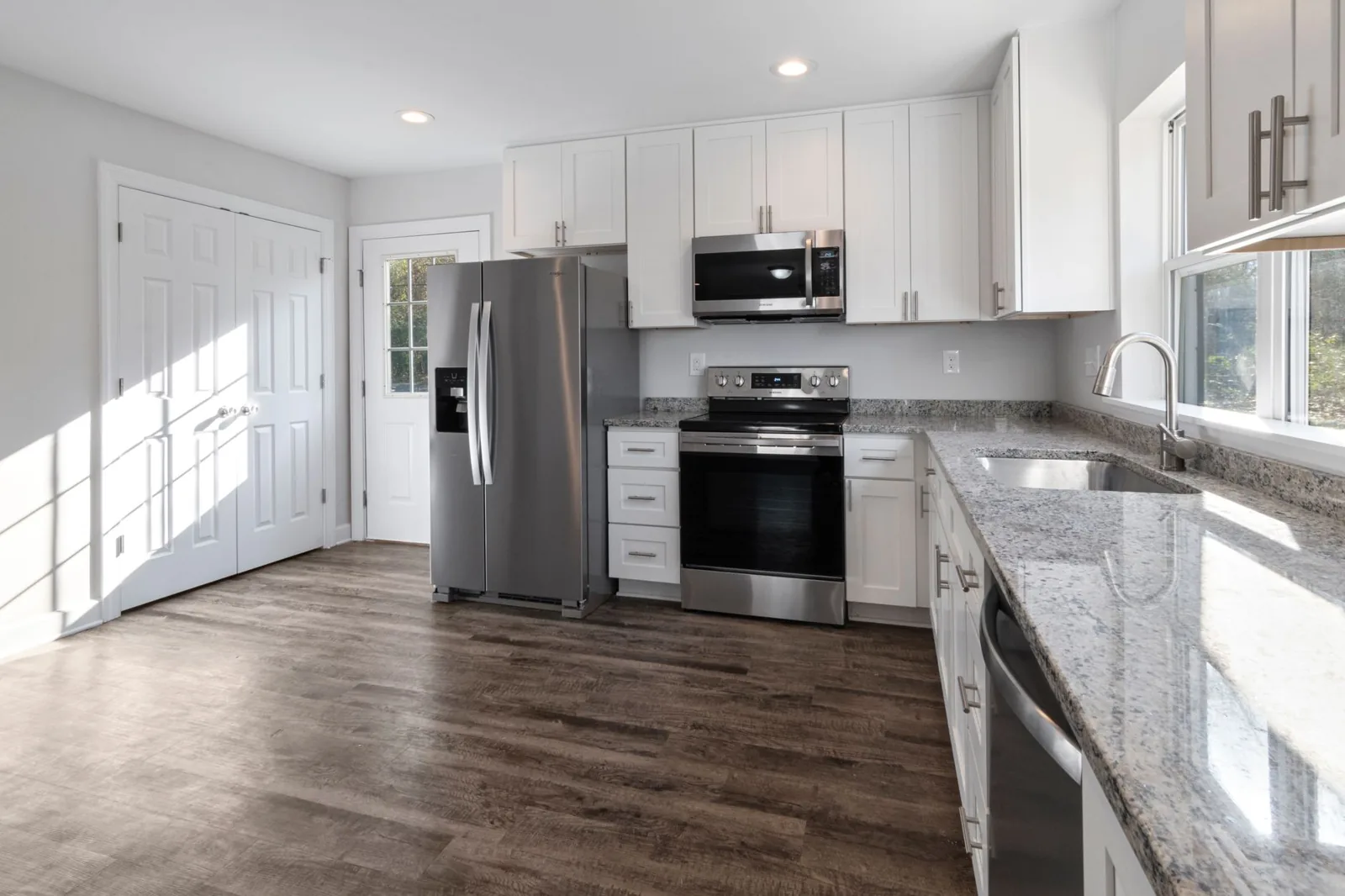
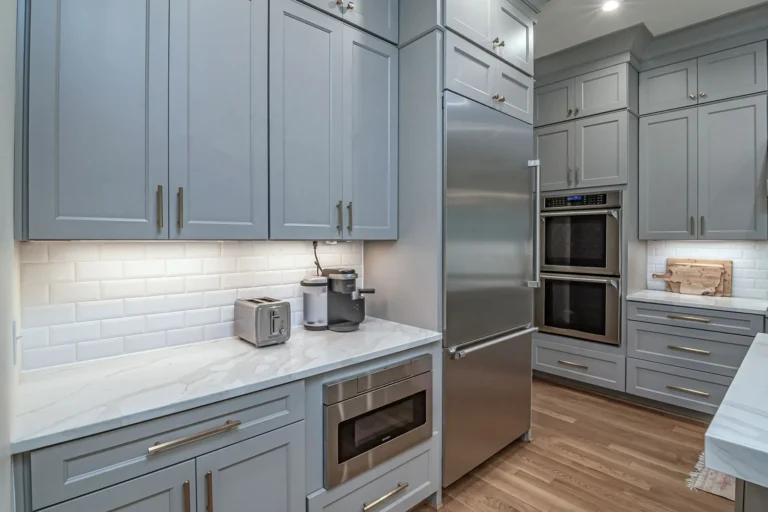
Photo by Curtis Adams via Pexels
Cabinets Drive the Budget
Because cabinets are the biggest single expense, they are also the biggest lever for saving. Stock or ready-to-assemble cabinets can cut the cabinetry bill by 40% or more versus custom, while still delivering a clean look when fitted properly. Refacing existing boxes — replacing only doors, drawer fronts, and hardware — typically costs half of full replacement. For a full comparison of the two paths, read our breakdown of kitchen cabinet refacing cost.
What Drives Kitchen Renovation Cost Up or Down
Several factors move the final price far more than people expect:
- Moving plumbing or gas lines. Relocating a sink, dishwasher, or gas range means running new lines and opening walls. Expect to add $1,000 to $5,000 per fixture moved.
- Structural changes. Removing a load-bearing wall to open the floor plan requires an engineer and a beam, which can add $3,000 to $10,000 on its own.
- Electrical upgrades. Older kitchens often need new circuits to meet code, especially for modern appliance loads. Budget $500 to $2,500 depending on panel condition.
- Permits. Most jurisdictions require permits for plumbing, electrical, and structural work. Fees range from a few hundred to over $1,000, and skipping them can void insurance and complicate a future sale.
- Finish grade. The gap between a $40 quartz counter and a $90 engineered-stone slab, multiplied across an entire kitchen, is where five figures quietly disappear.
This Old House’s kitchen remodeling hub is a reliable reference for understanding scope before you sign a contract, and the U.S. Department of Energy’s appliance guidance is worth a look when choosing energy-efficient models that lower long-term running costs.
Kitchen Renovation Cost vs. Kitchen Remodel Cost
People use “renovation” and “remodel” interchangeably, but contractors treat them differently, and the distinction affects your budget. A renovation restores or refreshes what is already there — refacing cabinets, replacing counters, re-tiling. A remodel changes the structure or layout — moving walls, relocating fixtures, altering the footprint. Because a remodel involves demolition and structural work, it almost always costs more. Our side-by-side on kitchen remodel vs renovation walks through which one fits your goals and wallet.
How to Keep Costs Down Without Regretting It
Cutting kitchen renovation cost should be about spending smarter, not spending less on everything.
- Keep the layout. The moment you stop moving plumbing and walls, you dodge the most expensive line items in the estimate.
- Reface instead of replace cabinets when the boxes are structurally sound. It is the highest-return savings tactic on most projects.
- Buy appliances during sales cycles. Major brands discount heavily around Memorial Day, Labor Day, and Black Friday; scheduling your renovation to catch a holiday sale can save $1,000 or more.
- Do the demo yourself. Ripping out old cabinets and flooring is physically demanding but not skilled, and it can save $1,000 to $2,000. Leave the gas, electrical, and plumbing to licensed pros.
- Keep one statement piece. Splurge on one visible element — a waterfall island or a handmade tile backsplash — and go mid-range everywhere else. The room still reads as high-end without the matching invoice.
- Get at least three written quotes. Scope-to-scope comparison across three contractors routinely reveals a 10% to 30% spread for the same job.
For a more complete picture of what a finished project at each budget level looks like, see our overview of the kitchen remodel cost by project type.
Frequently Asked Questions
What is the average cost to renovate a kitchen in 2025?
A mid-range kitchen renovation in the United States averages $25,000 to $60,000. Cosmetic refreshes run $5,000 to $15,000, and high-end jobs with custom work commonly exceed $100,000. Regional labor rates swing these figures by 30% or more.
Is it cheaper to renovate or remodel a kitchen?
Renovating is cheaper because it refreshes what already exists without moving walls, plumbing, or gas lines. Remodeling changes the layout or structure and adds demolition, engineering, and permit costs, making it the more expensive option in almost every case.
How long does a kitchen renovation take?
A cosmetic refresh takes one to three weeks, a mid-range renovation four to eight weeks, and a high-end remodel three to six months. Custom cabinets and structural work are the biggest timeline drivers, since both come with lead times measured in weeks.
What adds the most value to a kitchen renovation?
Function and layout add the most resale value, followed by new countertops and appliances. Buyers respond to durable surfaces and a workable floor plan far more than to trendy finishes, so spend on quartz, solid cabinets, and good lighting before decorative extras.
Should I renovate my kitchen before selling?
A light, well-targeted refresh — paint, hardware, counters, and a deep clean — typically recoups more than a full luxury renovation when you are selling within a year. Check what comparable homes in your neighborhood offer, then renovate just enough to clear that bar.
For current pricing data, Angi lists kitchen renovation costs.
The Bottom Line
Kitchen renovation cost is not a single number; it is a consequence of scope, square footage, finish grade, and where you live. Anchor your budget to the mid-range band of $25,000 to $60,000 for a typical refresh-and-upgrade, move up only if you are changing the footprint, and protect yourself with three written quotes and a permit-checked contract. Spend on the cabinets, counters, and layout that you touch every day — those are the investments that both age well and pay you back at resale. Ready to see what your square footage really costs? Start with our kitchen remodel cost per square foot guide and build a budget that matches the kitchen you actually want.