Kitchen Remodel vs Refacing: Which Cabinet Upgrade Is Right for You?
The kitchen is the most-used room in most homes, and it is also the room where a dated look shows fastest. When cabinets start to yellow, doors sag, or the layout simply no longer works, homeowners face a fork in the road: tear everything out and start fresh, or resurface what is already there. The decision between a kitchen remodel vs refacing comes down to three things — budget, timeline, and how much you dislike your current layout.
A full kitchen remodel typically runs $40,000 to $90,000 or more, while cabinet refacing usually lands between $4,000 and $9,500. That gap is wide enough to make refacing tempting, but refacing only makes sense when the existing cabinet boxes and layout are sound. If you want to move the sink, add an island, or fix a cramped floor plan, refacing will not get you there.
This guide breaks down the real costs, timelines, and trade-offs of each option so you can choose with confidence and avoid paying for work you do not need.
What Is Kitchen Cabinet Refacing?
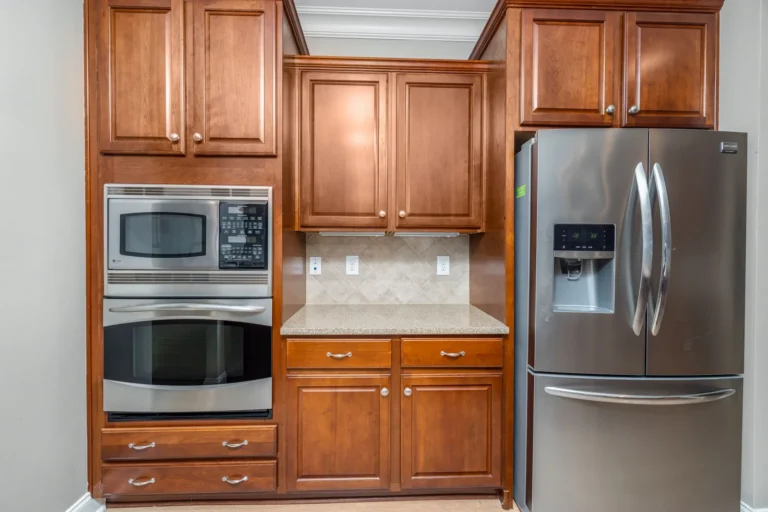
Cabinet refacing keeps your existing cabinet boxes in place and replaces only the visible surfaces: the doors, drawer fronts, and the thin veneer that covers the exposed face frames and side panels. In most cases the boxes are also re-stained or re-painted to match, and new hardware — hinges, pulls, and soft-close slides — is installed on top.
Refacing is a good fit when:
- Your cabinet boxes are made of plywood or solid wood and are still square and sturdy.
- You like the current layout and only want a cosmetic refresh.
- The interior shelving is in decent shape and does not need reconfiguring.
- You want a faster, cheaper project than a full gut renovation.
A refacing job usually takes two to four days of labor. Because nothing is demolished and no plumbing or electrical is moved, the kitchen stays functional for most of the process. That alone is a major selling point for families who cannot afford to lose their kitchen for six to twelve weeks.
The catch is that refacing cannot fix a bad layout. If your cabinets are cramped, poorly positioned, or built from particleboard that has absorbed years of moisture, you will be wrapping new veneer around a problem rather than solving it.
What Is a Full Kitchen Remodel?
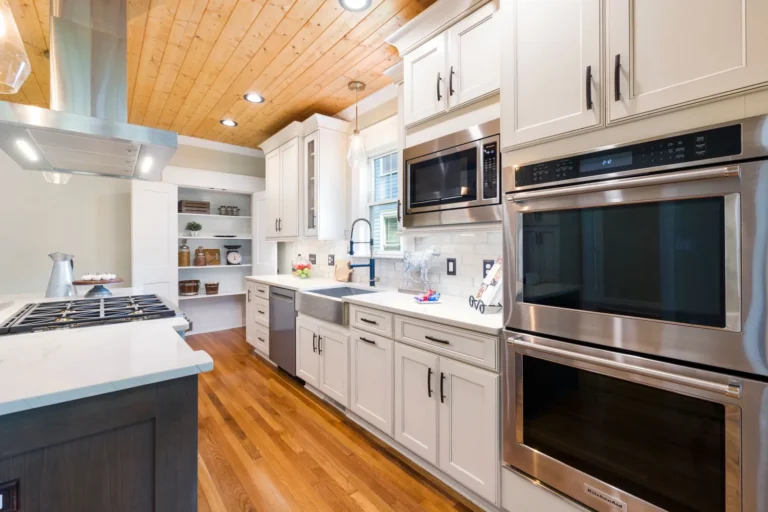
A full remodel means removing the existing cabinets, countertops, sink, and often the flooring and appliances, then rebuilding the space. This is the only option that lets you change the footprint: move the refrigerator to a different wall, relocate the sink, add an island, or open the kitchen up to the living area.
Remodeling covers everything from the studs out. You get brand-new cabinet boxes built to fit your exact space, new countertops, new plumbing fixtures, and in many cases new electrical runs and lighting. If the subfloor or drywall is damaged, a remodel is the moment to fix it properly rather than hiding it.
The trade-offs are cost and time. A mid-range kitchen remodel averages $40,000 to $60,000, and upscale projects with custom cabinets and stone countertops routinely pass $90,000, according to remodeling cost data. The work typically takes six to twelve weeks, during which the kitchen is effectively out of commission. You will need to set up a temporary cooking station and budget for multiple takeout nights.
That said, a remodel is the better long-term investment when the bones of the kitchen are bad. New boxes carry decades of life, and a corrected layout adds real daily value that no amount of new doors can reproduce.
Kitchen Remodel vs Refacing: Cost, Timeline, and Scope Compared
The table below lays out the key differences side by side.
| Feature | Cabinet Refacing | Full Kitchen Remodel |
|---|---|---|
| Typical cost | $4,000 – $9,500 | $40,000 – $90,000+ |
| Timeline | 2 – 4 days | 6 – 12 weeks |
| Keeps existing layout | Yes | No, layout can change |
| Cabinet boxes replaced | No | Yes |
| Counters, sink, flooring | Unchanged | Usually replaced |
| Plumbing / electrical changes | None | Possible |
| Best when | Boxes are solid, layout works | Layout is poor or boxes are damaged |
| Typical ROI feel | Fast cosmetic lift | Higher long-term value |
The cost gap is the single biggest driver of the refacing decision. For the price of refacing an entire kitchen, you might only cover the cabinets — not the countertops, flooring, or labor — in a full remodel. Refacing returns a fresher look for a fraction of the expense, which is why it is popular with homeowners preparing to sell.
Photo by Curtis Adams via Pexels
When Refacing Is the Better Choice
Refacing wins in three specific situations.
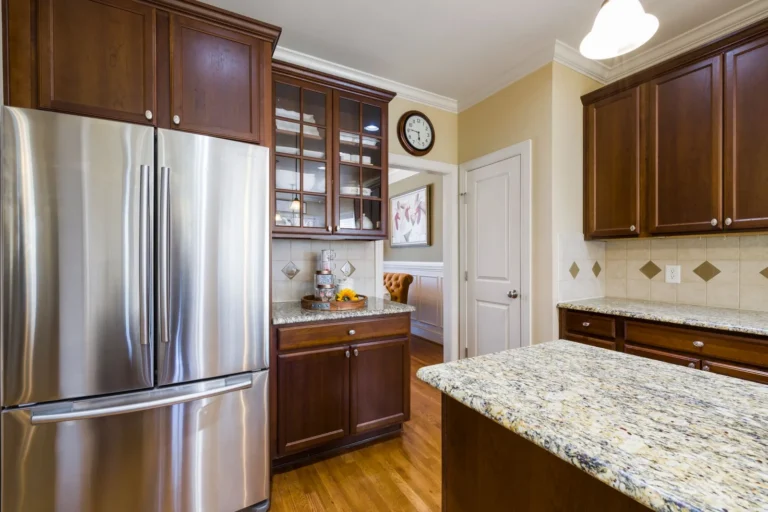
Your cabinet boxes are genuinely good. Solid wood or plywood boxes from a quality manufacturer can easily last 40 years or more, while the doors and hinges on top of them age faster. If the shells are square, the drawers glide, and there is no water damage near the sink or dishwasher, refacing lets you keep that foundation and replace only the worn parts.
You are selling soon. If you plan to list the house within a year or two, a $5,000 refacing job delivers most of the visual upgrade a buyer notices, without the months of disruption a remodel requires. You will not recoup a $70,000 remodel in resale value on a short timeline, but a modest refacing can make the kitchen photograph well and speed up a sale.
Your budget is capped. A full remodel frequently goes over budget once contractors open walls and find surprises. Refacing is more predictable — there is little hidden damage to discover when you are not moving plumbing or tearing out boxes.
The key question to ask yourself before committing to refacing is simple: if everything looked brand new tomorrow, would I still be frustrated by the layout? If the answer is yes, refacing will not satisfy you, no matter how good the finish looks.
When a Full Remodel Is the Better Choice
A remodel is the right call when the problems go deeper than the surface.
The layout does not work. This is the number-one reason homeowners regret choosing refacing. You cannot fix a cramped work triangle, a missing island, or a sink in the wrong spot by hanging new doors. If you are constantly bumping into people while cooking, save up and do it right.
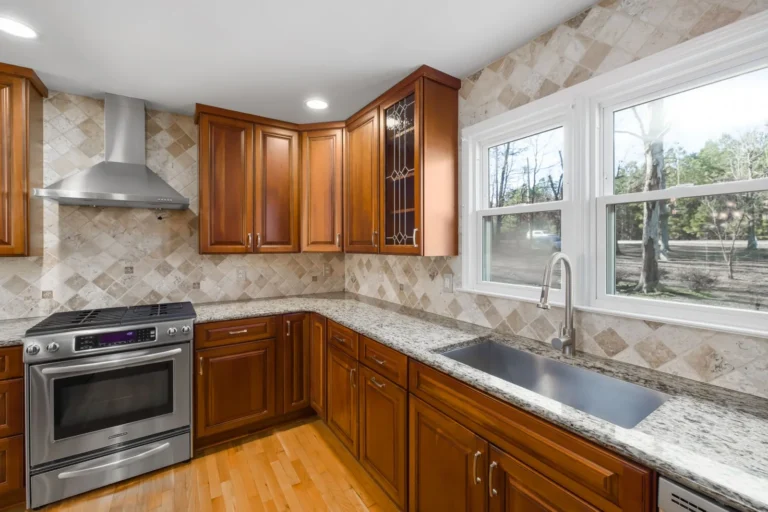
The boxes are damaged or cheap. Particleboard cabinets that have swelled around the sink base, or vinyl-coated boxes peeling at the edges, are not worth resurfacing. New veneer will not adhere properly to damaged surfaces, and you will have spent money on a short-term fix.
You want different storage. Soft-close drawers, pull-out shelves, deep pantry cabinets, and roll-out trays almost always require new boxes. Refacing keeps your old interior configuration, so if your goal is better function rather than better looks, a remodel is the only honest answer.
The floor plan is opening up. If you are already pulling down a wall or moving the kitchen into an adjacent space, refacing in isolation makes no sense. Fold the cabinet work into the larger remodel and build it correctly the first time.
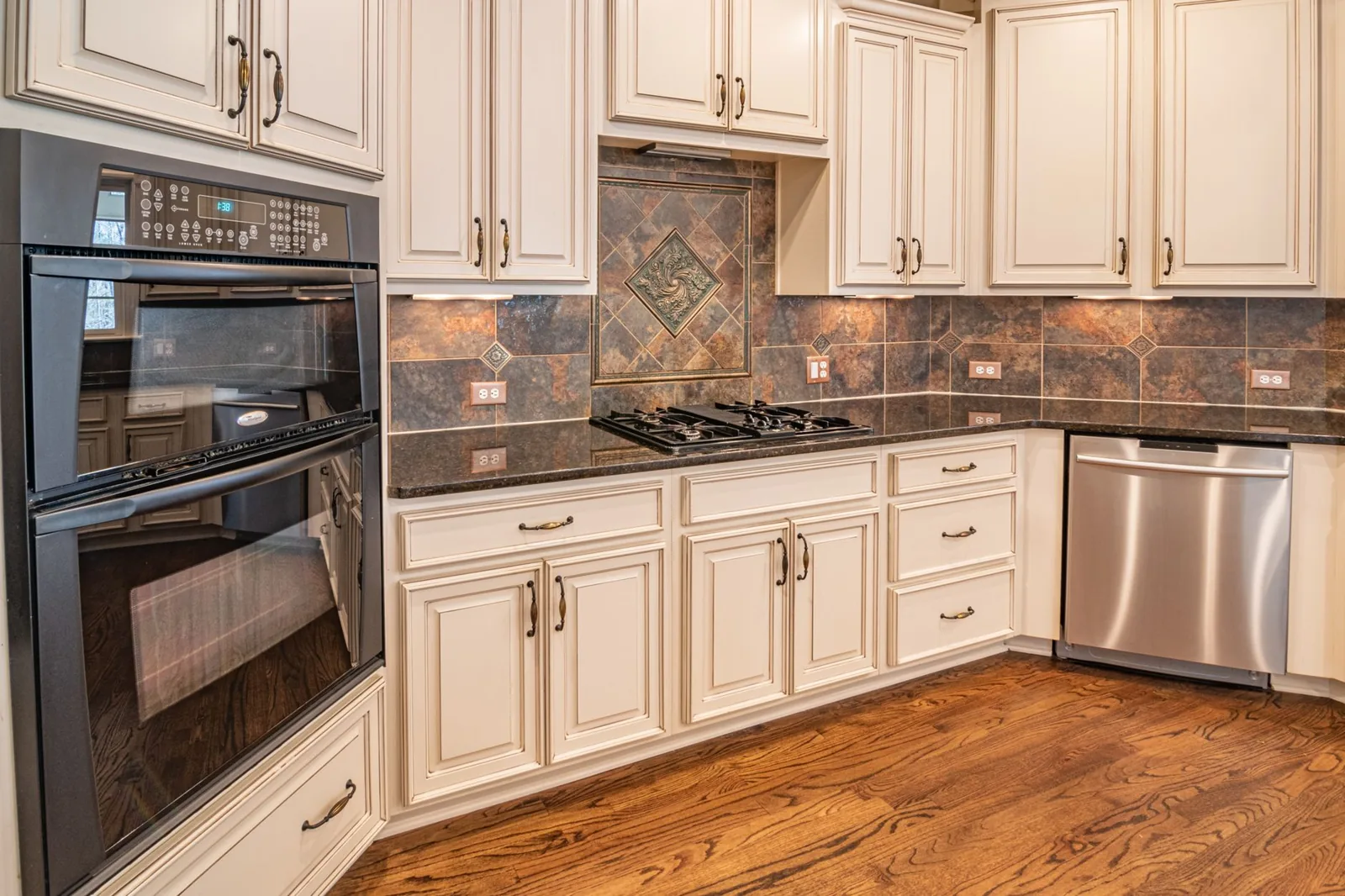
Photo by Curtis Adams via Pexels
What Refacing Does Not Fix
It is worth being blunt about refacing’s limits, because sales pitches rarely mention them.
- It does not change the position of any cabinet, sink, or appliance.
- It does not repair water-damaged or sagging boxes.
- It does not upgrade drawer hardware beyond new slides and hinges.
- It does not replace countertops (though many refacing contractors will quote these separately).
- It does not fix ventilation, lighting, or flooring problems.
If any of those items are on your wish list, factor them into a broader kitchen remodel cost conversation instead of expecting refacing to cover them. Refacing is a surface treatment, not a structural renovation — treat it as such and you will not be disappointed.
How Much Does Each Option Actually Cost?
Hard numbers matter more than percentages. From recent contractor and industry pricing:
- Cabinet refacing: $4,000 to $9,500 for an average kitchen, or roughly $70 to $180 per cabinet face, depending on materials (laminate at the low end, real wood veneer at the top).
- New cabinet doors only (refacing lite): $2,000 to $5,000 when the boxes are already in good shape and you skip the veneer.
- Full remodel: $40,000 to $60,000 for a mid-range 10×12-foot kitchen, climbing past $90,000 with custom cabinets, stone countertops, and appliance upgrades.
- Cabinets alone in a remodel: $12,000 to $30,000 for stock, semi-custom, or custom lines.
For a deeper look at how the numbers break down by room size and material, see our guides on kitchen remodel cost per square foot and kitchen cabinet refacing cost.
Countertops are another cost to watch. If you are dreaming of quartz or granite, remember that quartz countertops cost runs $50 to $150 per square foot installed — a reminder that the cabinet decision is often only half the budget conversation.
The Resale and ROI Angle
Both options are priced against what buyers notice. A dated kitchen is one of the first things that turns off buyers, and a full remodel is one of the most-cited projects for recovering value at resale. But recovery is not the same as profit.
A mid-range major kitchen remodel historically recoups roughly 50 to 60 percent of its cost at resale, depending on the market and the quality of the finish. A refacing job costs far less up front, so even a partial recapture leaves you ahead on a short timeline. If you are selling within two years, refacing is usually the smarter financial move. If you are staying five-plus years, the daily benefit of a corrected layout starts to outweigh the higher price tag of a remodel.
The nuance: buyers do not pay line-item prices for your renovation. They react to the kitchen as a whole. A well-done refacing that brightens the room can raise a listing’s appeal nearly as much as new cabinets would, as long as the layout was already functional. For more on how a remodel differs from a cosmetic renovation, see kitchen remodel vs renovation.
Frequently Asked Questions
Is it cheaper to reface or replace kitchen cabinets?
Refacing is almost always cheaper. Refacing an entire kitchen typically costs $4,000 to $9,500, while replacing cabinets with new ones runs $12,000 to $30,000 for materials alone, before countertops and labor. Refacing can save 40 to 60 percent versus full cabinet replacement.
Can you reface cabinets and keep the same layout?
Yes. Refacing keeps your cabinets exactly where they are and only replaces doors, drawer fronts, and surface veneer. This is the primary reason it is fast and affordable. If you want to change the layout, you need a full remodel instead.
How long does cabinet refacing last?
Quality refacing using real wood veneer and well-built doors can last 15 to 20 years or more, provided the underlying boxes remain sound. Laminate refacing tends to wear sooner, especially on high-touch surfaces like drawer fronts and cabinet edges.
Is cabinet refacing worth it?
Refacing is worth it when your cabinet boxes are solid and you like your layout but dislike the look. It delivers a dramatic cosmetic update at a fraction of remodel cost and disruption. It is not worth it if the boxes are damaged or the layout frustrates you.
How long does a full kitchen remodel take?
A full kitchen remodel typically takes six to twelve weeks from demolition to final walkthrough, depending on the scope, custom cabinetry lead times, and any plumbing or electrical changes. Refacing, by contrast, is usually finished in two to four days.
For authoritative cost and planning data, the editors at This Old House and Family Handyman publish detailed breakdowns of cabinet refacing and kitchen remodeling that are worth bookmarking before you get quotes.
The Bottom Line
The kitchen remodel vs refacing decision is really a question about your layout, not your cabinets. If you like where everything is and the boxes are solid, refacing gives you 80 percent of the visual upgrade for roughly 10 percent of the remodel cost — and you are cooking again within the week.
If the layout frustrates you, the boxes are cheap or damaged, or you want real changes to storage, then refacing is money spent on a problem that will still be there when the new doors go up. In that case, a full remodel is the only route to the kitchen you actually want.
Start by assessing your cabinet boxes and your work triangle honestly, then get quotes for both options before you decide. Most contractors will price them side by side, and seeing the two numbers on paper usually makes the right choice obvious.