Kitchen Backsplash Ideas: 12 Looks for Any Budget and Style
A backsplash is the one surface in your kitchen where you can spend a little and change a lot. It shields the wall behind your sink and range from water, grease, and steam, but it also does something bigger: it sets the visual tone for the entire room. The right kitchen backsplash ideas can make a dated kitchen look current without touching a single cabinet, and most of them cost a fraction of what new cabinets or countertops run.
Homeowners on a modest budget often start here because the payoff is so fast. A 30-square-foot backsplash — the typical area between the counter and upper cabinets at a standard 18-inch height — can be retiled over a weekend for a few hundred dollars, or it can become a five-figure slab of book-matched marble. The range is that wide, which is exactly why the options below are organized by both style and cost.
Before you pick a material, know the two rules that decide how happy you’ll be with the result. First, buy a sample and tape it to the wall next to your cabinets in daylight before you commit, because tile looks different in the store. Second, budget 10 to 15 percent extra material for cuts and breakage. Grout color matters as much as the tile itself — a matching grout reads calm and seamless, while a contrasting grout makes every tile pop.
Why the Backsplash Earns Its Price Per Square Foot
Most home improvement projects deliver a partial return on investment, which is why contractors steer people toward the surfaces buyers actually notice. A backsplash sits at eye level, takes daily abuse from cooking, and photographs well, so it punches far above its material cost. According to renovation pros, an updated backsplash is one of the most commonly cited reasons a kitchen is described as “newly remodeled” in listings.
The surface also has a practical job that cheap materials can fail. Behind a gas range, the wall takes direct heat and splattering oil; behind a farmhouse sink, it takes constant water. That is why the cheapest vinyl stickers work in a rental but look sad after two years of real cooking, and why a proper ceramic or stone tile can still look new after fifteen.
For most homeowners, choosing a backsplash comes down to a three-way trade-off between cost, appearance, and installation difficulty. The sections below walk through the classic options, the modern ones, and what each will actually run you installed.
Classic Kitchen Backsplash Ideas
These are the looks that have survived decades of kitchen trends for a reason: they are easy to find, forgiving to install, and unlikely to feel dated when you sell.
Subway Tile
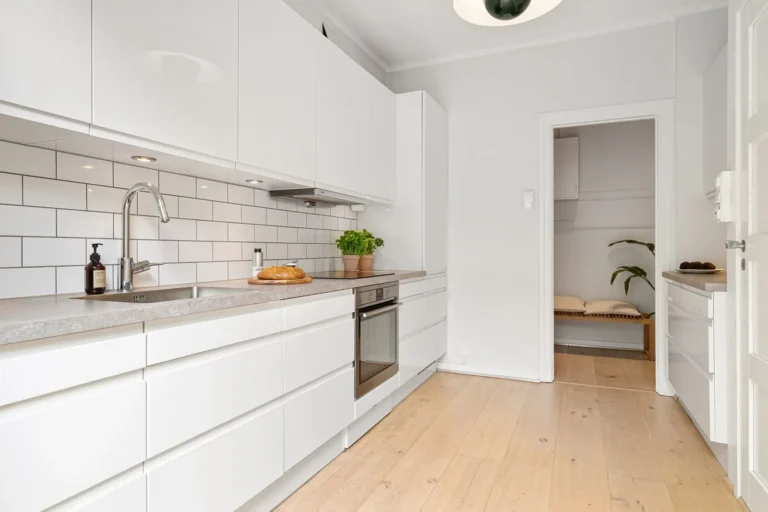
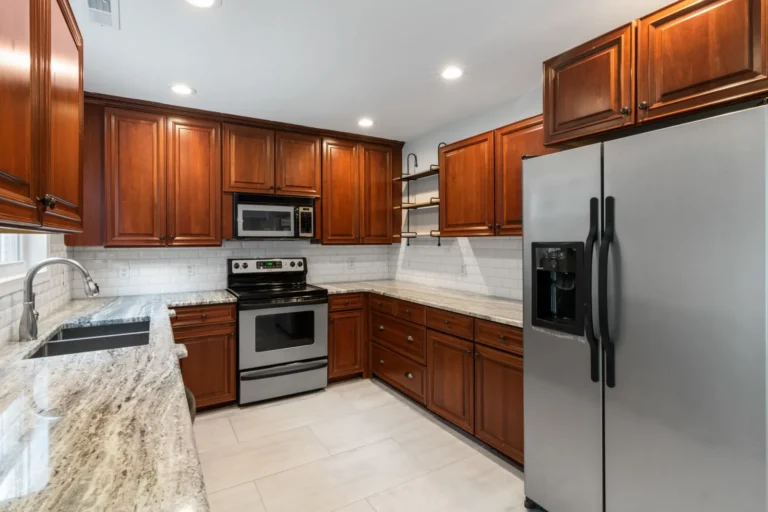
White 3-by-6-inch subway tile is the default for a reason. It costs little, reads clean against almost any cabinet color, and works in houses built in 1920 or 2020. A basic white subway backsplash in a 30-square-foot kitchen runs $300 to $800 for materials and $750 to $1,500 installed. For a slightly richer look, run the tile vertically or use a colored grout in charcoal or sage instead of white.
Ceramic and Porcelain Field Tile
Large-format ceramic tiles, often 12-by-24 inches, give you fewer grout lines and a more modern, slab-like appearance at a much lower cost than real stone. Porcelain is denser and more stain-resistant than ceramic, which matters behind a cooktop. Expect $3 to $12 per square foot for the tile and $10 to $25 per square foot installed.
Marble and Travertine Tile
Natural stone tile brings veining and warmth that printed tile rarely matches. Marble subway tile runs $8 to $30 per square foot, but it is porous and needs sealing once a year, and acidic splashes like lemon juice can etch the surface. If you want the look without the upkeep, a high-quality porcelain printed with a stone pattern is the pragmatic middle ground.
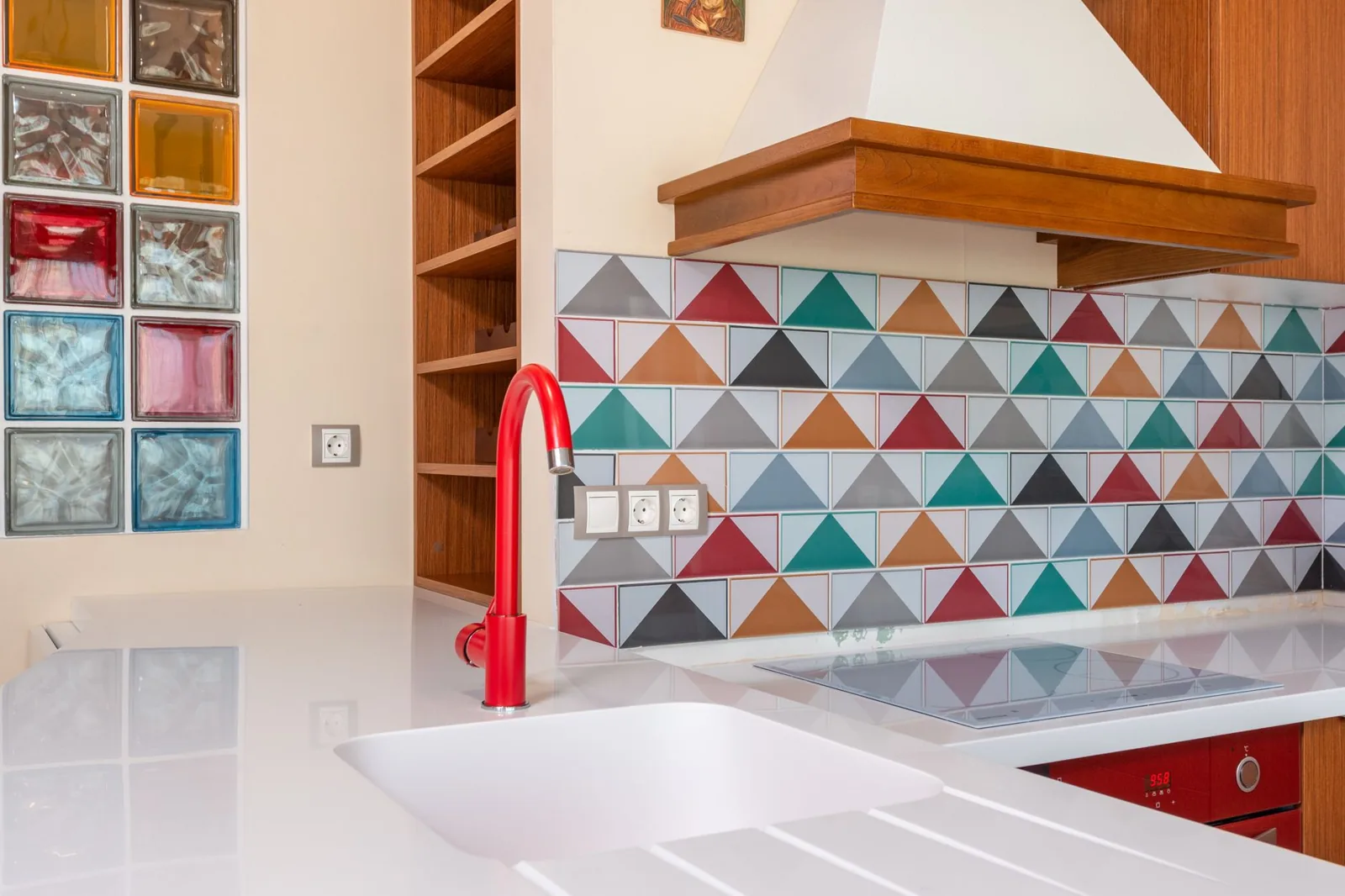
Photo by Max Vakhtbovych via Pexels
What a Backsplash Costs, Material by Material
Prices below are realistic installed ranges for a standard 30-square-foot backsplash in 2025, including labor where noted. Regional labor rates move these numbers a couple of hundred dollars either way, but the relative ranking holds everywhere.
- Ceramic subway tile: $300–$800 materials, $750–$1,500 installed — the best value for most homes.
- Glass tile: $7–$30 per square foot material, $15–$40 installed — higher waste and labor because of sharp edges.
- Natural stone slab: $40–$100 per square foot installed — a single seamless slab of marble or quartzite, the most expensive mainstream option.
- Peel-and-stick tile: $8–$20 per square foot — DIY only, no labor, but lifespan is measured in years, not decades.
- Stainless steel sheet: $20–$50 per square foot — commercial look, easy to clean, needs a fabricator.
The comparison table below lines up the four options most homeowners end up choosing between.
| Material | Installed cost per sq ft | Best for | Durability |
|---|---|---|---|
| Ceramic subway tile | $9–$25 | Budgets, classic looks | High |
| Glass tile | $15–$40 | Modern kitchens, color | Medium |
| Natural stone slab | $40–$100 | Luxury, seamless walls | High |
| Peel-and-stick tile | $8–$20 (DIY) | Rentals, quick updates | Low |
One note that saves real money: if you want a slab look without slab prices, ask a fabricator about “slab remnants.” Leftover pieces from bigger countertop jobs are often sold at a deep discount and are more than enough for a standard backsplash. Full-height slabs are also worth considering if you have no upper cabinets, since the wall becomes a focal point rather than a trim detail. If a full remodel is on your mind beyond just the wall, see our guide to kitchen remodel costs for how the pieces add up.
Modern Kitchen Backsplash Ideas
If the classic list feels too safe, these options lean bolder without tipping into regret-the-next-morning territory.
Patterned and Zellige Tile
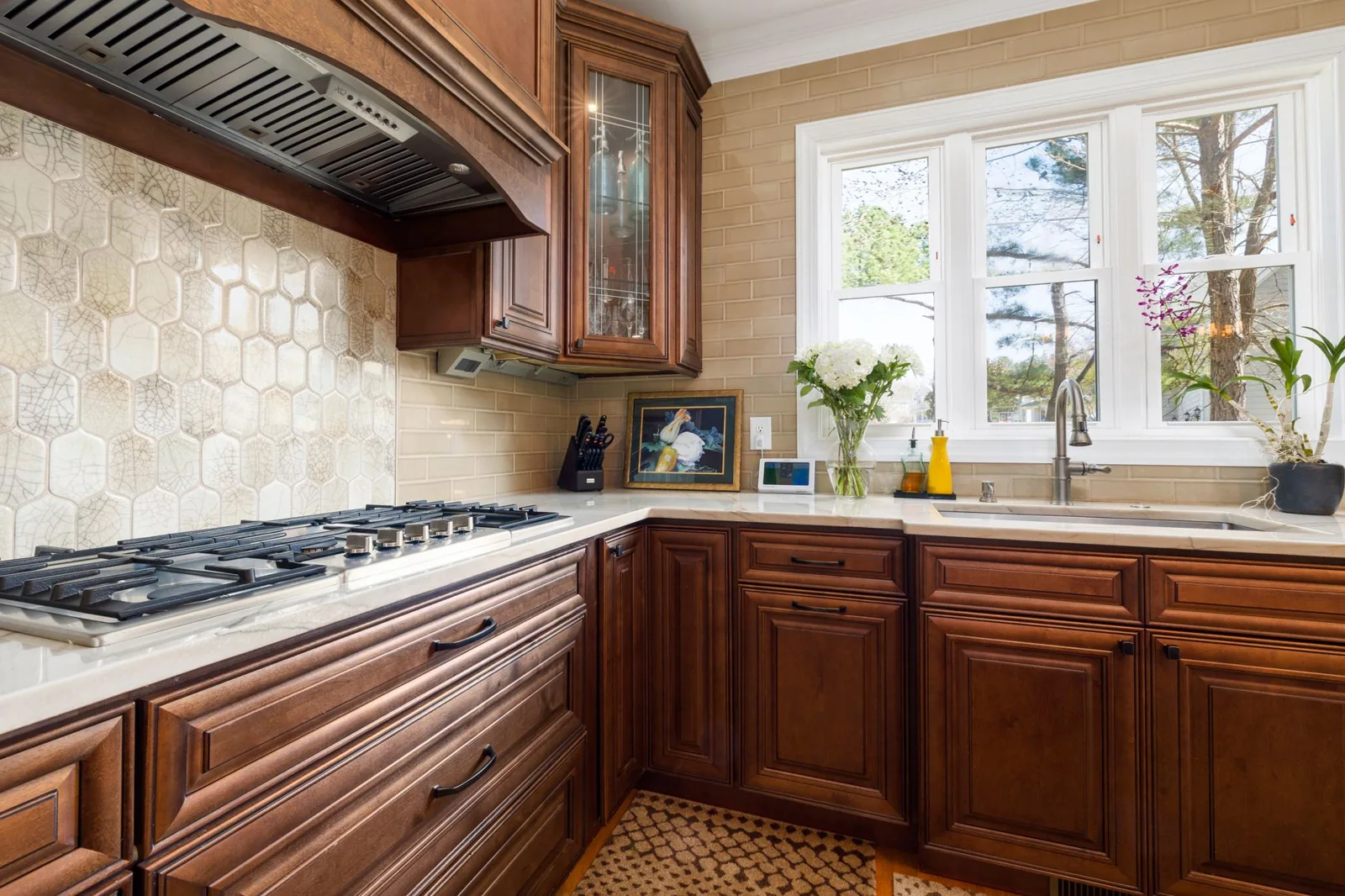
Handmade zellige tile, with its uneven glaze and wavy surface, is the current favorite of designers because no two tiles read exactly alike. It comes in squares, hexagons, and fish-scale shapes. It runs $12 to $40 per square foot and is harder to install flat, so factor in higher labor. A hand-painted or geometric cement tile delivers a similar one-of-a-kind feel at a similar price.
Glass and Metal Accents
Glass tile reflects light and makes a small, windowless kitchen feel brighter, which is why it shows up so often in urban apartments and condos. A single strip of glass or metal as an accent behind the range is a low-cost way to add color without committing the whole wall. Budget $15 to $40 per square foot installed.
Peel-and-Stick for Rentals and Quick Wins
Genuine peel-and-stick tile has improved sharply and can look surprisingly convincing in photos. It will not survive scrubbing the way fired tile does, and heat behind a gas range can loosen the adhesive, but for a rental where you can’t make permanent changes, or for a weekend refresh before listing a home, it is the fastest option. Plan on $8 to $20 per square foot and an afternoon of work.
Photo by Max Vakhtbovych via Pexels
If you are working with a tight budget but still want the whole kitchen to feel pulled together, pair a bold backsplash with more restrained choices everywhere else — our kitchen remodel ideas on a budget cover that balance in more detail.
Doing It Yourself vs. Hiring a Pro
The honest answer is that a backsplash is one of the easier tiling projects to attempt yourself, but the result depends entirely on your tolerance for detail.
DIY makes sense when you have a simple layout, straight walls, and no need for electrical or plumbing work behind the tile. A subway tile backsplash over a small area is a realistic first tiling project: tools run $50 to $150, materials for 30 square feet are under $800, and the work is contained in one room. The catch is that uneven grout lines and lippage — where one tile sits proud of its neighbor — are impossible to un-see once the grout dries.
Hiring a pro is the better call when you want glass, stone, or zellige (all harder to cut and level), when you need the backsplash to wrap around outlets and a range hood, or when the wall needs repair first. Professional labor for a backsplash typically runs $7 to $20 per square foot, and a good installer will deliver perfectly even lines in a day or two.
A middleground that many handy homeowners use: do the demo and wall prep yourself, then pay a tile setter only for the install. If you are trying to figure out whether this scope of work counts as a remodel or something smaller, our explainer on kitchen remodel vs renovation clarifies the difference and the expectations that come with each.
Frequently Asked Questions
What is the most popular kitchen backsplash right now?
White 3-by-6-inch subway tile remains the most-installed option overall, but zellige tile and slab stone are the most-requested upgrades in higher-end remodels. Printed porcelain that mimics marble splits the difference on price.
How much does it cost to install a backsplash?
For a standard 30-square-foot kitchen, expect roughly $750 to $1,500 for ceramic tile installed, $1,200 to $2,500 for glass, and $1,500 to $3,000 or more for natural stone slab. DIY cuts those numbers to materials-only.
Can you put a backsplash over an existing backsplash?
It is possible with tile, but it is usually a mistake. Thinset bonds poorly to glossy existing tile unless that tile is scuffed or primed, and the extra thickness creates ugly reveals around outlets and countertops. Removing the old backsplash is the cleaner job.
Do you really need a backsplash in a kitchen?
Not strictly, but the wall behind the sink and range will take water and grease damage without one. If you skip tile entirely, at minimum run a minimum 4-inch strip of the same material as your countertop along the wall at the sink and range.
How do I clean a tile backsplash?
Wipe weekly with warm water and a few drops of dish soap, and degrease the area behind the range monthly. Avoid abrasive pads on glass and natural stone, and reseal marble and travertine once a year to keep stains from soaking in.
For tile and layout inspiration, Better Homes & Gardens rounds up kitchen backsplash ideas.
The Bottom Line
A backsplash is the rare kitchen upgrade that is cheap, fast, and visible all at once. Classic subway or ceramic tile gives most homes the best return for the least money, while glass, zellige, and slab stone are worth the premium if you plan to stay and enjoy them. Whatever you choose, buy a sample, watch the grout color, and match the material to how much abuse the wall will actually take.
Start with a material that fits how you cook and how long you plan to live there, then set a budget of $750 to $2,500 for a typical tile install — or plan a weekend of DIY for a few hundred dollars in materials. Done right, a backsplash is one of the few kitchen decisions that looks as good in the listing photos as it does in person.