Shower Tile Ideas: 10 Looks for Any Budget and Style
Shower tile does more than keep water out of your walls. It is the single largest visible surface in most bathrooms, and the right shower tile ideas can make a tired alcove look custom-built — or turn a plain stall into the room’s focal point — without moving a single pipe. Because tile covers three full walls from floor to ceiling, the choices you make here set the mood for everything else in the room.
The good news is that the price range is enormous, which means there is a strong option at almost any budget. You can tile a standard 60-inch tub-shower surround for under $1,000 in basic ceramic, or spend $5,000 or more on book-matched marble and hand-laid mosaic. The sections below are organized by style first and cost second, so you can find a look you actually like and then dial the material up or down to fit your wallet.
Before you pick anything, follow the two rules that save the most regret. First, buy a physical sample and tape it to the wall in your shower’s light before you commit — tile looks completely different wet, under a vent fan, and against your actual paint. Second, order 10 to 15 percent extra for cuts, breakage, and future repairs, because dye lots change and a discontinued tile is nearly impossible to match later.
Why Shower Tile Is Worth Getting Right
Unlike a backsplash, which you can swap in a weekend, shower tile is a long-term commitment. It is bonded to waterproofing that you do not want to disturb, and tearing it out means redoing the waterproofing underneath. Done well, a properly installed tile shower lasts twenty years or more; done poorly, it leaks inside your walls and becomes a mold problem you cannot see until it is expensive.
Water is the whole game here. The tile itself is decorative, but the waterproofing membrane behind it is what keeps the studs dry. Most pros now install a surface-applied membrane like Schluter’s Kerdi system or a liquid membrane such as Custom Building Products’ RedGard beneath the thinset. The tile is the finish layer; the membrane is the actual waterproofing. That is the main reason shower tile costs more per square foot labor than a kitchen backsplash — every line has to be plumb, level, and watertight.
For most homeowners, choosing shower tile comes down to the same three-way trade-off as any surface: cost, appearance, and how hard it is to keep clean. Small tiles mean more grout lines to scrub; highly polished stone means regular sealing; trendy colors can date the room faster than you would like. The sections below work through the timeless options and the more current ones, with honest installed prices for each.
Classic Shower Tile Ideas
These are the looks that survive bathroom trends because they are easy to find, forgiving to install, and hard to get wrong when it comes time to sell.
White Subway Tile
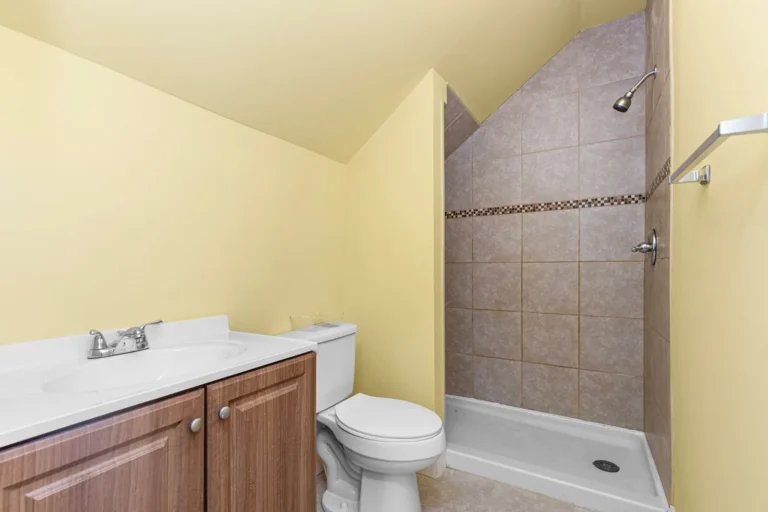
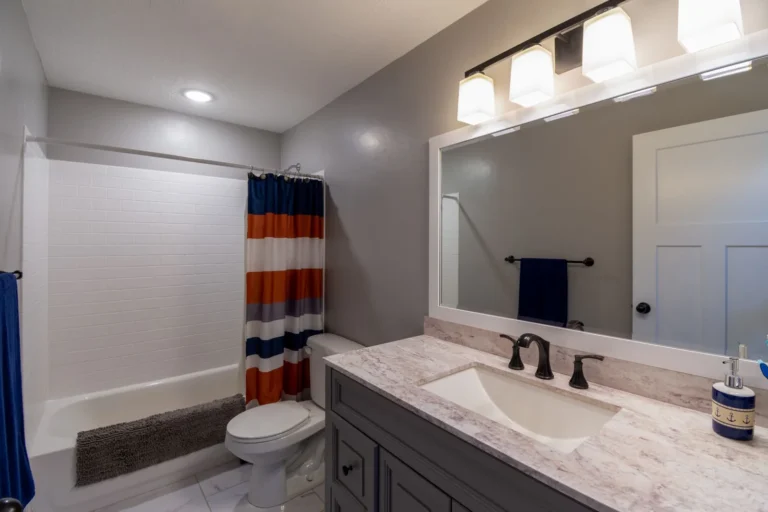
White 3-by-6-inch subway tile is the default shower choice for a reason. It costs little, reads clean against any fixture finish, and works in a house built in 1910 or 2021. Installed, expect $8 to $18 per square foot including labor, which puts a standard 70-square-foot tub surround at roughly $600 to $1,300. For more character without more risk, run it vertically, stack it in a grid instead of an offset, or introduce a contrasting grout in charcoal or sage.
Large-Format Porcelain
Large-format porcelain panels, usually 12-by-24 inches or up to 24-by-48 inches, are the modern workhorse. Fewer grout lines means less scrubbing and a sleeker, more slab-like look. Porcelain is denser and less water-absorbent than ceramic, which is what you want in a wet area. Expect $3 to $12 per square foot for the tile and $10 to $22 per square foot installed. The larger the format, the higher the labor, because the pieces are heavy and the wall has to be dead flat.
Marble and Travertine
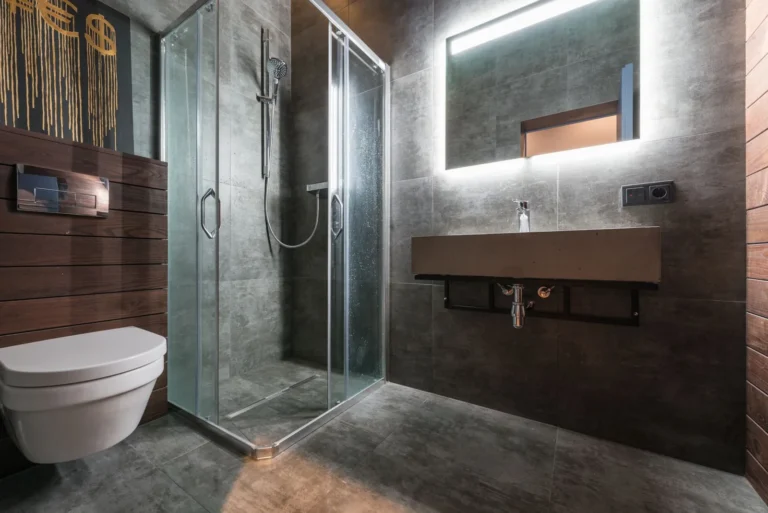
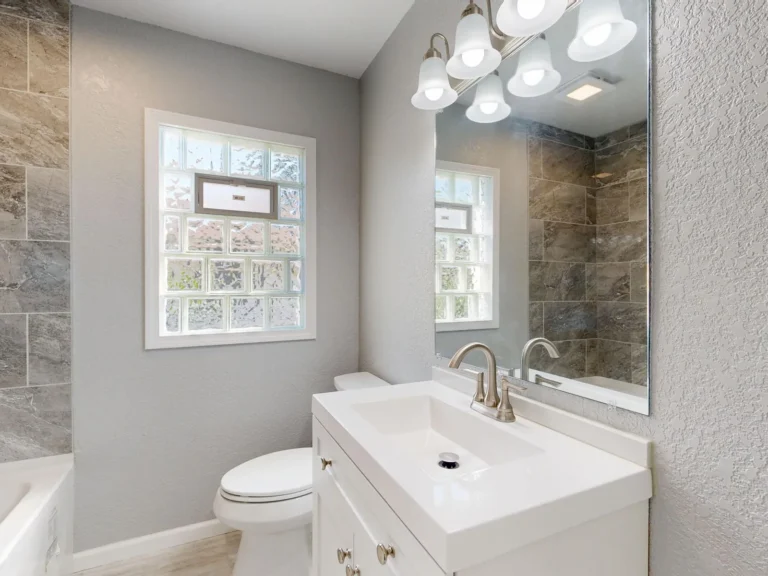
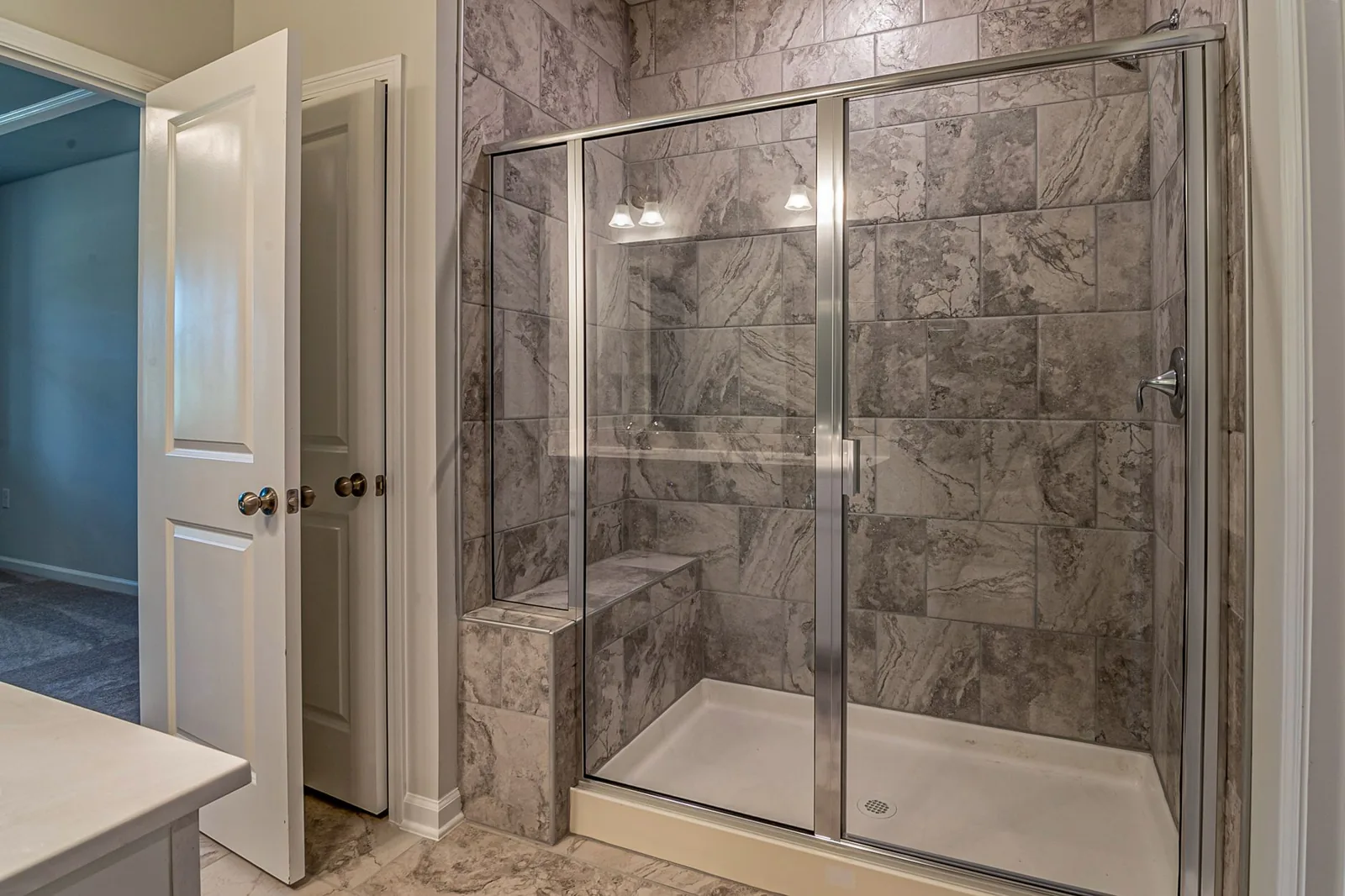
Natural stone delivers veining and depth that printed tile rarely matches, and it is still the go-to for high-end bathrooms. Marble shower tile runs $8 to $35 per square foot, but it is porous, needs sealing once or twice a year, and can etch when hard water and acidic soaps sit on it. If you want the look without the upkeep, a high-quality porcelain printed with a marble pattern is the pragmatic middle ground — most people cannot tell the difference at arm’s length.
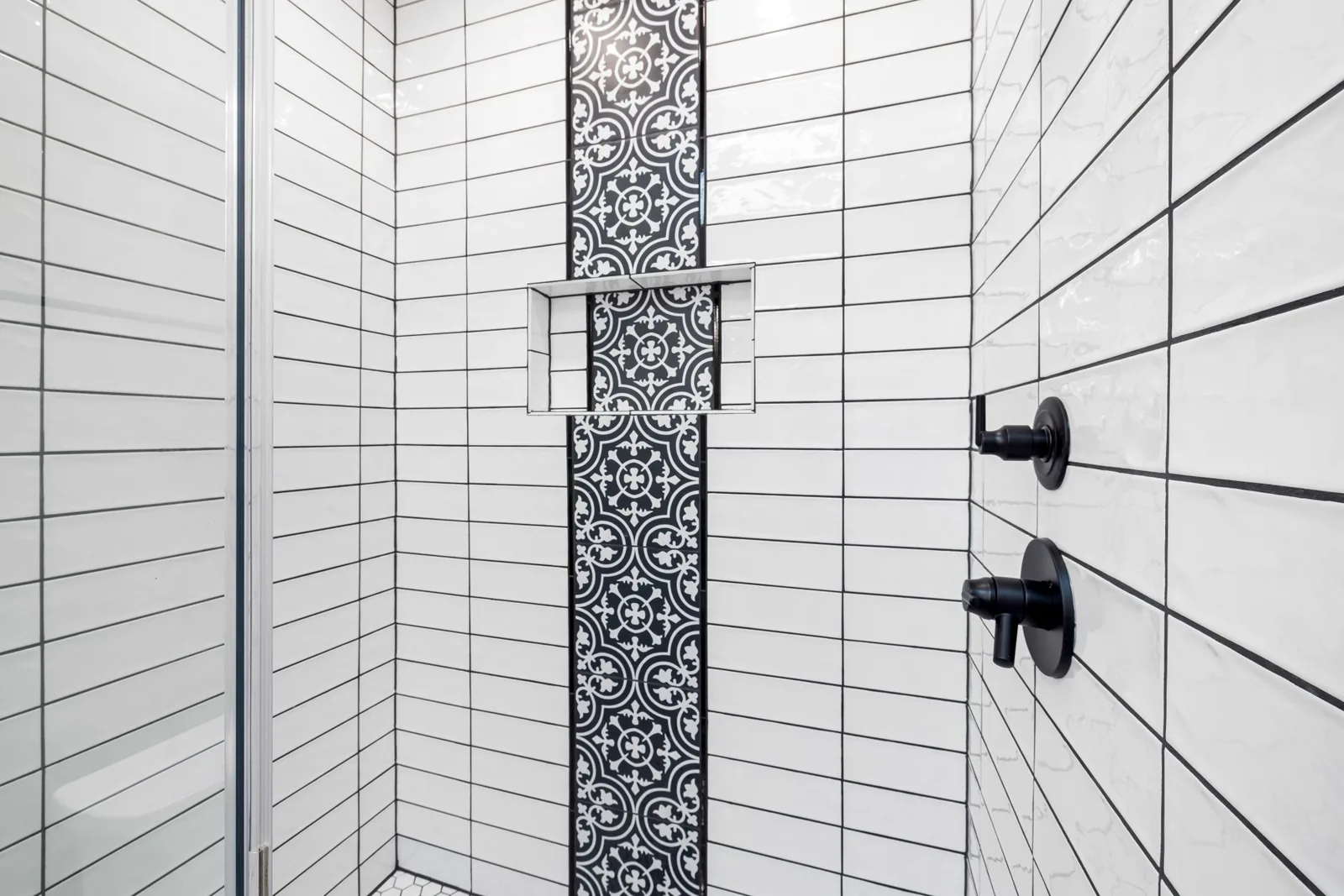
Photo by Curtis Adams via Pexels
What Shower Tile Costs, Material by Material
Prices below are realistic installed ranges for a standard 70-square-foot tub-shower surround, including labor, current as of 2025. Regional labor rates move these numbers a few hundred dollars either way, but the ranking between materials holds everywhere.
- Ceramic subway tile: $8–$18 per square foot installed — the best value for most homes.
- Large-format porcelain: $10–$22 per square foot installed — modern look, fewest grout lines.
- Glass tile: $15–$40 per square foot installed — high waste and labor because of sharp edges and visible adhesive.
- Natural stone (marble, travertine, slate): $15–$60 per square foot installed — luxury look with regular sealing required.
- Pebble or mosaic sheet tile: $10–$30 per square foot installed — great for shower floors, tedious to grout.
The table below lines up the four options most homeowners actually end up choosing between.
| Material | Installed cost per sq ft | Best for | Upkeep |
|---|---|---|---|
| Ceramic subway tile | $8–$18 | Budgets, classic looks | Low |
| Large-format porcelain | $10–$22 | Modern bathrooms | Low |
| Glass tile | $15–$40 | Accent walls, color | Medium |
| Natural stone | $15–$60 | Luxury, resale appeal | High |
A note that saves real money: the tile itself is only about a third of the job. Labor, waterproofing, thinset, grout, and trim pieces make up the rest, which is why contractor quotes range so widely on what looks like identical tile. If you are weighing tile against the rest of a remodel, see our breakdown of bathroom remodel costs to see how the pieces add up.
Modern Shower Tile Ideas
If the classic list feels too safe, these options lean bolder without tipping into “what was I thinking” territory in a few years.
Zellige and Handmade-Look Tile
Handmade zellige tile, with its uneven glaze and wavy surface, is the current designer favorite because no two pieces read exactly alike. It is also more expensive and harder to install flat, so expect a real labor premium. Budget $15 to $40 per square foot installed, and plan for slightly wider grout lines, which is what gives zellige its warmth in the first place.
Hexagon, Fish Scale, and Geometric Shapes
Shape is the cheapest way to add personality without adding color. A matte white hexagon or fish-scale tile keeps the room bright and resale-friendly while reading as a deliberate design choice rather than a default. These come in ceramic and porcelain at $5 to $18 per square foot for material, with labor running higher than straight field tile because of all the small cuts at the edges.
Accent Niches and Feature Walls
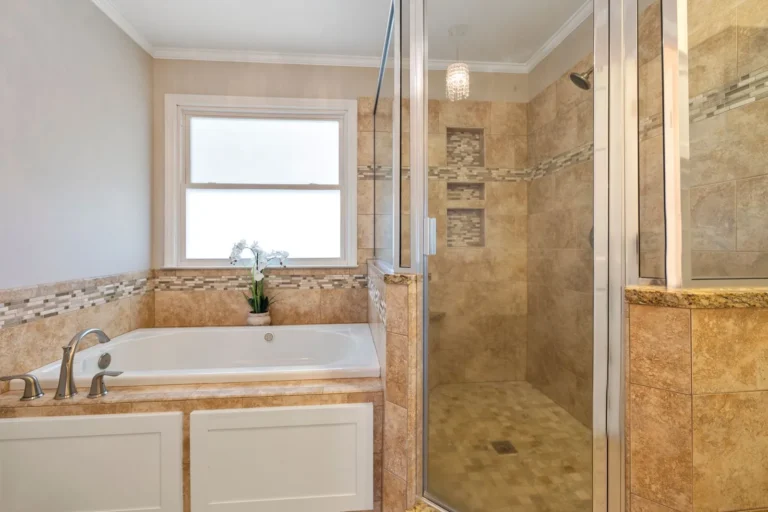
If full walls of statement tile feel like too much, put the money in one place. A tiled recessed niche lined with a contrasting mosaic or a single accent wall in glass or patterned tile gives you the custom look for a fraction of the cost of doing every wall. This is the highest-impact shower tile idea for the least square footage.
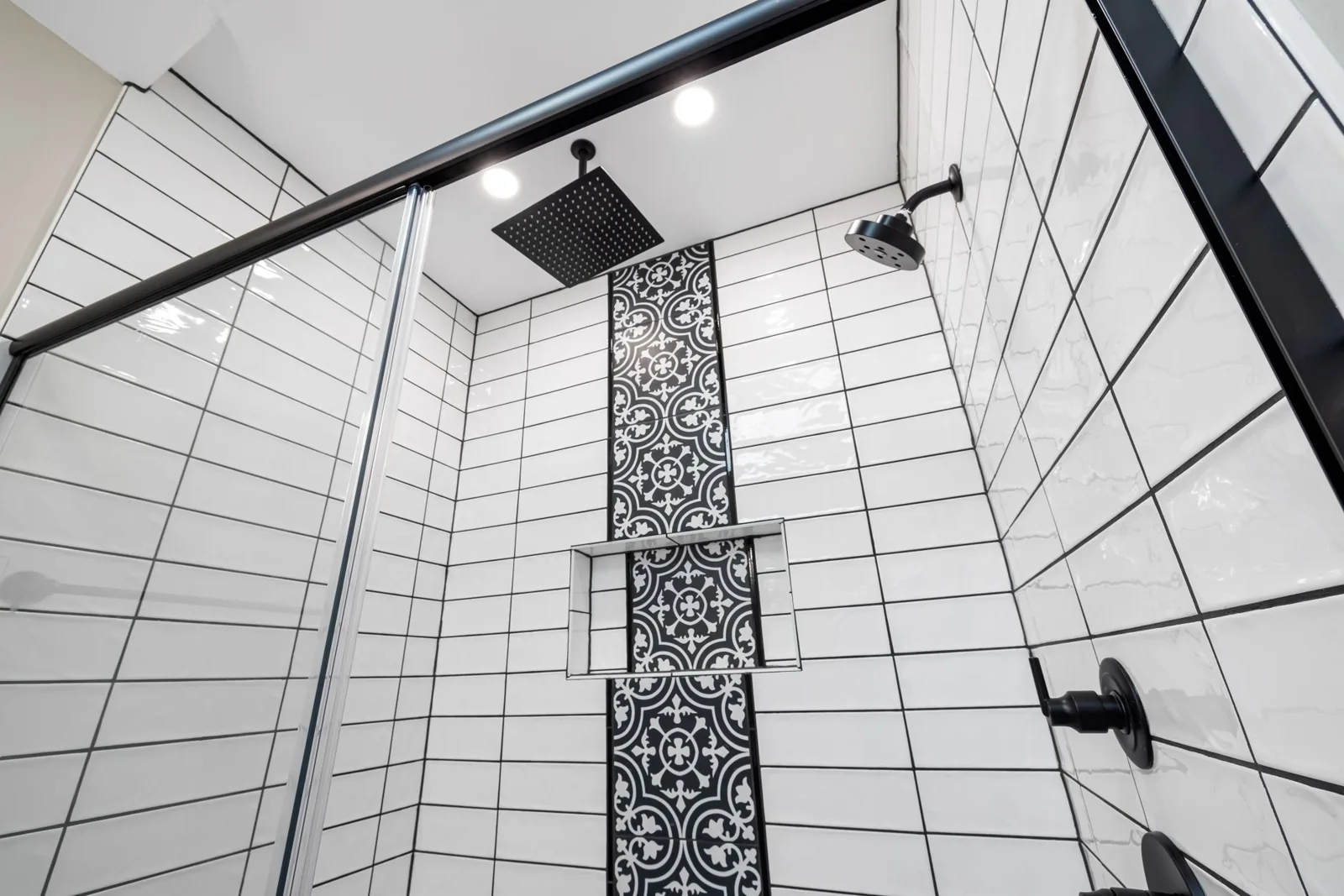
Photo by Curtis Adams via Pexels
If your budget is tight but you still want the whole bathroom to feel pulled together, pair a modest field tile with one accent moment and spend the savings elsewhere — our bathroom remodel ideas on a budget walk through that balance in detail.
Picking Grout, Layout, and Tile Size
Most shower tile regret comes down to three decisions people make at the last minute: grout color, layout direction, and tile size.
Grout color changes everything. A matching grout reads calm and quiet and hides imperfect cuts; a contrasting grout makes every tile pop and turns a basic subway job into a statement. The trade-off is that contrasting grout also highlights every uneven line, so it raises the stakes on the installer. For a shower, use a grout rated for wet areas — an epoxy grout like Mapei’s Kerapoxy or a premium cement grout with a sealer — because standard grout will discolor and hold moisture.
Layout direction controls how big the room feels. Running subway tile vertically makes a low ceiling feel taller. Running a large-format tile horizontally makes a narrow stall feel wider. A stacked grid reads modern; an offset brick pattern reads classic. These are free decisions, and they matter more than upgrading the tile by a dollar a foot.
Tile size dictates how flat your walls must be. Large tiles demand near-perfect walls, and any bow will cause “lippage” — one tile edge sitting proud of its neighbor — that you cannot un-see once the light hits it. If your walls are old and wavy, smaller tile is more forgiving. Let the condition of your substrate drive the size you choose, not just the photo you saved.
Doing It Yourself vs. Hiring a Pro
Shower tile is not a beginner project, and the honest advice is to hire for the wet zone.
Hiring a pro is the right call for most people. A shower has to be waterproofed, sloped, and built to code, and a failed waterproofing job means demolition, mold remediation, and a redo that costs more than the original job. Professional labor for shower tile typically runs $10 to $25 per square foot, but a good installer is worth it because they are really selling you a dry wall cavity, not just pretty tile.
DIY can make sense if you are tiling over an intact, waterproof tub surround and are confident in your plumb lines and cuts. A modest 3-by-6 subway job in a tub alcove is a realistic project for a patient DIYer, and you can save the entire $700 to $1,800 labor bill. The catch is that any mistake behind the tile is a water leak, and a leak inside a wall is the most expensive kind of mistake a homeowner can hide from themselves.
The middle ground many handy homeowners use: pay a pro to do the waterproofing and pan — the part that actually keeps water out — and tile the walls yourself afterward. If you are reconsidering the entire shower layout rather than just the surface, compare the numbers in our guide to walk-in shower costs.
Frequently Asked Questions
What is the most popular shower tile right now?
White subway tile is still the most-installed option overall, but large-format porcelain is the fastest-growing choice in remodels, and zellige tile is the most-requested upgrade in higher-end bathrooms. Printed porcelain that mimics marble splits the difference on price.
How much does it cost to tile a shower?
For a standard 70-square-foot tub-shower surround, expect roughly $600 to $1,300 for basic ceramic installed, $1,400 to $2,800 for large-format porcelain, and $1,500 to $4,000 or more for natural stone and glass. A fully custom walk-in shower runs higher because there is more surface area.
What is the easiest shower tile to keep clean?
Large-format porcelain is the easiest, simply because it has the fewest grout lines to scrub. Glossy or polished finishes also wipe down faster than matte or textured surfaces, which trap soap scum. If you hate grout, choose the biggest tile your walls can support and a grout rated for wet areas.
Can you tile over existing shower tile?
It is possible but usually a mistake. Thinset bonds poorly to glossy existing tile without serious scuffing or a bonding primer, and the added thickness creates ugly reveals around the drain, valve, and edges. More importantly, old tile is often hiding failing waterproofing, and covering it hides the problem, it does not fix it.
Do you need to seal shower tile?
Porcelain and glazed ceramic do not need sealing, but the grout does — reseal cement grout every one to two years. Natural stone like marble and travertine needs sealing because the stone itself is porous. Epoxy grout never needs sealing, which is one reason to spend the extra on it in a shower.
For tile material and pattern options, This Old House covers shower tile.
The Bottom Line
Shower tile is one of the few bathroom surfaces where spending a little more up front pays for itself in fewer headaches later, because ripping it out is a much bigger job than putting it in. For most homes, white subway or large-format porcelain gives the best combination of looks, durability, and resale value for the least money, while glass, zellige, and natural stone are worth the premium if you plan to stay and enjoy them.
Start with a material that matches how your bathroom is used, then choose grout and layout to suit it, and set a budget of roughly $600 to $3,000 for the tile on a standard surround — more if you are building a custom walk-in. Get the waterproofing right, buy a real sample, and a well-chosen shower tile will still look current in a decade, which is more than you can say for almost anything else in the room.