How Much Does a Bathroom Remodel Cost? (2025 Price Guide)
How much does a bathroom remodel cost? That is the first question every homeowner asks, and the honest answer is that it depends on more variables than most people expect. For a full bathroom, the 2025 national average lands between $6,600 and $17,500, with most mid-range projects settling around $11,000 to $13,500. A simple half-bath refresh can come in under $5,000, while a gutted primary suite with heated floors and a custom vanity can top $40,000 without much trouble.
The wide range exists because a bathroom packs a lot of trades into a small square footage. Plumbing, electrical, waterproofing, tile, glass, and fixtures all cost real money, and labor typically eats 40% to 65% of the total budget. If you walk into a remodel knowing where that money goes, you can cut in the right places without ending up with a leak or a room you hate.
This guide breaks down real 2025 numbers by bathroom size, scope, finish level, and line item, so you can budget a remodel that matches your house and your savings instead of guessing.
Average Bathroom Remodel Cost by Size
Bathroom remodels are priced by the room’s size and configuration more than anything else. Here is what you can expect to pay, labor and materials included, as of 2025.
| Bathroom Type | Typical Size | Average Cost Range |
|---|---|---|
| Half bath / powder room | 15–25 sq ft | $2,000–$7,000 |
| Small full bath | 35–40 sq ft | $6,600–$12,000 |
| Standard full bath | 40–70 sq ft | $12,000–$25,000 |
| Primary / master bath | 60–160 sq ft | $15,000–$40,000+ |
A powder room costs less mostly because it has no shower or tub — no plumbing rough-in changes, no waterproofing, no glass. A primary bath costs more because homeowners usually upgrade the finishes there: double vanities, separate tub and shower, heated floors, and better tile.
Cost Per Square Foot
Per-square-foot pricing is useful for a quick sanity check but it misleads more than it helps. Bathrooms mostly run $70 to $275 per square foot, and the reason the top end is so high is that expensive items are concentrated in a tiny area. A 40-square-foot bath with a $4,000 custom vanity and $3,000 of tile is “expensive per square foot” even though the room is small.
Use square-footage as a rough ceiling, not a line-item estimate. Two bathrooms of the same size can cost $8,000 or $25,000 depending on whether you are moving plumbing or keeping it where it is. If you want a deeper breakdown of money by surface area, see our bathroom remodel cost per square foot guide.
What Drives the Cost of a Bathroom Remodel
Five line items account for nearly all of the variance between a $7,000 remodel and a $30,000 one. Understanding them is how you actually control the total.
- Moving plumbing. Keeping the toilet, sink, and shower in their current spots is the single biggest money saver. Relocating a drain or water line can add $1,500 to $5,000 once you pay for rough-in work and floor surgery.
- Tile and waterproofing. Tile material runs $2 to $30+ per square foot just for the tile. Labor to install it — plus backer board, membrane, and grout — typically costs more than the tile itself.
- Fixtures and hardware. A basic alcove tub-shower unit is a few hundred dollars. A freestanding soaking tub plus a separate walk-in shower with a glass enclosure can hit $6,000 to $12,000 on their own.
- Vanity and countertop. Stock vanities start around $200; custom cabinetry with a quartz top can run $2,500 to $6,000.
- Permits and unexpected repairs. Most municipalities want $100 to $500 for a remodel permit. Once walls open, water-damaged framing, bad wiring, or cast-iron drain pipe replacement can add thousands you did not plan for.
Labor vs. Materials Split
Plan on labor being roughly half the job. A mid-range full-bath remodel might break down like this:
- Tile work, waterproofing, and flooring: 25–30% of budget
- Plumbing rough-in and fixture install: 20–25%
- Electrical and lighting: 5–10%
- Vanity, countertop, and cabinetry: 15–20%
- Painting, trim, and finish work: 5–10%
That split is why a “budget” remodel that only swaps fixtures still feels expensive — the plumber and tiler charge by the hour no matter how cheap your new faucet was.
Budget vs. Mid-Range vs. High-End
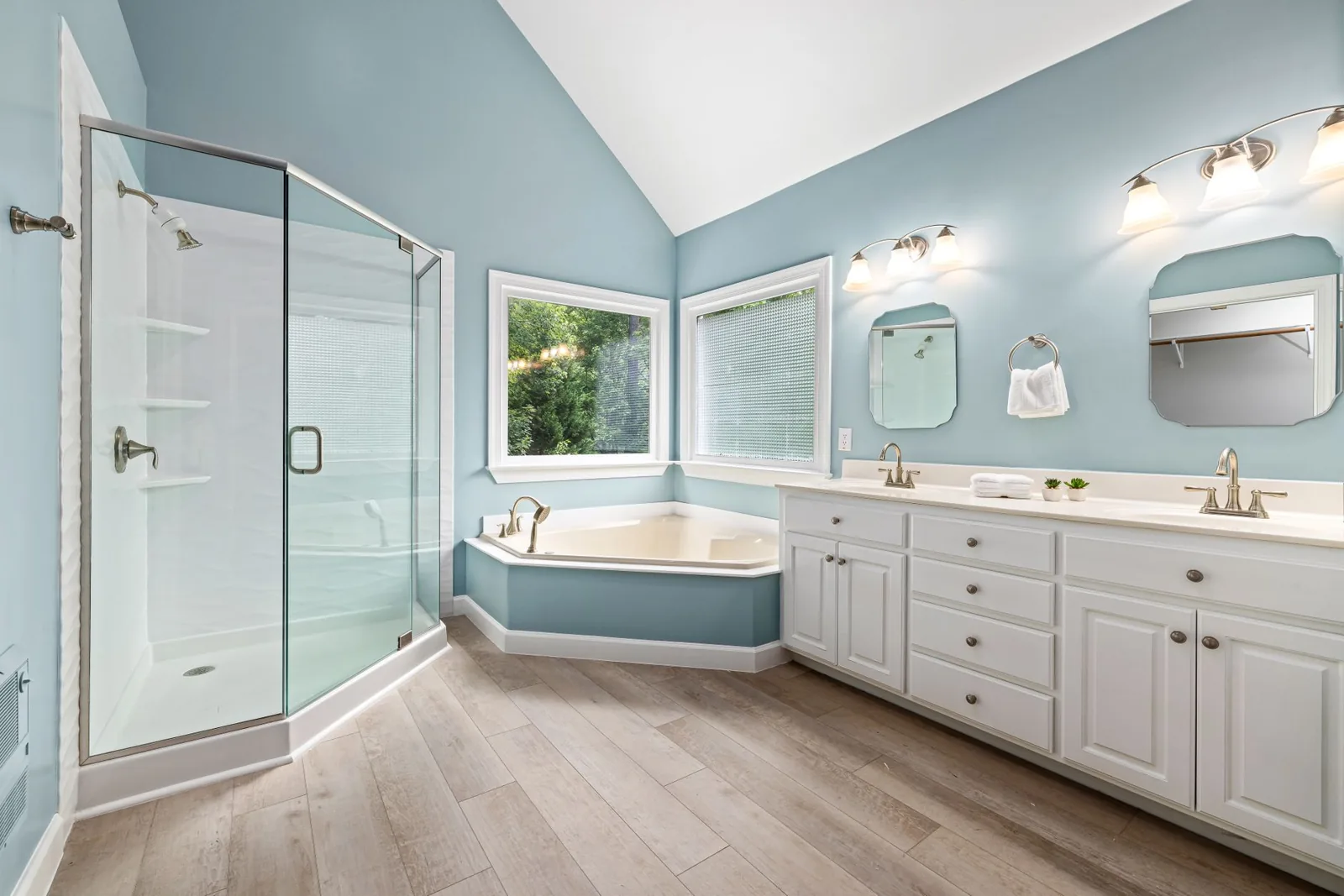
Photo by Curtis Adams via Pexels
The finish level you pick swings the total more than the size of the room. Here is how the same standard full bath prices out at three tiers.
| Finish Level | What You Get | Full Bath Cost |
|---|---|---|
| Budget | Stock vanity, fiberglass tub-shower, basic ceramic tile, standard fixtures | $6,600–$12,000 |
| Mid-range | Semi-custom vanity, porcelain tile, quartz top, glass shower door, better fixtures | $12,000–$22,000 |
| High-end | Custom cabinets, natural stone, freestanding tub + separate shower, heated floors | $22,000–$40,000+ |
The budget tier is completely livable and is the right call for a guest bath or a house you plan to sell soon. The mid-range tier is where most full remodels land and where you get the best return. The high-end tier is for a bathroom you plan to use for a decade — those materials are a lifestyle choice, not an investment move.
For ideas on trimming the mid-range down without making it feel cheap, our budget bathroom remodel ideas article has concrete cuts that hold up.
How Much Specific Upgrades Add
If you are weighing a specific swap, these are the going 2025 prices for the most common individual upgrades:
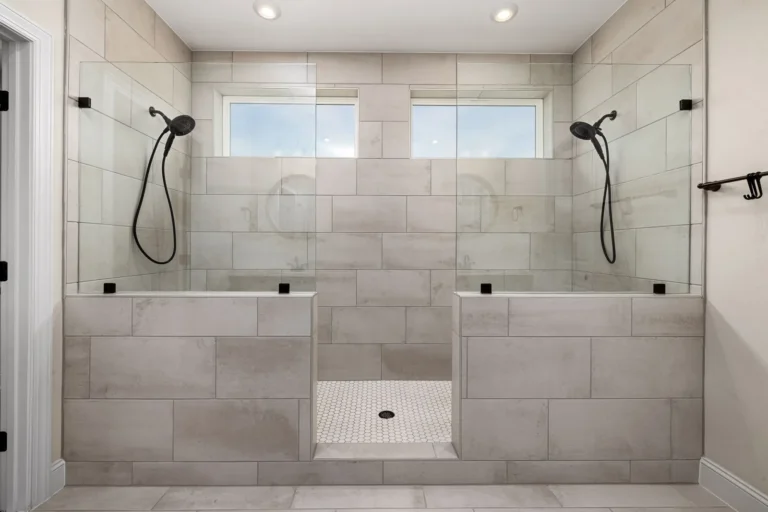
- Walk-in shower conversion: $4,200 to $8,500, including tile, pan, and glass.
- Bathtub-to-shower conversion: $2,500 to $7,000 after demolition and drain adjustment.
- Freestanding soaking tub: $1,500 to $5,000 for the tub alone, plus plumbing.
- Double vanity installation: $1,500 to $4,500 with countertop and sinks.
- Heated tile floor: $10 to $22 per square foot installed.
- New exhaust fan: $150 to $550 including vent work.
If a walk-in shower is on your list, the pricing overlaps enough with a tub swap that it is worth comparing them line by line — our walk-in shower cost breakdown covers the full range, and if you are still deciding between the two, see our walk-in shower vs. bathtub comparison.
How to Budget and Save Without Cutting Corners
The goal is not to spend the minimum; it is to spend the minimum without buying problems. These are the cuts that hold up over time.
- Keep the layout. Not moving the toilet, sink, or drain is worth thousands and zero compromise in most rooms.
- Refinish instead of replace. Reglazing an existing tub costs $400 to $700 versus $1,500+ for a new cast-iron tub plus install.
- Do your own demolition. Pulling old tile and fixtures yourself can save $500 to $1,500 — just shut off the water first and check for asbestos if the house predates 1980.
- Buy fixtures in a line, not à la carte. Matching faucet, showerhead, and hardware from one manufacturer’s entry line is cheaper than mixing premium pieces.
- Get three written quotes. Bids for the same scope routinely vary by 20% to 40%. The contractor’s schedule and overhead matter as much as the materials.
Add a 10% to 20% contingency on top of whatever bid you accept. Almost every remodel finds something behind the drywall, and the projects that go over budget are the ones that never planned for it.
Photo by Max Vakhtbovych via Pexels
Frequently Asked Questions
How much does a bathroom remodel cost in 2025?
For a full bathroom, expect $6,600 to $17,500 on average, with mid-range projects landing around $12,000 to $15,000. A half bath runs $2,000 to $7,000, and a high-end primary bath commonly passes $30,000.
Can I remodel a bathroom for $5,000?
Yes, but only a small or half bath, and mostly cosmetic: paint, a new vanity, a new toilet, updated lighting, and a refreshed shower surround. A full-gut remodel under $5,000 almost always means doing the labor yourself or accepting very basic finishes.
Do bathroom remodels add value to a home?
A mid-range remodel typically recoups roughly 55% to 70% of its cost at resale, depending on your market and how dated the old bathroom was. The biggest dollar wins come from fixing functional problems, not from luxury finishes — an updated bathroom also helps a home sell faster even when it does not fully pay you back.
How long does a bathroom remodel take?
A standard full-bath remodel takes two to four weeks once work starts. Projects that move plumbing, need structural repairs, or involve custom cabinets and stone can stretch to six to eight weeks.
Should I hire a general contractor or a specialist?
For anything beyond a cosmetic refresh, hire a licensed general contractor (or a design-build remodeler) who pulls permits and carries liability insurance. Coordinating a plumber, electrician, and tiler yourself saves a markup but costs you scheduling, liability, and usually time.
The Bottom Line
How much does a bathroom remodel cost? In 2025, the working answer is $6,600 to $17,500 for a full bath, with the midpoint around $13,000 and a wide tail on either side depending on size, layout changes, and finish level. Keep the plumbing where it is, spend real money on waterproofing and tile labor instead of gimmicks, and add a 10% to 20% contingency.
The best way to sharpen that number for your specific room is to get three written bids for an identical scope of work — and to ask each contractor where the line items differ. For a fuller picture of the full remodel range, start with our bathroom remodel cost guide, and if a vanity swap is the main event, our bathroom vanity cost article breaks down that piece on its own.
For current average ranges and market data, the Angi bathroom remodel cost guide and This Old House’s bathroom remodeling cost breakdown are both solid, regularly updated references.