Master Bathroom Remodel Cost: What Homeowners Actually Pay in 2026
The master bathroom remodel cost most homeowners land on is between $10,000 and $35,000, with a national midpoint around $20,000 to $25,000 for a mid-range gut renovation. At the low end, a cosmetic refresh of a small ensuite can run $6,000 to $8,000. At the top, a luxury master bath with a freestanding soaking tub, a custom double vanity, heated floors, and a walk-in steam shower easily clears $60,000 — and in high-cost metros like San Francisco or New York, $100,000 is not unusual.
Those are honest ranges, not sales numbers. What separates a $12,000 remodel from a $40,000 one is almost never a single line item. It’s the scope of the demolition, the quality of the fixtures and tile, whether you move plumbing, and how much structural or electrical work the space actually needs.
This guide breaks the total into pieces you can price, so you can decide where to spend, where to save, and what a fair bid looks like before you sign a contract.
What Determines Your Master Bathroom Remodel Cost
Three factors do most of the heavy lifting on price: size, scope, and finish level. Understand these and you can predict a contractor’s bid within a few thousand dollars before they even measure.
Size. Master bathrooms are generally larger than hall baths — often 60 to 120 square feet, and sometimes more. At an average of $125 to $250 per square foot for labor and materials, a hundred-square-foot master bath is a very different job from a forty-square-foot powder room. Bigger rooms need more tile, more drywall, more waterproofing, and more linear feet of plumbing and trim.
Scope. A “remodel” can mean swapping the vanity and repainting, or it can mean stripping to the studs and relocating the toilet. The more you touch, the more you pay. Moving a drain line under a concrete slab can cost $1,000 to $3,000 on its own before you buy a single fixture.
Finish level. Two showers that look similar can differ by $5,000. Builder-grade porcelain tile is $3 to $6 per square foot installed; large-format porcelain or natural stone is $15 to $40. A big-box double vanity might be $800, while a custom walnut vanity with quartz counters runs $4,000 to $8,000. The gap compounds across every material in the room.
Master Bathroom Remodel Cost by Scope
Contractors typically talk about remodels in three tiers. Frame your project here first, and the numbers below will hold up far better than a generic national average.
| Feature | Cosmetic Refresh | Mid-Range Remodel | Luxury/Gut Remodel |
|---|---|---|---|
| Typical cost | $6,000 – $15,000 | $20,000 – $45,000 | $50,000 – $100,000+ |
| Scope | Paint, new fixtures, reface vanity, new lighting, regrout | Full gut, new shower/tub, new vanity, tile floors | Full gut, move plumbing, custom cabinetry, heated floors |
| Timeline | 1–2 weeks | 3–6 weeks | 6–12 weeks |
| Plumbing changes | None | Reuse existing rough-ins | Relocate fixtures and drains |
| Best for | Selling soon or worn finish | Updating an outdated but sound bath | Long-term “forever” home |
A cosmetic refresh is where you should start if the layout works and the plumbing is sound. A mid-range remodel is the sweet spot for most homeowners — you replace everything you see but keep the toilet and shower where they are. A luxury remodel is the only tier where you should plan for an architect, a designer, and potentially a building permit beyond the standard plumbing and electrical pulls.
Mid-Range Remodel Line Items
A typical $25,000 mid-range master bath breaks down roughly like this:
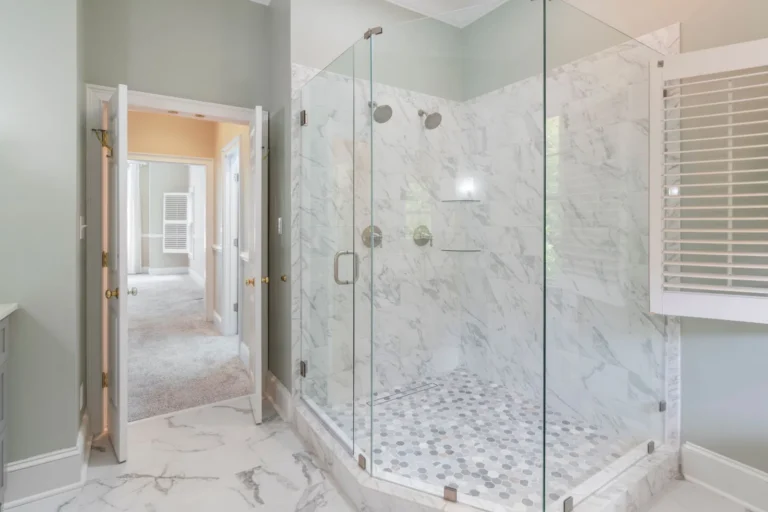
- Shower or tub/shower: $7,000 – $12,000. A tiled walk-in shower with glass enclosure is the single biggest ticket. A prefabricated acrylic unit drops this to $2,000 – $4,000.
- Vanity and countertop: $2,500 – $6,000. Double vanities in a master bath add real cost but also real resale appeal.
- Flooring: $2,000 – $4,500. Porcelain or ceramic tile over new cement board and subfloor prep.
- Plumbing fixtures: $1,500 – $3,500. Faucets, shower valve, toilet, and any new supply lines.
- Electrical and lighting: $1,000 – $2,500. Code requires a dedicated circuit and GFCI protection; add recessed lights and a vent fan.
- Drywall, paint, and trim: $1,500 – $3,000
- Demolition and disposal: $1,000 – $2,500
- Permits: $300 – $1,500 depending on your municipality.
Labor is typically 40% to 60% of the total on a full remodel. That’s why the cheapest meaningful way to cut cost is to keep plumbing in place — moving a toilet or drain can add thousands in labor while returning little to how the room actually feels.
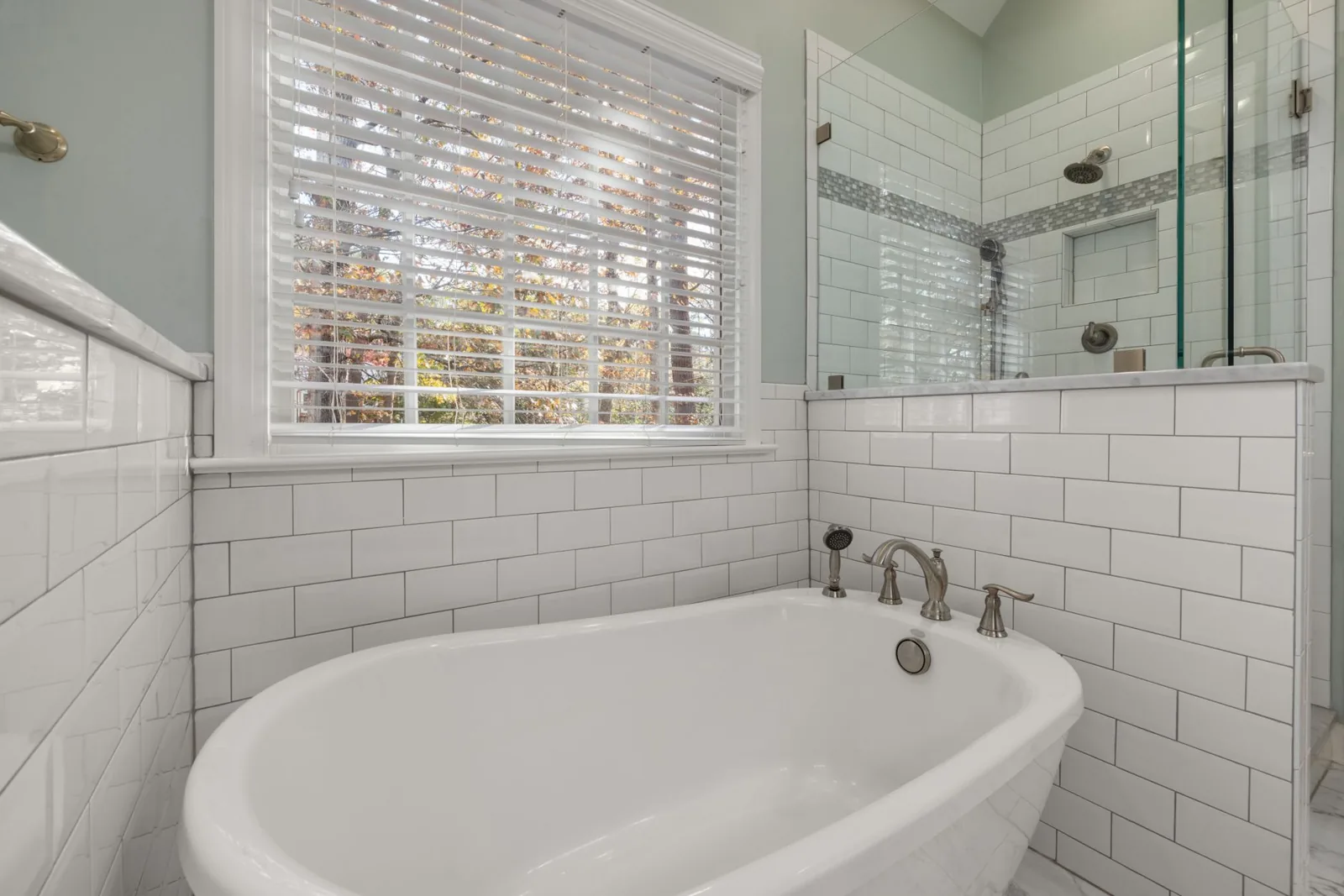
Photo by Curtis Adams via Pexels
Master Bathroom Remodel Cost Per Square Foot
If you’d rather think in square footage, the rule of thumb is $125 to $250 per square foot for a mid-range remodel, and $300 to $600 per square foot for high-end work. But be careful with this number: small bathrooms carry high fixed costs (plumbing, electrical, one-day minimums) that inflate the per-square-foot figure, while large bathrooms let you spread those costs out.
For comparison, our full bathroom remodel cost guide and bathroom remodel cost per square foot breakdown walk through the math for every size of room. If your master bath is on the smaller side — under 50 square feet — expect to pay at the higher end of the per-square-foot range.
Where the Money Actually Goes
Labor and Trades
On a gut remodel you’ll likely touch four or five trades: a general contractor, a plumber, an electrician, a tile setter, and possibly a drywaller and painter. Licensed plumbers in most metros charge $75 to $150 per hour, electricians $65 to $120, and tile setters $4 to $15 per square foot for installation alone. A general contractor coordinates them all and typically marks up the whole job 10% to 20% for the service.
Materials That Move the Needle
- Tile. The single largest material variable. $3/sq ft vs. $25/sq ft is a $10,000 swing on a big master bath.
- Shower glass. A frameless glass enclosure runs $1,500 to $4,000 installed, versus a $200 shower curtain rod.
- Countertops. Laminate is $150 to $400; quartz is $1,000 to $4,000 installed for a double vanity.
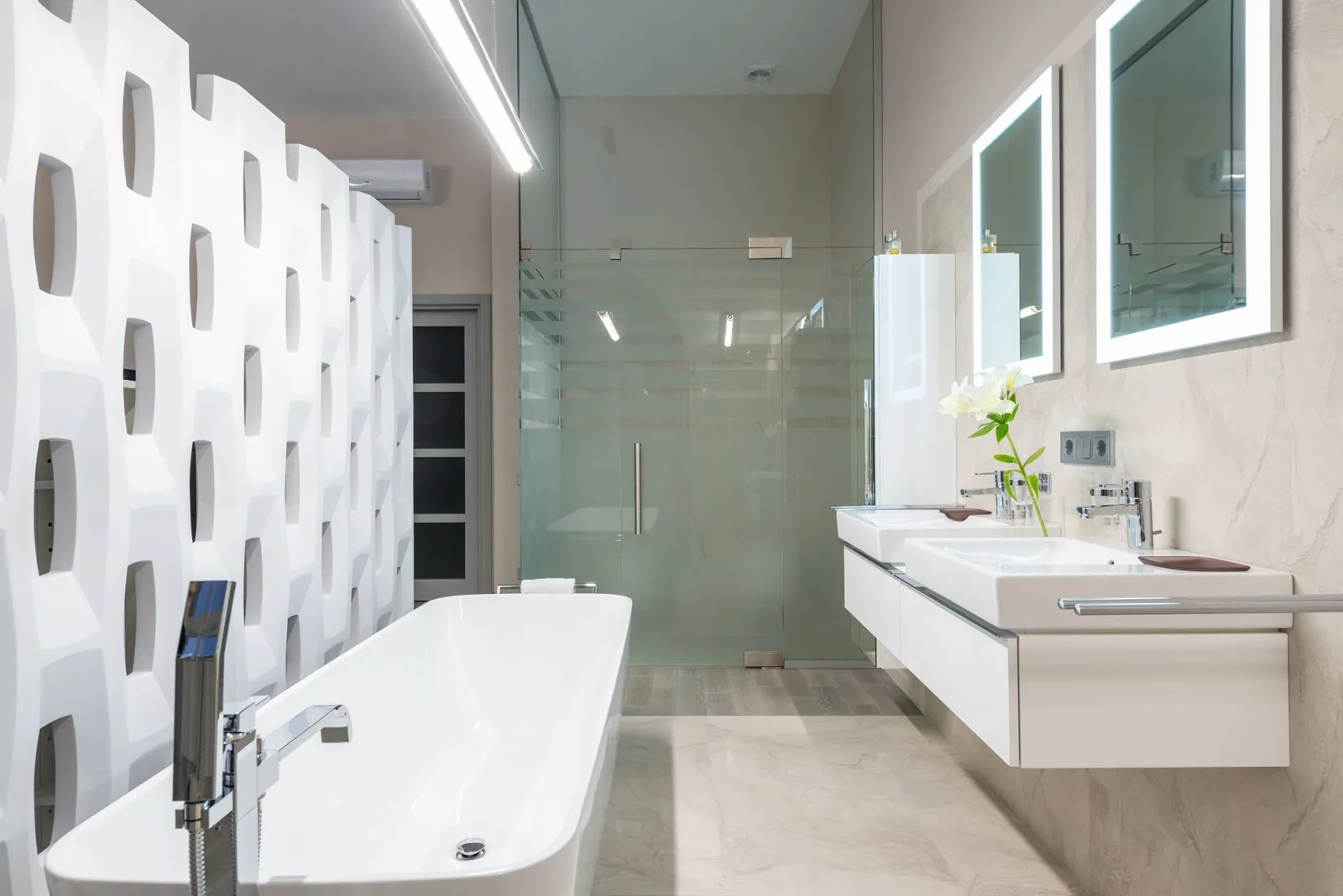
- Tub vs. shower. A freestanding soaking tub ($1,200 to $5,000 for the tub alone) plus surrounding plumbing adds thousands. A standard alcove tub can be under $600.
- Heated floors. Electric radiant mat is $10 to $20 per square foot plus the cost of a dedicated circuit.
Hidden Costs to Budget For
- Water damage repair. Once walls open, rotted subfloor or mold remediation can add $1,000 to $5,000.
- Code upgrades. Older homes often need a new GFCI circuit, a larger vent fan, or even a subpanel.
- Asbestos and lead. Pre-1978 homes may require professional abatement, which is expensive and non-negotiable.
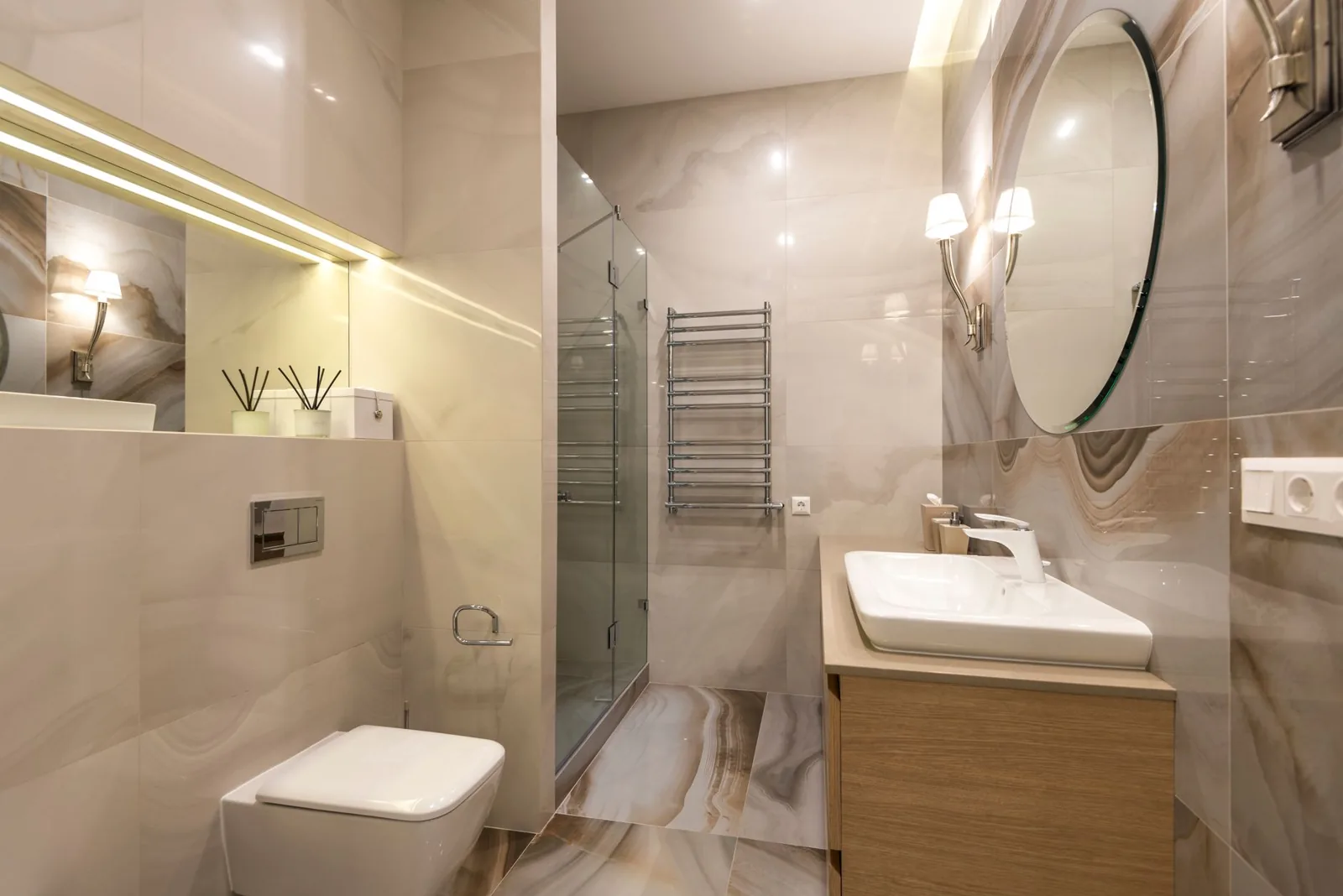
Photo by Max Vakhtbovych via Pexels
How to Lower Your Master Bathroom Remodel Cost
You can cut the total by 20% to 40% without making the result look cheap. The levers, in order of impact:
- Keep the layout. Not moving the toilet, shower, or vanity rough-ins is the biggest single saver on labor.
- Refresh instead of replace the vanity. New hardware, paint, and a quartz top can transform a dated cabinet for a few hundred dollars.
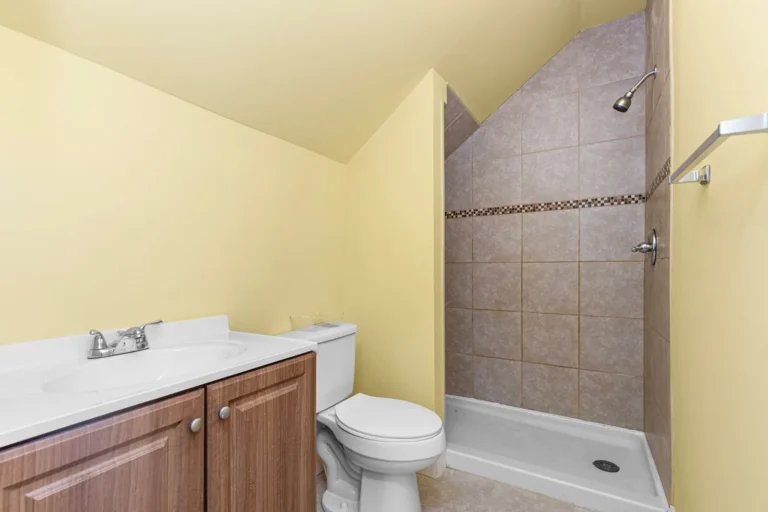
- Choose a prefab shower pan. A ready-made acrylic or composite pan is $200 to $800 versus a custom mortar bed.
- Mix materials. Spend on the floor tile you love; use affordable ceramic on the shower walls.
- Buy fixtures yourself. Contractors mark up materials 15% to 30%. Supply faucets, tub, and vanity if they’ll allow it.
- Do demolition yourself. Tearing out old tile and drywall can save $1,000 to $2,000 — if you’re careful around plumbing and wiring.
- Stage the project. Spreading work over phases is harder on your daily life but easier on cash flow.
For more concrete ways to trim the bill, our bathroom remodel ideas on a budget roundup is full of them. And if the shower is the biggest line item in your scope, compare your options in our walk-in shower cost and walk-in shower vs. bathtub guides.
Return on Investment
The master bath is one of the few remodels where you can meaningfully recover cost at resale. A mid-range bathroom remodel recoups roughly 60% to 70% of its cost at sale, and an upscale master bath remodel averages closer to 50% to 60% in most markets, according to Remodeling Magazine’s Cost vs. Value report. Several real-estate and remodeling sources, including This Old House, report similar ranges.
That said, the return depends heavily on your neighborhood. In a tract of $250,000 homes, a $70,000 spa bathroom will not pay for itself. In a $700,000-home neighborhood, a dated master bath can actually slow a sale. Match your spend to the value of the house, not to the bathroom you’ve always dreamed of.
Frequently Asked Questions
How much does a master bathroom remodel cost in 2026?
Most spend $10,000 to $35,000, with a mid-range full remodel averaging $20,000 to $25,000. Cosmetic refreshes run $6,000 to $15,000, while luxury remodels go from $50,000 to $100,000 or more.
How long does a master bathroom remodel take?
A cosmetic refresh takes one to two weeks. A mid-range full remodel runs three to six weeks, and a luxury gut remodel can stretch to twelve weeks if you’re moving plumbing and waiting on custom cabinetry and stone.
Do I need a permit to remodel a master bathroom?
If you’re swapping fixtures in place and repainting, usually not. But any electrical, plumbing, or structural change requires a permit in most jurisdictions. Licensed contractors pull permits as part of the job — if a contractor tells you to skip one to save money, that’s a red flag.
Is a master bathroom remodel worth it?
For most homeowners, yes. You’ll recover roughly 60% to 70% of a mid-range remodel at resale, and you get years of daily use and comfort in the meantime. The key is matching the spend to your home’s value.
What is the most expensive part of a bathroom remodel?
Typically the shower — a custom tiled walk-in shower with a frameless glass enclosure runs $7,000 to $12,000 or more — followed by labor, which accounts for 40% to 60% of the total.
The Bottom Line
A realistic master bathroom remodel cost budget is $10,000 to $35,000 for most homes, built around three decisions: how much you tear out, whether you move plumbing, and what finish level you choose. Fix the layout early, get three detailed bids that itemize labor and materials separately, and set aside 10% to 20% of the budget for surprises found behind the walls.
Start by deciding which tier fits your home and your timeline, then use the per-square-foot and line-item numbers above to pressure-test any quote. When the numbers on paper start to feel predictable, you’re ready to sign.
Looking for more specifics? See our full bathroom remodel cost guide for a total overview, or dig into the biggest individual expense with our walk-in shower cost breakdown.